The Battle of Cambrai: A Turning Point in Warfare
1917 · Cambrai, France
The Battle of Cambrai begins during World War I, marking the first large-scale use of tanks in combat by British forces.
September 15, 1916
The first use of tanks in warfare occurred during the Battle of the Somme in World War I, marking a significant development in military technology.
Somme, France | British Army
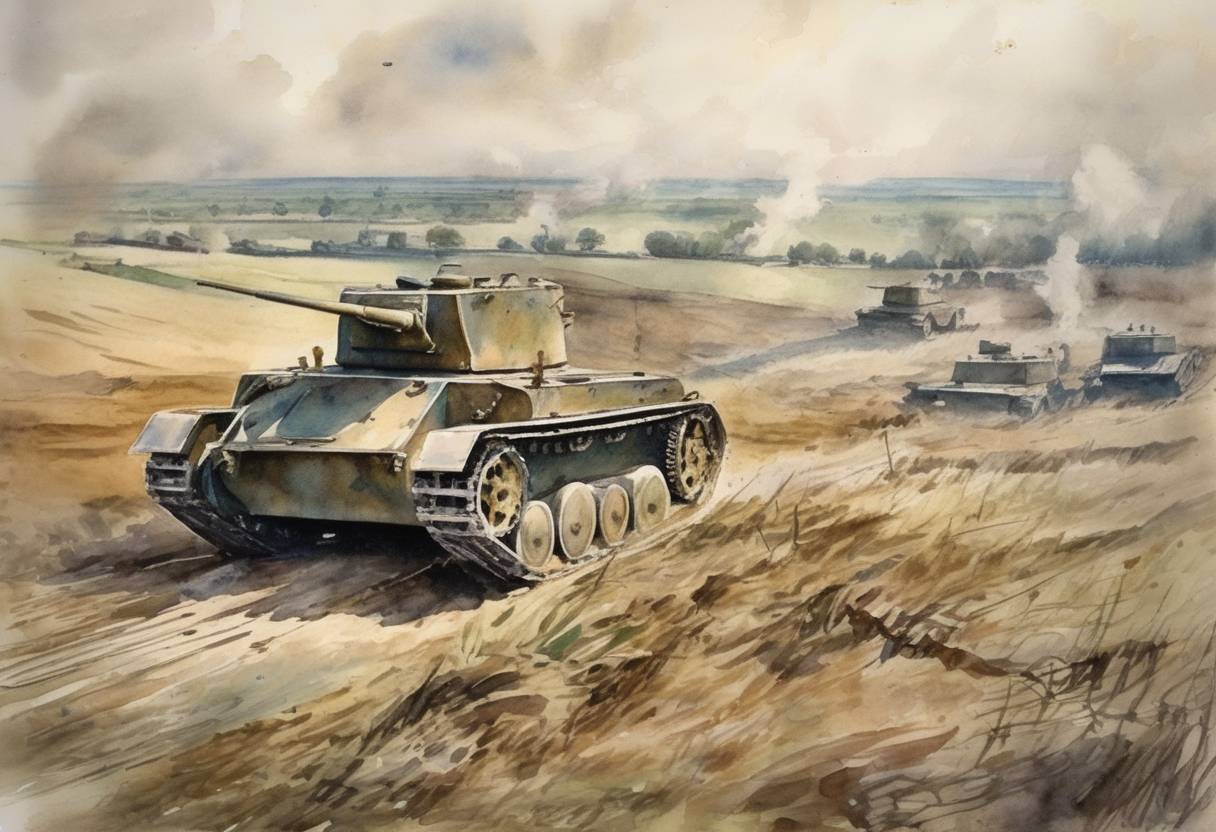
The introduction of tanks in warfare marked a pivotal moment in military history, occurring during the Battle of the Somme on September 15, 1916. This event represented a significant technological advancement in World War I, fundamentally altering the dynamics of ground combat.
The Battle of the Somme, one of the largest battles of World War I, began on July 1, 1916, and lasted until November 18, 1916. It was primarily a British and French offensive against the German Empire on the Western Front. The battle aimed to relieve pressure on the French forces at Verdun and to weaken the German army.
By September 1916, the battle had already been underway for over two months, with massive casualties on both sides and little territorial gain. The introduction of tanks was part of a broader strategy to break the stalemate of trench warfare that had characterized much of the conflict.
Development: The concept of the tank was developed by the British as a means to overcome the challenges posed by trench warfare, barbed wire, and machine-gun fire. The vehicle was designed to traverse difficult terrain and provide mobile firepower.
Mark I Tanks: The first tanks used in combat were the British Mark I models. These were heavily armored vehicles equipped with either naval guns or machine guns, capable of crossing trenches and rough terrain.
Deployment: On September 15, 1916, during the Battle of Flers-Courcelette, a phase of the larger Somme offensive, the British deployed 49 tanks. However, due to mechanical failures and difficult terrain, only 32 reached the front lines.
Initial Success: The tanks achieved mixed results. While they had a psychological impact on German troops and were able to cross enemy trenches, their mechanical unreliability and slow speed limited their effectiveness. Nonetheless, they succeeded in supporting infantry advances and capturing some enemy positions.
Strategic Significance: Despite their limited success, the use of tanks demonstrated their potential to revolutionize warfare. The psychological shock and tactical advantages they offered prompted further development and refinement of armored vehicles.
Long-term Consequences: The deployment of tanks at the Battle of the Somme marked the beginning of modern armored warfare. Over the following years, improvements in design and tactics would make tanks a central component of military strategy in future conflicts, particularly in World War II.
The first use of tanks in warfare during the Battle of the Somme was a landmark event in military history. Although their initial deployment was fraught with challenges, the tanks’ presence on the battlefield signaled a shift towards mechanized warfare and highlighted the importance of technological innovation in military strategy. This development would have lasting implications for the conduct of war throughout the 20th century and beyond.
Source: www.history.com