Italian Invasion of Egypt - September 13, 1940
1940 · , Egypt
Italian forces invaded Egypt during World War II.
August 3, 1940
Italy invaded British Somaliland during World War II, as part of the East African Campaign. This was part of Italy's efforts to expand its colonial empire in Africa.
Hargeisa, British Somaliland | Kingdom of Italy
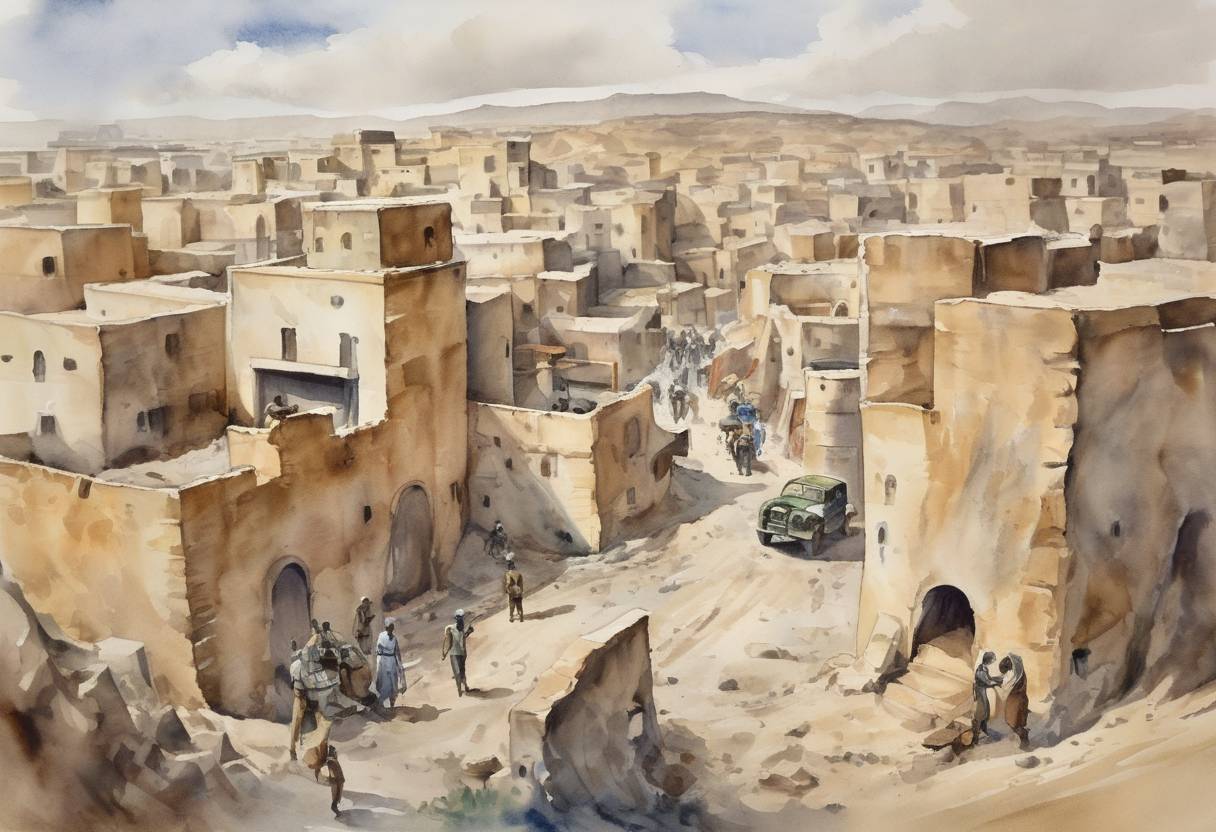
On August 3, 1940, during World War II, Italian forces launched an invasion of British Somaliland, marking a significant event in the East African Campaign. This military operation was part of Italy’s broader strategy to expand its colonial empire in Africa, leveraging its position in Italian East Africa, which included present-day Ethiopia, Eritrea, and Somalia.
Italian East Africa: Before the invasion, Italy had consolidated its territories in East Africa, forming Italian East Africa in 1936 after the conquest of Ethiopia. This region served as a strategic base for further expansionist ambitions in Africa.
Mussolini’s Ambitions: Italian dictator Benito Mussolini sought to bolster Italy’s prestige and influence by expanding its colonial holdings. The outbreak of World War II provided an opportunity to challenge British dominance in the region.
Strategic Importance: British Somaliland, located on the Horn of Africa, was strategically significant due to its proximity to the Red Sea and the Suez Canal, a vital maritime route for the British Empire.
Forces Involved: The Italian invasion force, commanded by General Guglielmo Nasi, consisted of approximately 25,000 troops, including both Italian and colonial soldiers. They were supported by tanks, artillery, and air power.
British Defense: The British garrison in Somaliland was relatively small, with around 4,000 troops under the command of Brigadier Arthur Chater. The defenders were primarily composed of local forces, including the Somaliland Camel Corps, and a few British and Commonwealth units.
Battle of Tug Argan: The key engagement occurred at the Battle of Tug Argan, where British forces attempted to hold a defensive line against the advancing Italians. Despite their efforts, the British were outnumbered and outgunned.
Fall of Berbera: After several days of fighting, British forces were compelled to retreat towards the port city of Berbera. By August 19, 1940, British Somaliland was evacuated, and the territory fell under Italian control.
Strategic Withdrawal: The British withdrawal was strategic, aiming to regroup and reinforce positions elsewhere in the region. The evacuation was conducted efficiently, with minimal losses.
Italian Occupation: The Italian occupation of British Somaliland was short-lived. By March 1941, British and Commonwealth forces launched a counter-offensive, recapturing the territory as part of a broader campaign to reclaim East Africa.
Impact on the East African Campaign: The invasion of British Somaliland was one of the few successful Italian offensives during World War II. However, it highlighted the vulnerabilities of Italian forces, which struggled to maintain control over their expanded territories.
Prelude to Allied Victories: The initial Italian successes in East Africa were soon reversed by the Allies, who launched a series of counter-offensives that ultimately led to the collapse of Italian East Africa by mid-1941.
This event underscores the complexities of colonial ambitions during World War II and the shifting dynamics of power in Africa during the conflict.
Source: en.wikipedia.org