589 · Toledo, Spain
The Second Council of Toledo begins. This was an important synod of bishops in the Visigothic Kingdom, marking a significant moment in the religious and political history of early medieval Spain.
November 9, 0694
The Seventeenth Council of Toledo convened, marking a significant event in the history of the Visigothic Kingdom in Hispania. This council was notable for its political and religious implications, as it dealt with issues such as the rights of kings and the treatment of Jews.
Toledo, Visigothic Kingdom (modern-day Spain) | Catholic Church
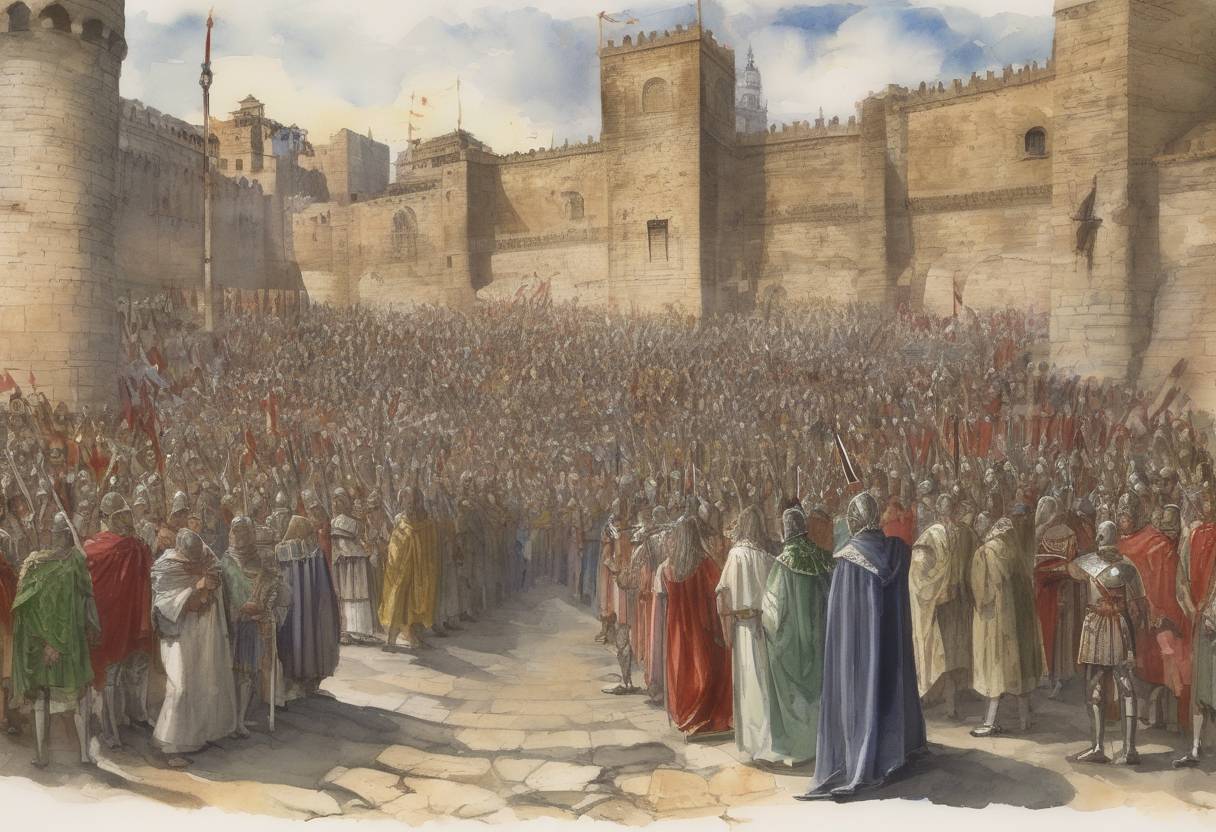
The Seventeenth Council of Toledo convened on November 9, 694, in the Visigothic Kingdom of Hispania. This council is a significant historical event due to its profound political and religious implications, particularly concerning the rights of kings and the treatment of Jewish communities within the kingdom.
The Visigothic Kingdom, which occupied much of the Iberian Peninsula, was a Christian kingdom that had been increasingly integrating Roman legal and ecclesiastical traditions. The Toledo Councils were a series of synods that played a crucial role in shaping the religious and political landscape of the kingdom. These councils were instrumental in consolidating the power of the monarchy and the church.
The Seventeenth Council of Toledo was convened under the reign of King Egica, who sought to strengthen royal authority. The council addressed the rights and responsibilities of the king, reinforcing the monarch’s divine right to rule and his role as the protector of the church. This was part of a broader effort to centralize power and ensure the stability of the kingdom.
One of the most notable aspects of this council was its decrees regarding the Jewish population. The Visigothic rulers had a history of enacting anti-Jewish legislation, and the Seventeenth Council continued this trend. The council accused the Jews of conspiring with Muslims to overthrow the Christian kingdom, a charge that led to severe repercussions. It decreed that Jews should be enslaved, their property confiscated, and their children taken away to be raised as Christians. This marked a significant escalation in the persecution of Jews in the Visigothic Kingdom.
The decisions made at the Seventeenth Council of Toledo had lasting impacts on the Visigothic Kingdom. The increased centralization of royal power helped maintain the kingdom’s stability in the short term. However, the harsh treatment of Jews contributed to social unrest and weakened internal cohesion, factors that would later play a role in the kingdom’s vulnerability to external threats.
In 711, less than two decades after the council, the Visigothic Kingdom fell to the Muslim Umayyad Caliphate, marking the beginning of Islamic rule in the Iberian Peninsula. The policies enacted at the council, particularly those against the Jews, are often viewed as part of the broader socio-political challenges that the kingdom faced leading up to its decline.
The Seventeenth Council of Toledo exemplifies the complex interplay between religion and politics in medieval Europe. It highlights the use of religious councils to legitimize and enforce political power, as well as the role of religious institutions in shaping societal norms and policies. The council’s decrees against Jews also reflect the broader patterns of anti-Semitism that were prevalent in medieval Europe, which would have enduring consequences throughout history.
Source: en.wikipedia.org