Apollo 12 Moon Landing: November 19, 1969
1969 · Moon, United States
Apollo 12 astronauts Charles Conrad and Alan Bean became the third and fourth humans to walk on the Moon.
July 24, 1969
Apollo 11 safely returns to Earth, completing the first manned mission to the Moon.
Pacific Ocean, United States | NASA
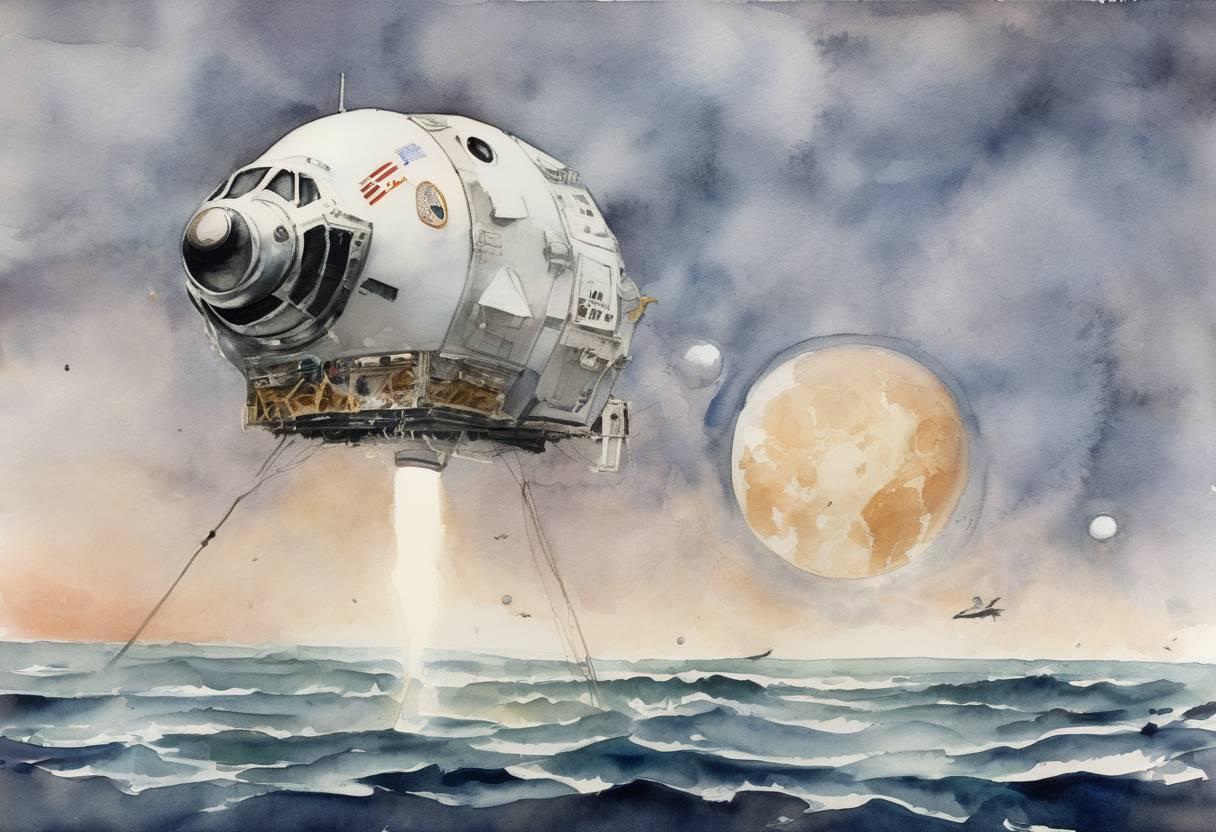
On July 24, 1969, the Apollo 11 mission, the first manned mission to land on the Moon, successfully returned to Earth, marking a monumental achievement in human space exploration.
The Apollo 11 mission was part of NASA’s Apollo program, which aimed to land humans on the Moon and bring them safely back to Earth. This mission was a direct response to President John F. Kennedy’s 1961 challenge to land a man on the Moon before the end of the decade.
After spending a total of 21 hours and 36 minutes on the lunar surface, Armstrong and Aldrin rejoined Collins in the Command Module “Columbia.” The spacecraft began its journey back to Earth on July 21, 1969.
The successful completion of Apollo 11 fulfilled President Kennedy’s goal and established the United States as a leader in space exploration. The mission demonstrated the potential for human space travel and paved the way for future lunar missions. The astronauts were celebrated as heroes upon their return and embarked on a world tour to share their experiences.
Apollo 11’s success had profound implications for science, technology, and international relations during the Cold War era. It inspired generations of scientists and engineers and remains a symbol of human ingenuity and perseverance.
The mission’s legacy continues to influence space exploration efforts, including the ongoing Artemis program, which aims to return humans to the Moon and eventually send astronauts to Mars.
Source: www.nasa.gov