Dissolution of the Rump Parliament by Oliver Cromwell - April 20, 1653
1653 · London, England
Oliver Cromwell dissolves the Rump Parliament by force, marking a significant moment in the English Interregnum.
January 20, 1649
King Charles I of England went on trial for treason and other high crimes against the realm. This trial eventually led to his execution.
London, England | English Parliament
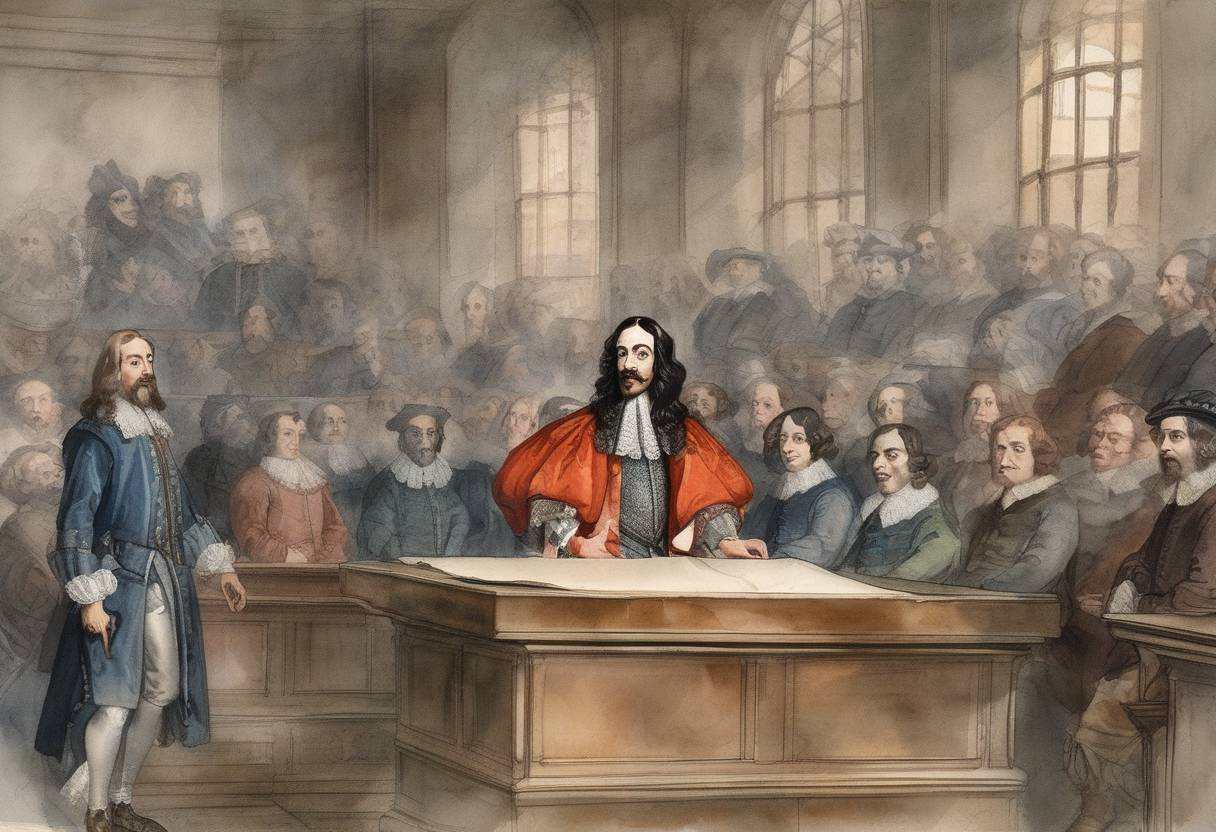
On January 20, 1649, King Charles I of England was brought to trial for treason and other high crimes against the realm. This unprecedented event marked a significant turning point in English history, as it was the first time a reigning monarch was legally tried and executed by his own subjects.
The trial of King Charles I was the culmination of a series of conflicts known as the English Civil Wars, which took place from 1642 to 1651. These wars were primarily fought between the Royalists, who supported the king, and the Parliamentarians, who sought to limit his powers. The conflict arose from deep-seated issues, including:
The Parliamentarians, led by figures like Oliver Cromwell, eventually gained the upper hand. By 1648, Charles I was captured and imprisoned, setting the stage for his trial.
The trial was held at Westminster Hall, with the High Court of Justice specially established for this purpose. The court was composed of 135 commissioners, although not all attended. The key points of the trial included:
On January 30, 1649, King Charles I was executed by beheading outside the Banqueting House in Whitehall, London. His execution sent shockwaves throughout Europe and marked the temporary abolition of the monarchy in England.
The trial of King Charles I remains a pivotal moment in history, symbolizing the struggle between absolute monarchy and the rights of Parliament, influencing the future of governance in England and beyond.
Source: www.britannica.com