The Spanish Armada Spotted Off the Coast of England - July 29, 1588
1588 · English Channel, England
The Spanish Armada was spotted off the coast of England, marking a significant moment in the Anglo-Spanish War.
August 8, 1588
The Spanish Armada was defeated by the English navy under the command of Lord Charles Howard and Sir Francis Drake, marking a significant turning point in the Anglo-Spanish War.
English Channel, United Kingdom | English Navy
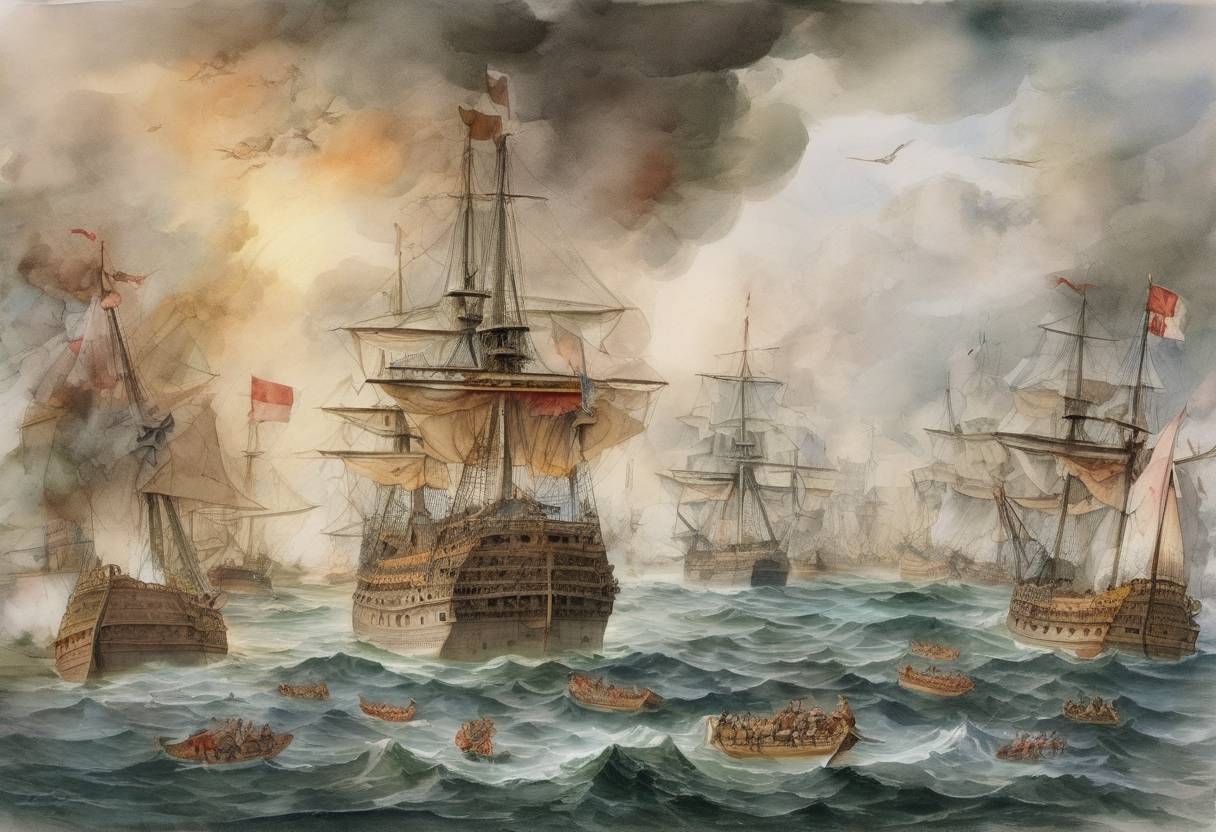
On August 8, 1588, a pivotal event in European history unfolded as the Spanish Armada, a formidable fleet sent by King Philip II of Spain, was defeated by the English navy. This event marked a significant turning point in the Anglo-Spanish War (1585–1604) and had profound implications for the balance of power in Europe.
The conflict between Spain and England was rooted in religious and political tensions. King Philip II, a staunch Catholic, sought to overthrow Protestant Queen Elizabeth I of England and restore Catholicism. The execution of Mary, Queen of Scots, in 1587, who was seen as a Catholic martyr, further inflamed tensions. In response, Philip II assembled the Spanish Armada, a fleet of about 130 ships, with the aim of invading England.
The Spanish Armada set sail from Lisbon in May 1588, under the command of the Duke of Medina Sidonia. The plan was to sail to the Netherlands, pick up additional troops, and then invade England. However, the Armada faced numerous challenges, including adverse weather conditions and logistical issues.
The English navy, commanded by Lord Charles Howard and Sir Francis Drake, was well-prepared for the Spanish fleet. The English ships were smaller, faster, and more maneuverable than the Spanish galleons. On July 29, 1588, the Armada was sighted off the coast of England, and the English fleet engaged them in a series of skirmishes.
The decisive encounter occurred on August 8, near Gravelines, off the coast of France. The English employed innovative tactics, including the use of fire ships—vessels set ablaze and sent into the anchored Spanish fleet, causing chaos and disarray. The Spanish formation was broken, and the Armada was forced to retreat.
The defeat of the Spanish Armada was a monumental event with far-reaching consequences:
In summary, the defeat of the Spanish Armada on August 8, 1588, was a turning point in the Anglo-Spanish War and a defining moment in the history of naval warfare, altering the course of European history and setting the stage for the rise of the British Empire.
Source: www.britannica.com