Surrender of Belgian King Leopold III to German Forces on May 28, 1940
1940 · Brussels, Belgium
Belgian King Leopold III surrenders to German forces during World War II, leading to the occupation of Belgium.
August 20, 1914
German forces occupy Brussels during World War I.
Brussels, Belgium | German Army
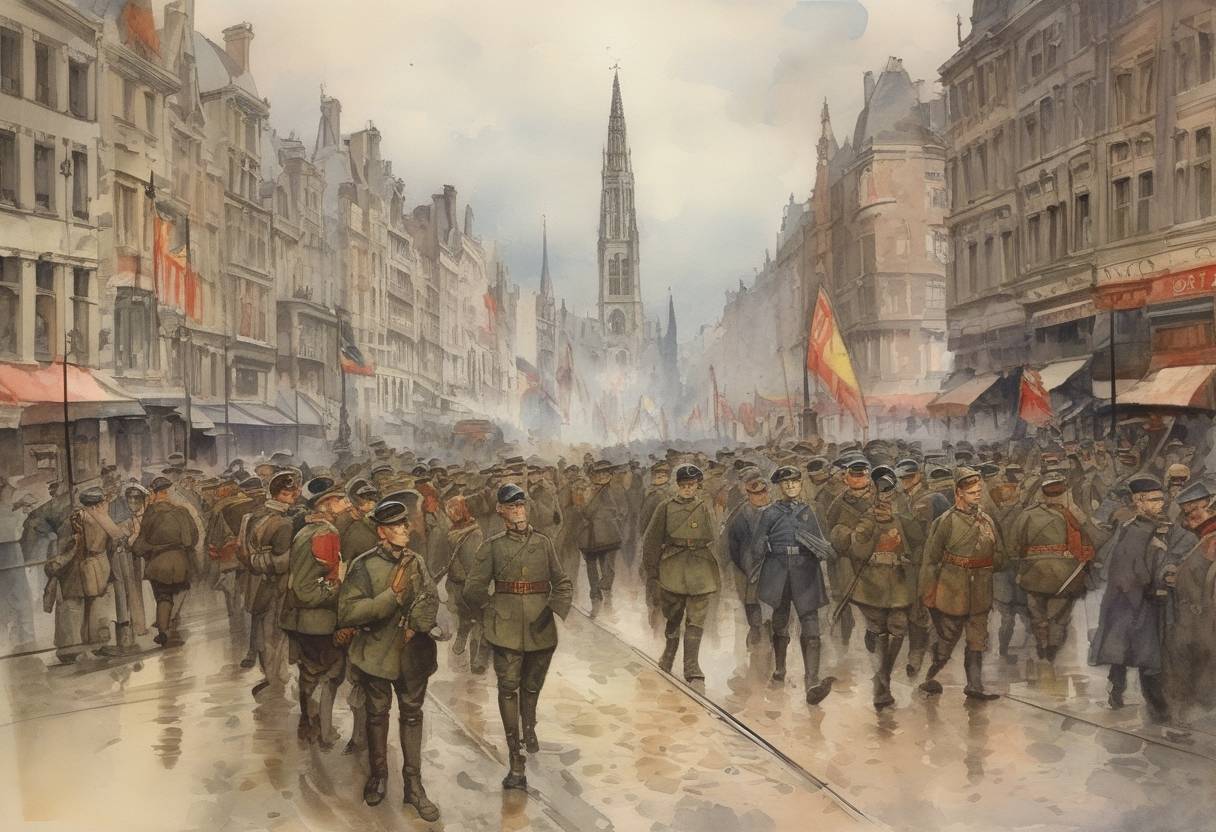
On August 20, 1914, during the early stages of World War I, German forces occupied Brussels, the capital of Belgium. This event was a significant moment in the war’s Western Front and had considerable implications for the conflict’s progression.
Schlieffen Plan: The occupation of Brussels was part of Germany’s broader military strategy known as the Schlieffen Plan. This plan aimed to quickly defeat France by advancing through Belgium, thereby avoiding a prolonged two-front war against France in the west and Russia in the east.
Belgium’s Neutrality: Belgium was a neutral country at the outbreak of World War I. However, Germany’s invasion on August 4, 1914, violated this neutrality, prompting Britain to declare war on Germany in defense of Belgium.
Belgian Resistance: Despite being outnumbered and outgunned, Belgian forces put up a determined resistance. The defense of Liège, in particular, delayed the German advance and demonstrated Belgium’s resolve.
German Advance: After overcoming Belgian defenses at Liège and other strategic points, German forces continued their rapid advance through Belgium. By mid-August, they were approaching Brussels.
Brussels’ Surrender: On August 20, 1914, Brussels surrendered to the German army without significant resistance. The Belgian government had already relocated to Antwerp, recognizing the futility of defending the city against the overwhelming German forces.
Impact on Civilians: The occupation of Brussels marked the beginning of a harsh period for its residents. German forces imposed strict controls, requisitioned supplies, and enforced martial law. The occupation was characterized by a climate of fear and uncertainty.
Strategic Position: The occupation of Brussels allowed Germany to secure a strategic position in Belgium, facilitating further advances into France. It also demonstrated the effectiveness of the initial phase of the Schlieffen Plan.
International Reaction: The violation of Belgian neutrality and the occupation of its capital drew international condemnation. It galvanized support for the Allied cause, particularly in Britain and its dominions.
Long-term Consequences: The occupation of Brussels and the subsequent German actions in Belgium, including the destruction of Leuven and atrocities against civilians, contributed to the portrayal of Germany as an aggressor in Allied propaganda.
In summary, the occupation of Brussels on August 20, 1914, was a pivotal event in the early months of World War I. It underscored the brutal realities of the conflict and set the stage for the protracted and devastating battles that would follow on the Western Front.
Source: en.wikipedia.org