Decree by Emperor Arcadius on February 15, 399
399 · Constantinople, Eastern Roman Empire
The Roman Emperor Arcadius issues a decree that prohibits pagan worship and sacrifices, furthering the Christianization of the Roman Empire.
August 22, 0392
The Roman Emperor Valentinian II issued a decree prohibiting pagan worship in the Roman Empire, marking a significant step in the Christianization of the empire.
Rome, Roman Empire | Roman Empire
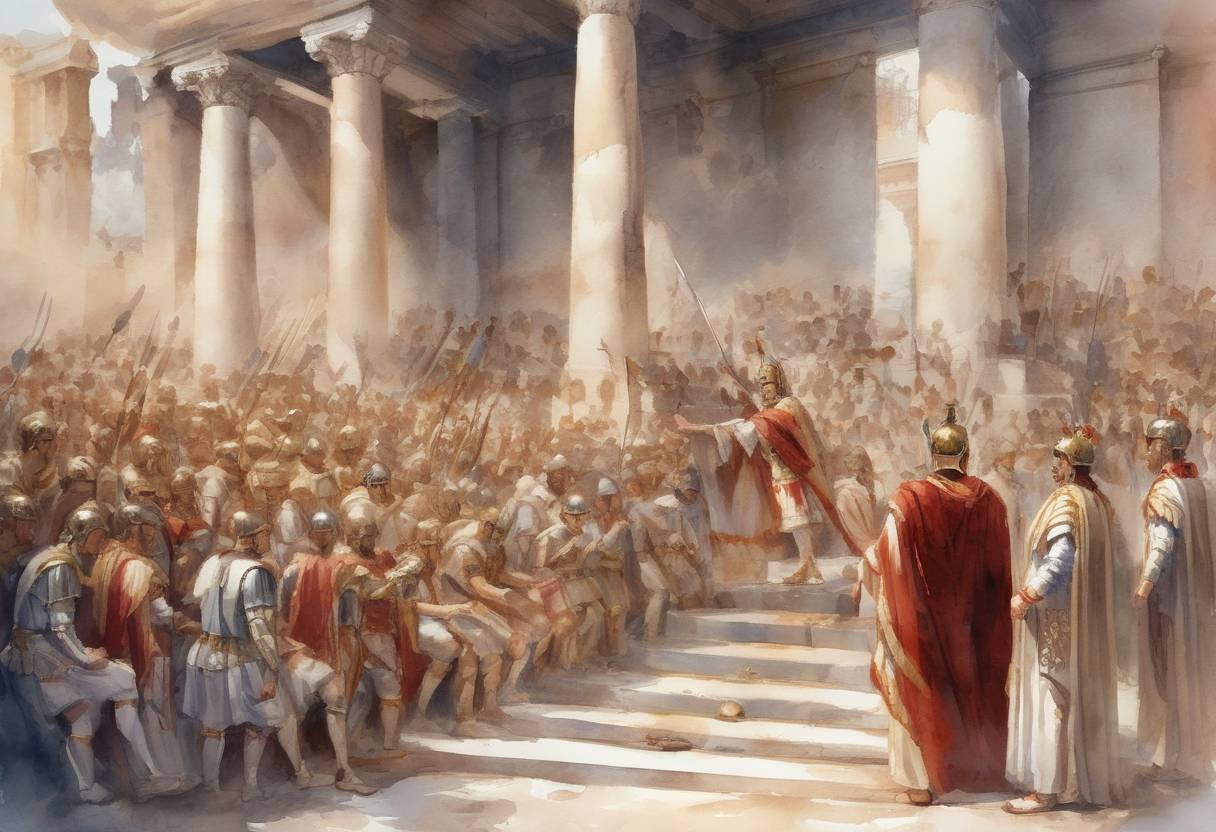
On August 22, 392, Roman Emperor Valentinian II issued a significant decree that prohibited pagan worship throughout the Roman Empire. This edict marked a pivotal moment in the Christianization of the empire, reflecting the broader transformation of Roman religious and cultural life during this period.
The Rise of Christianity: By the late 4th century, Christianity had gained substantial influence within the Roman Empire. The conversion of Emperor Constantine the Great in the early 4th century and the subsequent Edict of Milan in 313, which granted religious tolerance to Christians, set the stage for Christianity’s ascendancy.
Theodosian Influence: Valentinian II’s reign was heavily influenced by Theodosius I, the senior emperor of the Roman Empire, who was a staunch supporter of Christianity. Theodosius had already enacted laws that favored Christianity and restricted pagan practices.
Prohibition of Pagan Worship: The decree issued by Valentinian II explicitly banned all forms of pagan worship, including sacrifices and the veneration of idols. This was part of a series of legislative measures aimed at suppressing paganism and promoting Christianity as the state religion.
Enforcement and Impact: The decree was enforced with varying degrees of intensity across the empire. It led to the closure of temples and the confiscation of temple properties, further diminishing the public presence of pagan practices.
Acceleration of Christianization: The decree significantly accelerated the process of Christianization within the Roman Empire. It marked a decisive shift in imperial policy, where Christianity was not only favored but actively promoted as the sole legitimate religion.
Cultural and Religious Transformation: The prohibition of pagan worship contributed to the transformation of Roman cultural and religious life. It facilitated the integration of Christian values and practices into the fabric of Roman society.
Legacy: The actions taken by Valentinian II and his contemporaries laid the groundwork for the establishment of Christianity as the dominant religion in Europe. This transformation had profound implications for the development of Western civilization.
In summary, the decree issued by Valentinian II on August 22, 392, was a landmark event in the history of the Roman Empire, symbolizing the transition from a polytheistic society to one increasingly defined by Christian orthodoxy.
Source: en.wikipedia.org