Edward VI's Coronation as King of England
1547 · London, England
Edward VI is crowned King of England at the age of nine following the death of his father, Henry VIII.
February 1, 1587
Queen Elizabeth I of England signs the death warrant for Mary, Queen of Scots.
London, England | English Monarchy
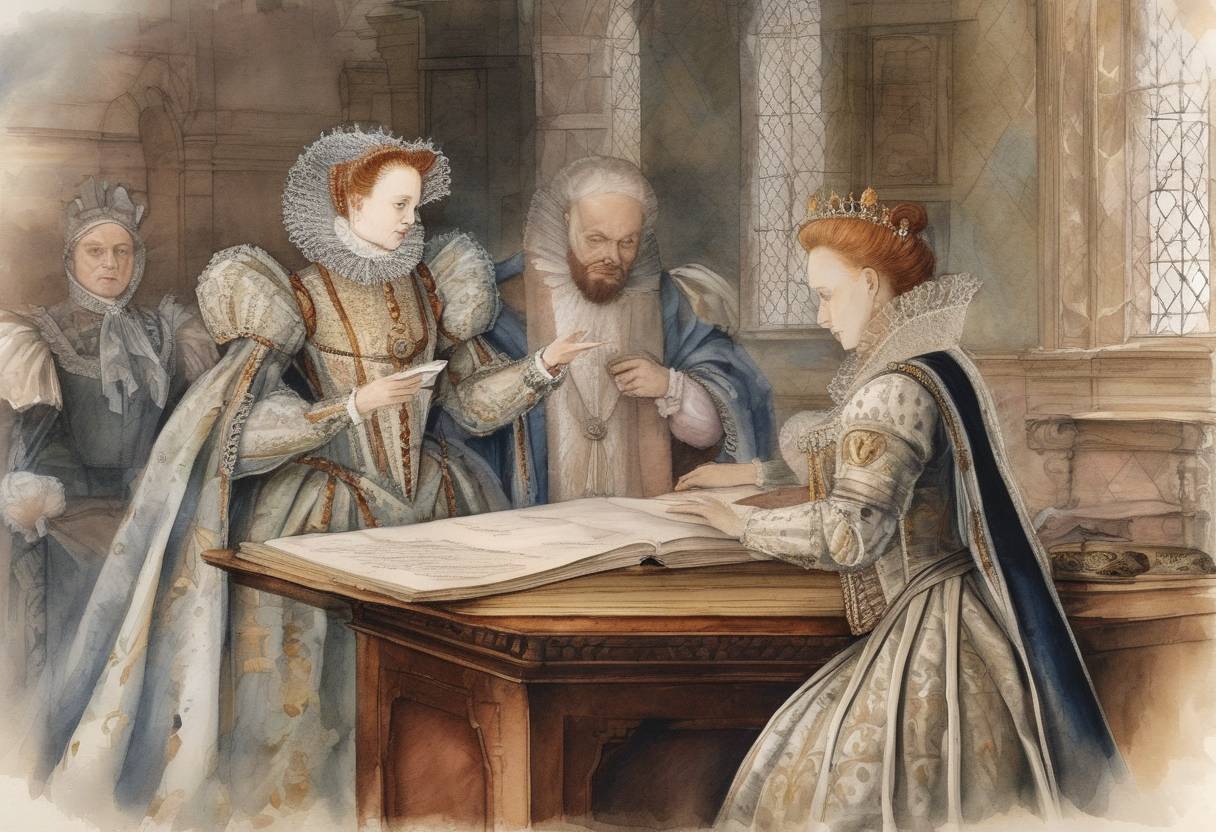
On February 1, 1587, Queen Elizabeth I of England signed the death warrant for Mary, Queen of Scots, a significant and contentious event in British history. This decision marked the culmination of years of political intrigue, religious conflict, and personal rivalry between the two queens.
Mary, Queen of Scots, was a Catholic monarch who had been a figure of contention in Protestant England. After being forced to abdicate the Scottish throne in 1567, she sought refuge in England, hoping for support from her cousin, Elizabeth I. Instead, Mary became a prisoner, as her presence in England posed a threat to Elizabeth’s rule. Many English Catholics viewed Mary as the legitimate sovereign, given her direct lineage to Henry VII and her Catholic faith.
The Babington Plot (1586): The immediate catalyst for Mary’s execution was the Babington Plot, a conspiracy to assassinate Elizabeth and place Mary on the English throne. The plot was uncovered by Elizabeth’s spymaster, Sir Francis Walsingham, who intercepted letters that implicated Mary in the scheme.
Trial and Conviction: Mary was put on trial in October 1586 at Fotheringhay Castle. Despite her protests that she was denied legal counsel and that the trial was unjust, she was found guilty of treason.
Political Pressure: Elizabeth faced immense pressure from her advisors and Parliament to execute Mary to eliminate the Catholic threat. However, Elizabeth was hesitant, aware of the potential political repercussions and the precedent it would set for executing a fellow monarch.
Despite her reluctance, Elizabeth signed the death warrant on February 1, 1587. She reportedly did so with great reluctance and later claimed that she had not intended for the warrant to be executed immediately. Nevertheless, the Privy Council, eager to resolve the issue, acted swiftly.
Execution: Mary, Queen of Scots, was executed on February 8, 1587, at Fotheringhay Castle. Her execution was carried out with dignity, and she maintained her composure, becoming a martyr in the eyes of many Catholics.
Consequences: The execution of Mary had significant repercussions. It strained relations with Catholic nations, particularly Spain, and contributed to the tensions that led to the Spanish Armada’s attempted invasion of England in 1588. Domestically, it solidified Elizabeth’s position but also cast a shadow over her reign due to the controversial nature of executing a fellow sovereign.
The execution of Mary, Queen of Scots, was a pivotal moment in the Elizabethan era, highlighting the intense religious and political conflicts of the time. It underscored the precarious nature of monarchical rule and the lengths to which rulers would go to secure their thrones. The event remains a poignant example of the complex interplay between personal rivalry and political necessity in history.
Source: en.wikipedia.org