The Battle of Kleidion: July 29, 1014
1014 · Kleidion, Bulgaria
The Battle of Kleidion took place, where Byzantine Emperor Basil II defeated the Bulgarian forces, leading to the eventual fall of the Bulgarian Empire.
April 13, 0814
The death of Krum, the Khan of Bulgaria, who was known for his military campaigns against the Byzantine Empire and for establishing a strong centralized state. His reign marked a period of expansion and consolidation for the Bulgarian Empire.
Pliska, First Bulgarian Empire | Bulgarian Empire
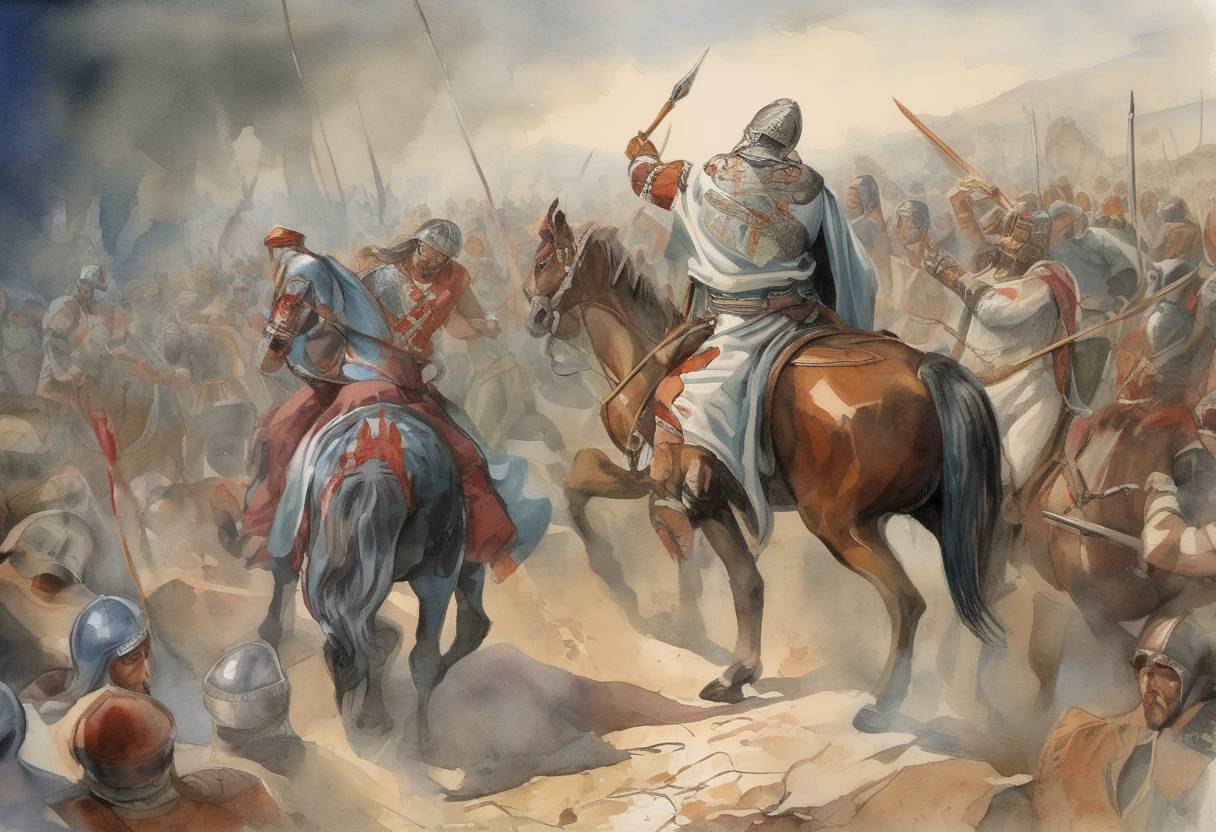
On April 13, 814, Krum, the formidable Khan of Bulgaria, passed away. His reign, which began around 803, was marked by significant military and administrative achievements that left a lasting impact on the Bulgarian Empire and its relations with the Byzantine Empire.
Krum ascended to power during a period of instability and fragmentation in the region. His leadership was pivotal in transforming Bulgaria into a centralized and powerful state. He is often credited with laying the foundations for the First Bulgarian Empire’s expansion and consolidation.
Krum is best known for his military prowess, particularly his campaigns against the Byzantine Empire. His most notable victory came in 811 at the Battle of Pliska, where he decisively defeated the Byzantine Emperor Nikephoros I. This victory was not only a significant military triumph but also a psychological blow to the Byzantines, as Krum reportedly used the skull of Nikephoros as a drinking cup, a symbol of his dominance.
Following this victory, Krum continued to exert pressure on the Byzantine Empire, capturing key territories and fortifying Bulgaria’s borders. His campaigns extended the Bulgarian influence into the Balkans, securing the empire’s position as a formidable power in the region.
Beyond his military achievements, Krum is also remembered for his administrative reforms. He implemented a legal code that sought to unify and strengthen the internal structure of the Bulgarian state. These laws were aimed at consolidating power, ensuring justice, and promoting economic stability, which contributed to the empire’s longevity and resilience.
Krum’s death on April 13, 814, marked the end of an era of aggressive expansion and consolidation for Bulgaria. His legacy was carried on by his successors, who continued to build upon the foundations he had laid. The period following his reign saw Bulgaria maintain its status as a significant power in Eastern Europe.
Krum’s impact on Bulgarian history is profound, as he not only expanded the empire’s territories but also established a strong centralized state that would endure for centuries. His reign is often seen as a turning point that set the stage for Bulgaria’s golden age under later rulers like Simeon the Great.
In summary, Krum’s death was a pivotal moment in Bulgarian history, marking the end of a reign characterized by military success and significant internal reforms. His contributions to the Bulgarian state and its position in the medieval world remain a testament to his leadership and vision.
Source: en.wikipedia.org