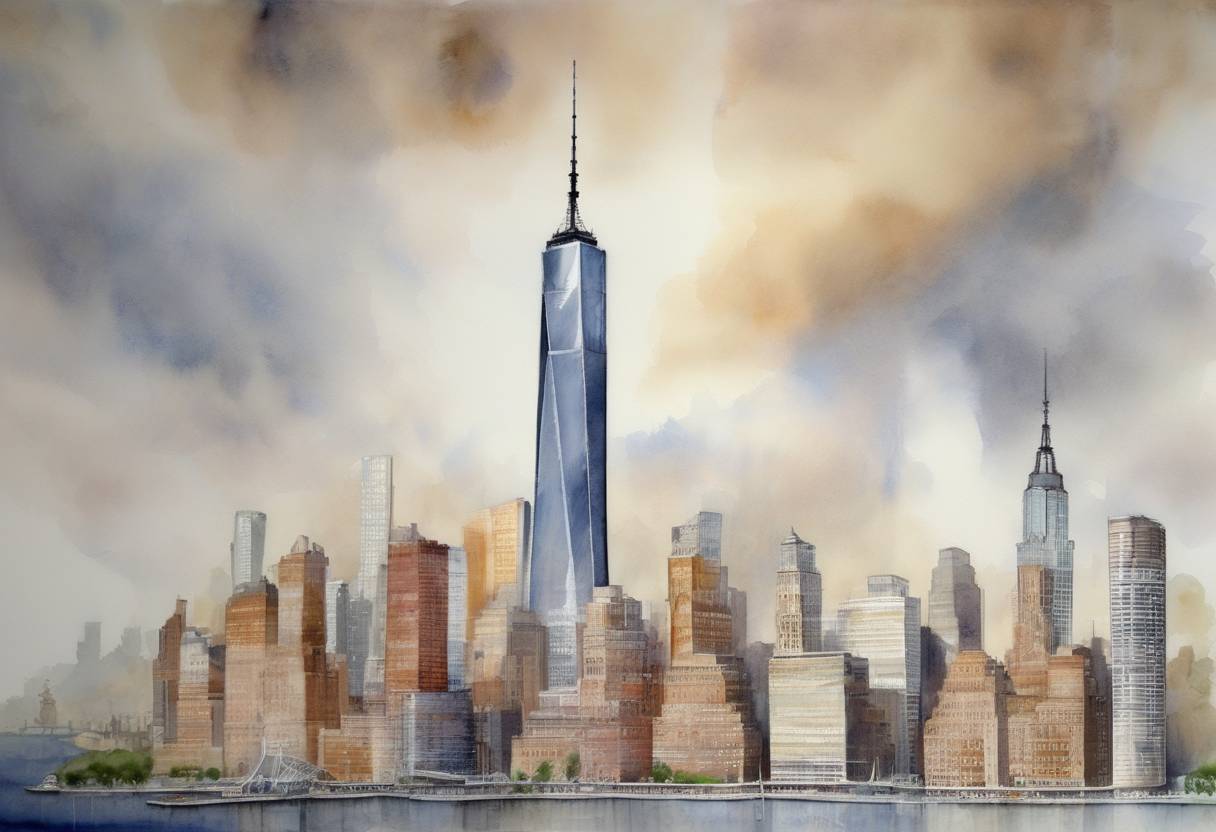
Construction of One World Trade Center Begins
On April 27, 2006, construction officially began on the Freedom Tower, later renamed One World Trade Center, in New York City. This marked a pivotal moment in the reconstruction efforts at the World Trade Center site following the devastating September 11, 2001, terrorist attacks.
Context and Background
The September 11 attacks resulted in the destruction of the original World Trade Center towers, leaving a profound impact on New York City and the world. In the aftermath, there was a strong desire to rebuild and create a symbol of resilience and renewal. The process of planning and designing a new structure was complex and involved numerous stakeholders, including architects, city planners, and the families of 9⁄11 victims.
Design and Planning
The design for One World Trade Center was selected through a competitive process. Architect Daniel Libeskind initially proposed the master plan for the site, which included the Freedom Tower. However, the final design was completed by architect David Childs of Skidmore, Owings & Merrill. The design aimed to balance aesthetics, functionality, and security, incorporating advanced safety features and sustainable building practices.
Key Features
- Height: One World Trade Center stands at a symbolic height of 1,776 feet, referencing the year of American independence.
- Structure: The building features a robust core and a tapered, glass façade, designed to maximize natural light and provide panoramic views.
- Sustainability: It incorporates green building technologies, including rainwater harvesting and energy-efficient systems.
Significance
The commencement of construction on April 27, 2006, was a significant milestone in the healing and rebuilding process for New York City. It symbolized resilience and the determination to move forward while honoring the memory of those lost in the attacks.
Aftermath and Completion
Construction of One World Trade Center faced numerous challenges, including logistical complexities and financial considerations. Despite these hurdles, the building was completed and opened to the public on November 3, 2014. It now serves as a prominent feature of the New York City skyline and a testament to the city’s enduring spirit.
One World Trade Center is not only a commercial hub but also a place of remembrance, with the adjacent National September 11 Memorial & Museum serving as a poignant tribute to the events of 9⁄11 and their lasting impact.