Space Shuttle Endeavour's Mission to Repair the Hubble Space Telescope
1993 · Cape Canaveral, United States
NASA launched the Space Shuttle Endeavour on a mission to repair the Hubble Space Telescope.
April 24, 1990
The Hubble Space Telescope was launched into space by the Space Shuttle Discovery.
Cape Canaveral, United States | NASA
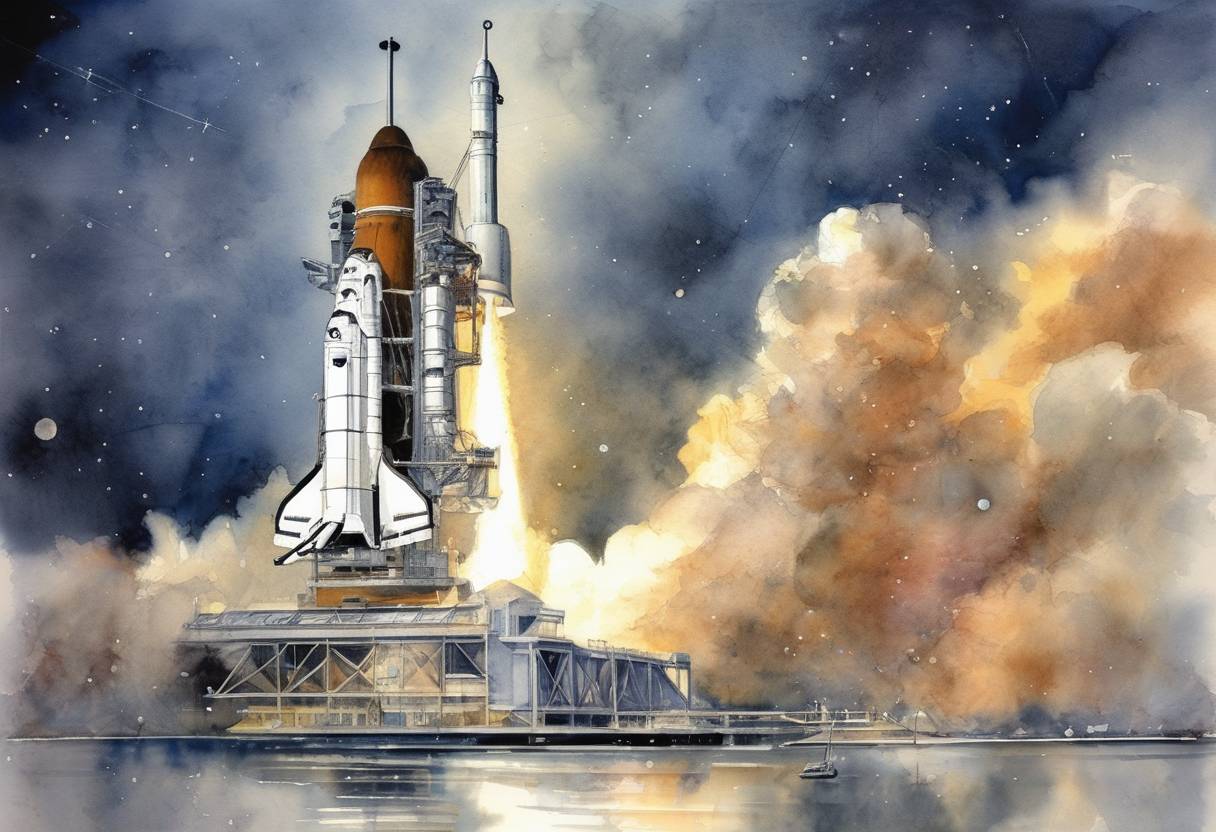
On April 24, 1990, the Hubble Space Telescope was launched into space aboard the Space Shuttle Discovery during the STS-31 mission. This event marked a significant milestone in the field of astronomy and space exploration, providing unprecedented views of the universe and contributing to numerous scientific discoveries.
The concept of a space-based telescope dates back to the 1940s, with astronomers recognizing the potential benefits of observing celestial objects without the distortion caused by Earth’s atmosphere. The Hubble Space Telescope, named after the renowned astronomer Edwin Hubble, was developed as a joint project between NASA and the European Space Agency (ESA).
The launch was successful, and the Hubble Space Telescope was deployed into a low Earth orbit approximately 547 kilometers (about 340 miles) above the Earth’s surface.
Shortly after deployment, it was discovered that the telescope’s primary mirror had a spherical aberration due to a manufacturing error, which affected the clarity of the images. This issue was addressed in December 1993 during the STS-61 mission, when astronauts aboard the Space Shuttle Endeavour installed corrective optics.
Since its deployment, the Hubble Space Telescope has made numerous contributions to our understanding of the universe, including:
The Hubble Space Telescope remains operational and continues to be a vital tool for astronomers worldwide, significantly enhancing our knowledge of the cosmos. Its success has paved the way for future space telescopes, such as the James Webb Space Telescope, which aims to build upon Hubble’s legacy.
The launch of the Hubble Space Telescope on April 24, 1990, represents a landmark achievement in space exploration and scientific research. Its enduring contributions to astronomy underscore the importance of international collaboration and technological innovation in expanding our understanding of the universe.
Source: en.wikipedia.org