Establishment of the Moscow–Washington Hotline
1963 · Washington, D.C., United States
The Moscow–Washington hotline, a direct communication link between the United States and the Soviet Union, is established.
June 20, 1963
The United States and the Soviet Union agree to establish a direct communications link, known as the "Hotline," to reduce the risk of accidental nuclear war.
Washington D.C., United States | U.S. Government
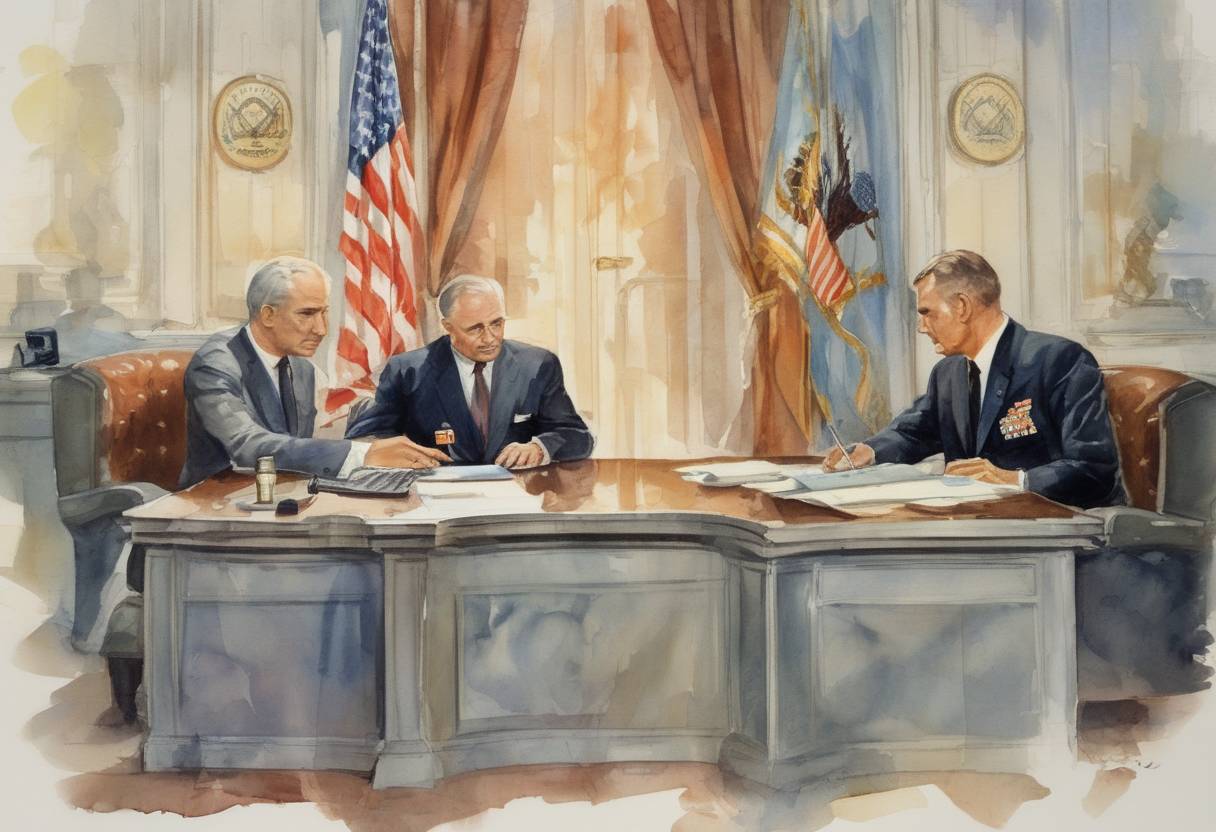
On June 20, 1963, the United States and the Soviet Union took a significant step towards reducing the risk of accidental nuclear war by agreeing to establish a direct communications link, famously known as the “Hotline.” This development was a crucial measure in the context of Cold War tensions and aimed at preventing misunderstandings that could escalate into nuclear conflict.
The early 1960s were marked by heightened tensions between the two superpowers, particularly following the Cuban Missile Crisis of October 1962. This crisis brought the world perilously close to nuclear war, highlighting the need for improved communication to manage potential conflicts and misunderstandings.
The agreement to establish the “Hotline” was formalized through a memorandum of understanding signed by representatives of both nations. The direct line was intended to facilitate immediate and direct communication between the leaders of the United States and the Soviet Union.
The establishment of the “Hotline” was a landmark in Cold War diplomacy, symbolizing a mutual recognition of the catastrophic consequences of nuclear war and the need for reliable communication.
The “Hotline” has been maintained and upgraded over the years, reflecting ongoing efforts to manage nuclear risks. It remains a critical tool for crisis management and continues to symbolize the importance of direct communication in international relations.
In conclusion, the establishment of the “Hotline” on June 20, 1963, was a pivotal moment in Cold War history, underscoring the necessity of dialogue and cooperation in preventing nuclear conflict.
Source: en.wikipedia.org