Execution of Catherine Howard: February 13, 1542
1542 · London, England
Catherine Howard, the fifth wife of King Henry VIII of England, was executed for adultery.
May 19, 1536
Anne Boleyn, the second wife of King Henry VIII of England, was executed on charges of adultery, treason, and incest.
London, England | English monarchy
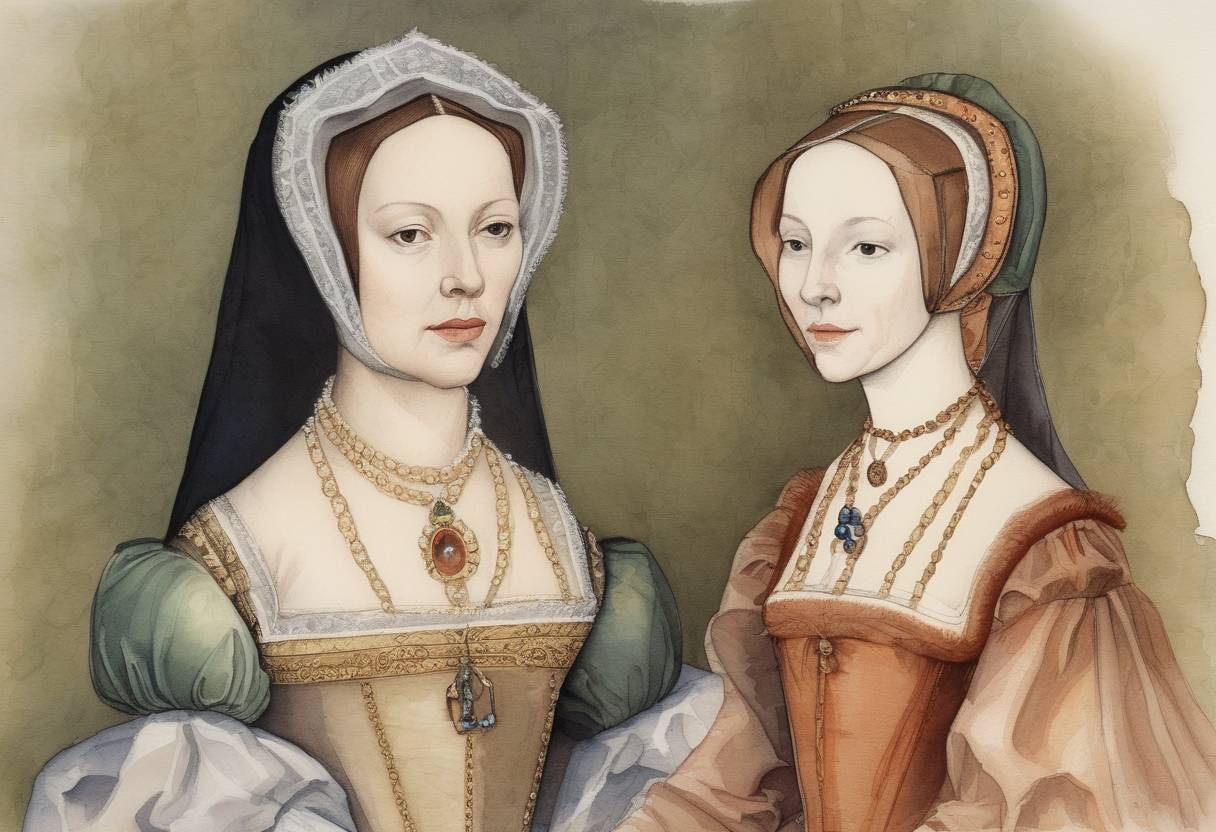
Anne Boleyn, the second wife of King Henry VIII of England, was executed on May 19, 1536, marking a pivotal moment in English history. Her execution was the culmination of a dramatic and turbulent period in the English court, characterized by political intrigue, religious upheaval, and personal vendettas.
Anne Boleyn was born around 1501, the daughter of Thomas Boleyn, a prominent diplomat, and Elizabeth Howard. She spent part of her early life in the Netherlands and France, where she received an education that would later serve her well in the English court. Anne returned to England in 1522 and quickly became a lady-in-waiting to Queen Catherine of Aragon, Henry VIII’s first wife.
Anne’s relationship with Henry VIII began around 1525. Unlike many of Henry’s previous mistresses, Anne refused to become his lover without the promise of marriage. This insistence led Henry to seek an annulment from Catherine, a process that would eventually result in England’s break from the Catholic Church and the establishment of the Church of England.
Anne and Henry married in January 1533, and she was crowned queen consort in June of the same year. However, her inability to produce a male heir and her strong-willed nature soon led to her downfall. Anne gave birth to a daughter, Elizabeth, in September 1533, but subsequent pregnancies ended in miscarriage or stillbirth.
By 1536, Henry’s affections had shifted to Jane Seymour, one of Anne’s ladies-in-waiting. Eager to rid himself of Anne, Henry’s advisors, including Thomas Cromwell, orchestrated a case against her. Anne was arrested and charged with adultery, incest, and treason.
Anne’s trial took place on May 15, 1536, at the Tower of London. Despite the lack of credible evidence, she was found guilty by a jury that included her uncle, Thomas Howard, the Duke of Norfolk. Anne maintained her innocence throughout the proceedings.
On May 19, 1536, Anne was executed by beheading within the Tower of London. Her execution was carried out by a skilled French swordsman, a method chosen by Henry as a supposed act of mercy. Anne’s final words were said to be a prayer for the king and a declaration of her faith.
Anne Boleyn’s execution had significant repercussions. Her daughter, Elizabeth, would later become one of England’s greatest monarchs, Queen Elizabeth I. The events surrounding Anne’s marriage and execution were instrumental in the English Reformation, permanently altering the religious landscape of England.
Anne Boleyn remains a figure of fascination and debate, symbolizing the complexities of power, gender, and politics in Tudor England. Her life and death continue to captivate historians and the public alike, serving as a poignant reminder of the perils faced by women in positions of influence during this tumultuous period.
Source: en.wikipedia.org