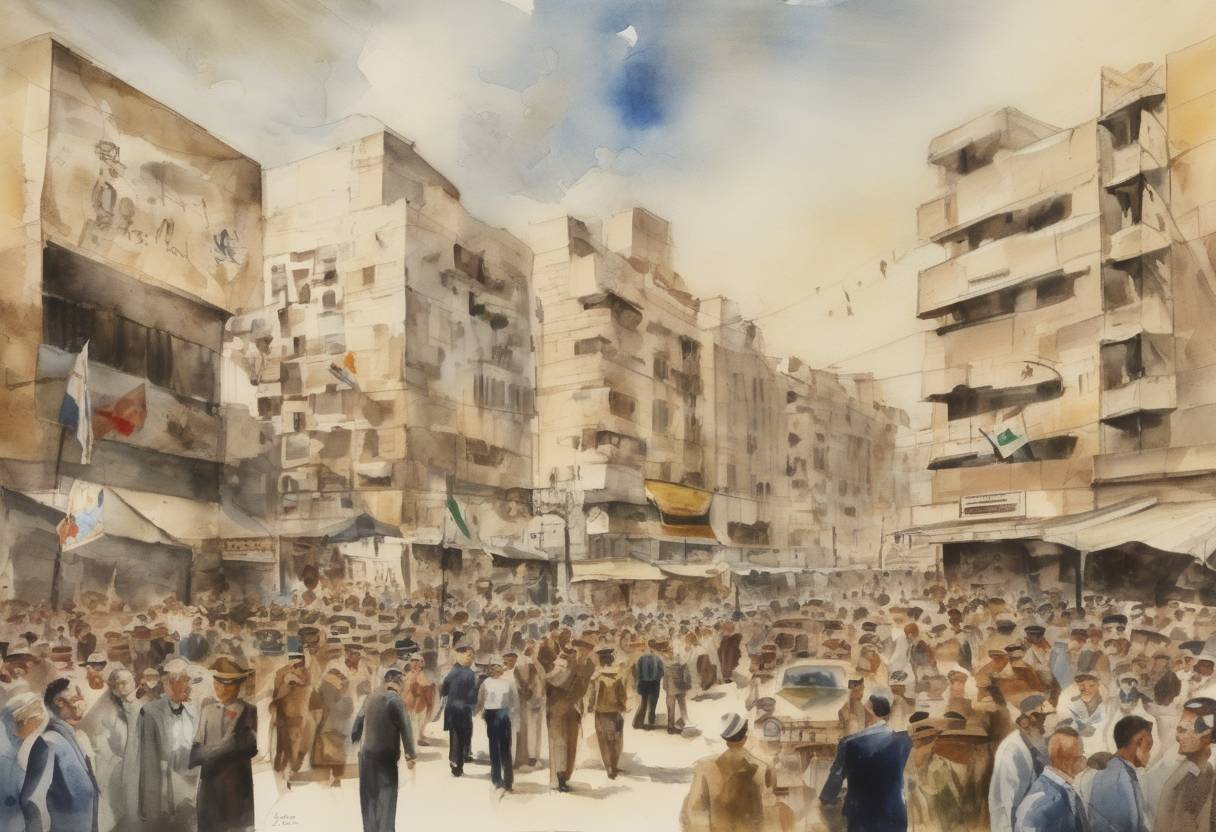
Proclamation of the State of Israel - May 14, 1948
On May 14, 1948, a pivotal moment in 20th-century history unfolded as David Ben-Gurion, the head of the Jewish Agency, proclaimed the establishment of the State of Israel. This event marked the end of the British Mandate for Palestine and set the stage for the 1948 Arab-Israeli War.
Context Leading Up to the Proclamation
The British Mandate
- Background: The British Mandate for Palestine was established after World War I, following the defeat of the Ottoman Empire. The League of Nations granted Britain the mandate in 1920, formalizing it in 1922.
- Jewish and Arab Nationalism: The period saw rising tensions between Jewish and Arab communities, both of whom aspired for national self-determination in the region.
- UN Partition Plan: In 1947, the United Nations proposed a partition plan to create separate Jewish and Arab states, with Jerusalem under international administration. The Jewish leadership accepted the plan, while Arab leaders rejected it.
The Lead-Up to May 14, 1948
- British Withdrawal: As the British prepared to withdraw, violence between Jewish and Arab communities intensified.
- Jewish Agency’s Preparations: Anticipating the end of the mandate, the Jewish Agency, led by Ben-Gurion, prepared to declare independence.
The Declaration of Independence
- Location: The declaration took place at the Tel Aviv Museum (now known as Independence Hall).
- The Declaration: David Ben-Gurion read the Declaration of Independence, which outlined the historical and moral justification for the establishment of a Jewish state in the land of Israel.
- Significance: The declaration emphasized the Jewish people’s historical connection to the land and their right to self-determination.
International Recognition
- United States and Soviet Union: The United States, under President Harry S. Truman, recognized the new state shortly after the declaration. The Soviet Union also extended recognition.
- Mixed International Reactions: While some countries quickly recognized Israel, others, particularly in the Arab world, opposed its creation.
The 1948 Arab-Israeli War
- Outbreak of War: Almost immediately after the declaration, neighboring Arab states invaded, marking the beginning of the 1948 Arab-Israeli War.
- Combatants: The conflict involved Israel and a coalition of Arab states, including Egypt, Transjordan (now Jordan), Syria, Lebanon, and Iraq.
- Consequences: The war resulted in significant territorial changes and the displacement of large populations, including Palestinian Arabs and Jewish communities from Arab countries.
Broader Historical Significance
- Establishment of Israel: The creation of Israel marked a significant moment in Jewish history, fulfilling a long-held aspiration for a sovereign state.
- Ongoing Conflict: The events of 1948 laid the groundwork for ongoing conflict in the region, with lasting implications for Middle Eastern geopolitics and the Israeli-Palestinian conflict.
The proclamation of the State of Israel on May 14, 1948, remains a defining moment in modern history, symbolizing both the realization of Jewish statehood and the complexities of regional politics that continue to resonate today.