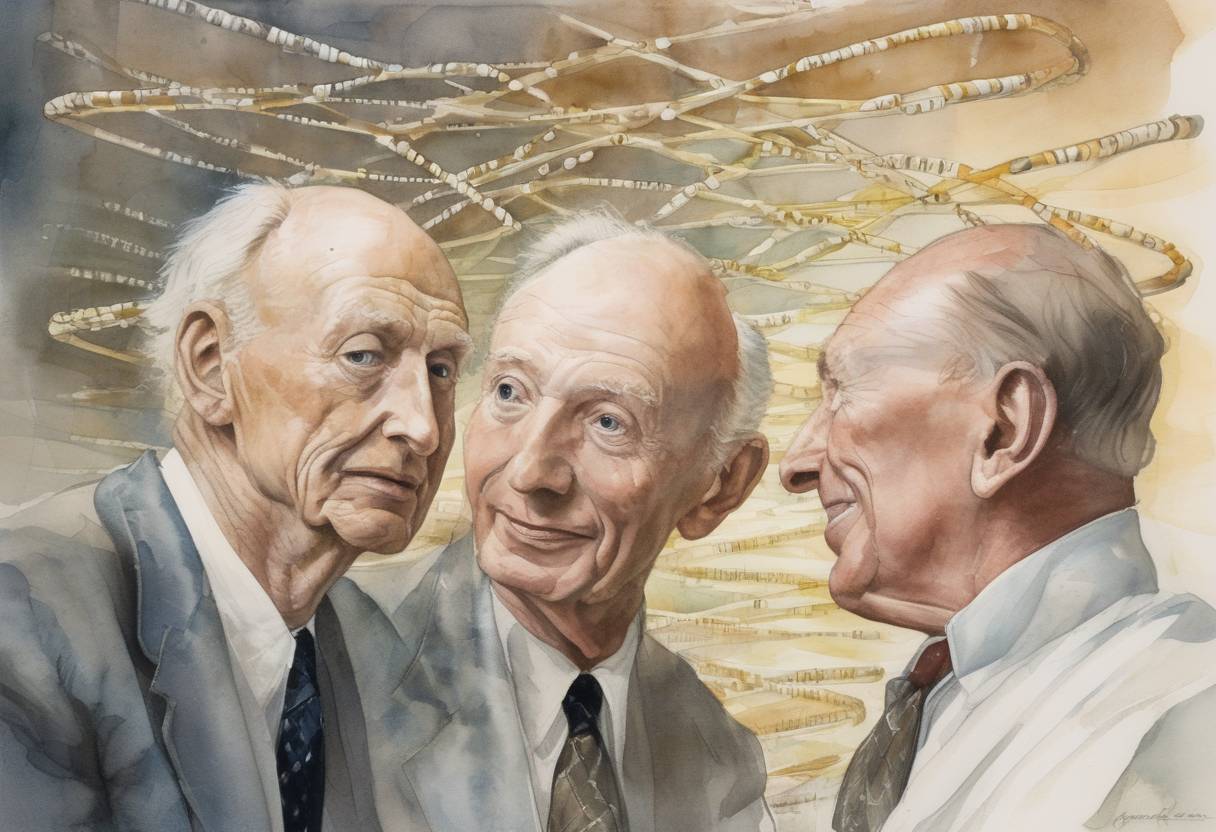
Discovery of the Double-Helix Structure of DNA
On February 28, 1953, James Watson and Francis Crick made a groundbreaking announcement that they had determined the double-helix structure of deoxyribonucleic acid (DNA). This discovery marked a pivotal moment in the field of genetics and has had profound implications for biology and medicine.
Context Leading to the Discovery
The early 20th century was a period of intense research into the nature of genetic material. By the 1940s, it was established that DNA was the molecule responsible for heredity, but its structure remained elusive. Several scientists, including Rosalind Franklin and Maurice Wilkins, were working on understanding DNA’s structure using X-ray crystallography.
Key Contributions
Rosalind Franklin: Her X-ray diffraction images of DNA, particularly the famous “Photo 51,” provided critical evidence of the helical structure. Franklin’s meticulous work laid the groundwork for understanding the physical dimensions of DNA.
Maurice Wilkins: Collaborating with Franklin at King’s College London, Wilkins also contributed to the X-ray diffraction studies that were crucial for Watson and Crick’s model.
The Announcement
Watson and Crick, working at the University of Cambridge, utilized available data, including Franklin’s X-ray images, to build a model of DNA. On February 28, 1953, they famously declared at the Eagle Pub in Cambridge that they had “found the secret of life.” Their model proposed that DNA was composed of two strands forming a double helix, with the strands held together by pairs of nitrogenous bases: adenine with thymine, and guanine with cytosine.
Significance and Aftermath
Publication: Their findings were published in the journal Nature on April 25, 1953, in a paper titled “Molecular Structure of Nucleic Acids: A Structure for Deoxyribose Nucleic Acid.”
Nobel Prize: In 1962, Watson, Crick, and Wilkins were awarded the Nobel Prize in Physiology or Medicine for their discoveries concerning the molecular structure of nucleic acids and its significance for information transfer in living material. Notably, Rosalind Franklin was not included, as the Nobel Prize is not awarded posthumously, and she had passed away in 1958.
Impact on Science: The elucidation of the DNA structure revolutionized the biological sciences, leading to advances in molecular biology, genetics, and biotechnology. It paved the way for the Human Genome Project and modern genetic engineering.
Broader Historical Significance
The discovery of the DNA double helix is considered one of the most significant scientific achievements of the 20th century. It provided a molecular explanation for the transmission of genetic information and has had far-reaching implications in fields such as medicine, forensic science, and anthropology.
In summary, the announcement by Watson and Crick on February 28, 1953, was a landmark event that transformed our understanding of life at the molecular level and continues to influence scientific research and innovation today.