Founding of Rio de Janeiro: March 1, 1565
1565 · Rio de Janeiro, Brazil
The city of Rio de Janeiro was founded by the Portuguese as a strategic defense against French privateers who were attempting to control the area.
January 1, 1502
Portuguese explorers, led by Pedro Álvares Cabral, become the first Europeans to sail into Guanabara Bay, which they initially mistook for the mouth of a river. They named it Rio de Janeiro.
Rio de Janeiro, Brazil | Portuguese Empire
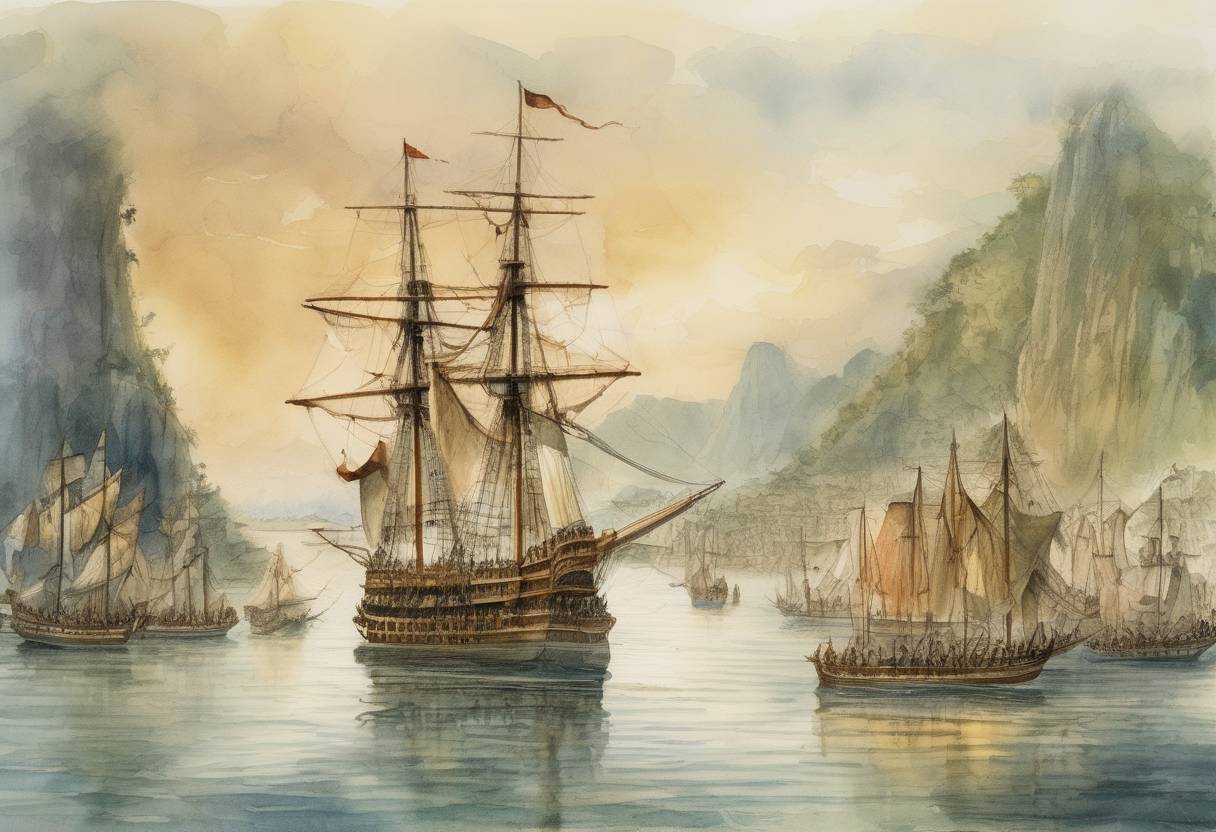
On January 1, 1502, a fleet of Portuguese explorers led by Pedro Álvares Cabral became the first Europeans to sail into what is now known as Guanabara Bay, located on the southeastern coast of Brazil. This event marked a significant moment in the Age of Exploration, as it contributed to the European understanding and mapping of the South American coastline.
The early 16th century was a period of intense maritime exploration for Portugal, driven by the desire to find new trade routes and expand their empire. Following Vasco da Gama’s successful voyage to India in 1498, the Portuguese Crown was eager to explore further along the Atlantic coast of South America. Pedro Álvares Cabral had already made a notable discovery in 1500 when he landed on the Brazilian coast, claiming it for Portugal.
As Cabral’s fleet navigated along the Brazilian coast, they encountered a large bay on January 1, 1502. Mistaking it for the mouth of a great river, the explorers named the area “Rio de Janeiro,” which translates to “River of January” in Portuguese. The name was a result of this initial misconception, as the bay was not a river but a large, sheltered harbor.
The discovery of Guanabara Bay was significant for several reasons:
Strategic Location: The bay’s natural harbor provided a strategic location for future Portuguese settlements and trade outposts. It later became the site of the city of Rio de Janeiro, which grew into a major port and cultural center.
Mapping and Exploration: This exploration contributed to the mapping of the South American coastline, enhancing European navigation and understanding of the New World.
Colonial Expansion: The discovery reinforced Portugal’s claims to territories in the Americas, as outlined in the Treaty of Tordesillas (1494), which divided the newly discovered lands outside Europe between Portugal and Spain.
In the years following the discovery, the Portuguese began to establish settlements along the Brazilian coast, exploiting the region’s resources and engaging in trade. Rio de Janeiro eventually became one of the most important cities in Brazil, playing a crucial role in the country’s history and development.
The initial exploration by Cabral and his fleet set the stage for further Portuguese expeditions and the eventual colonization of Brazil, leaving a lasting impact on the cultural and historical landscape of South America.
Source: en.wikipedia.org