The End of the Battle of Stalingrad: January 31, 1943
1943 · Stalingrad, Soviet Union
The Battle of Stalingrad comes to an end with the surrender of German forces, marking a significant turning point in World War II.
February 2, 1943
The Battle of Stalingrad ended with the surrender of German forces, marking a turning point in World War II.
Stalingrad, Soviet Union | Soviet Red Army
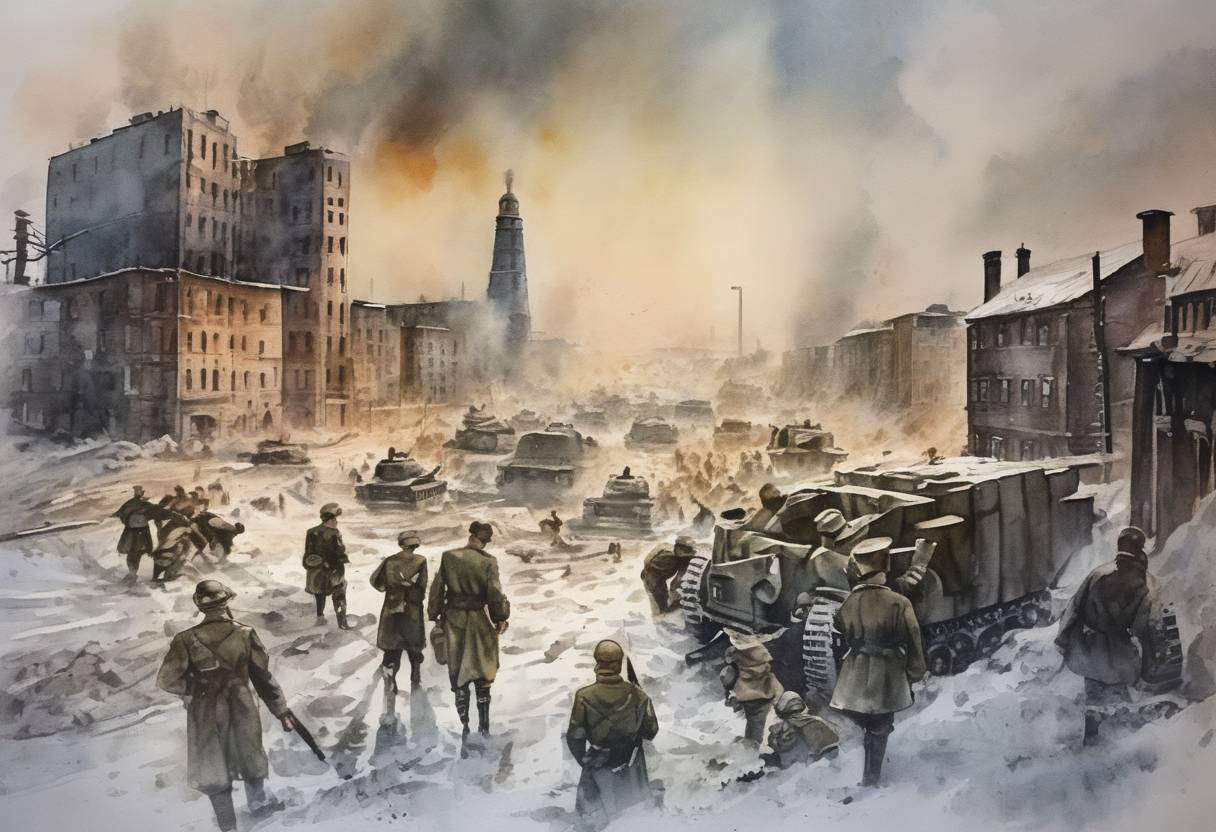
The Battle of Stalingrad, one of the most pivotal confrontations of World War II, concluded on February 2, 1943, with the surrender of German forces. This battle marked a significant turning point in the war, as it ended the German advance into the Soviet Union and began a series of Soviet offensives that would eventually lead to the fall of Nazi Germany.
Operation Barbarossa: Launched in June 1941, this was the code name for the German invasion of the Soviet Union. It aimed to conquer the western Soviet Union and repurpose its territory for German use.
Strategic Importance: Stalingrad, located on the Volga River, was a key industrial city and a vital transportation route. Its capture was crucial for the Germans to secure the southern flank and advance towards the oil-rich Caucasus region.
Initial German Success: The German 6th Army, led by General Friedrich Paulus, initially made significant advances, reaching the outskirts of Stalingrad by late summer 1942.
Urban Warfare: The battle was characterized by brutal close-quarters combat and urban warfare, with both sides suffering heavy casualties. The fighting was marked by its intensity and the determination of Soviet forces to defend the city.
Soviet Counteroffensive: On November 19, 1942, the Soviets launched Operation Uranus, a massive counteroffensive that encircled the German 6th Army and parts of the 4th Panzer Army, trapping them in Stalingrad.
Harsh Winter and Supply Shortages: The encircled German forces faced a harsh winter, dwindling supplies, and relentless Soviet attacks. Attempts to break the encirclement, including Operation Winter Storm, failed.
Surrender: On February 2, 1943, the remnants of the German 6th Army, exhausted and out of supplies, surrendered to the Soviet forces. General Paulus, promoted to Field Marshal by Hitler in a symbolic gesture, became the highest-ranking German officer to be captured.
Casualties: The battle resulted in staggering losses, with estimates of over 2 million total casualties, including soldiers and civilians.
Turning Point: The defeat at Stalingrad marked the first major loss for the German military on the Eastern Front and shifted the momentum in favor of the Allies. It bolstered Soviet morale and marked the beginning of a series of Soviet offensives that would eventually push German forces back to Berlin.
The Battle of Stalingrad is often cited as one of the greatest battles in history due to its scale, ferocity, and impact on the course of World War II. It demonstrated the resilience and strategic capabilities of the Soviet Union and highlighted the vulnerabilities of the German military strategy. The victory at Stalingrad became a symbol of Soviet resistance and a rallying point for the Allied forces.
Source: en.wikipedia.org