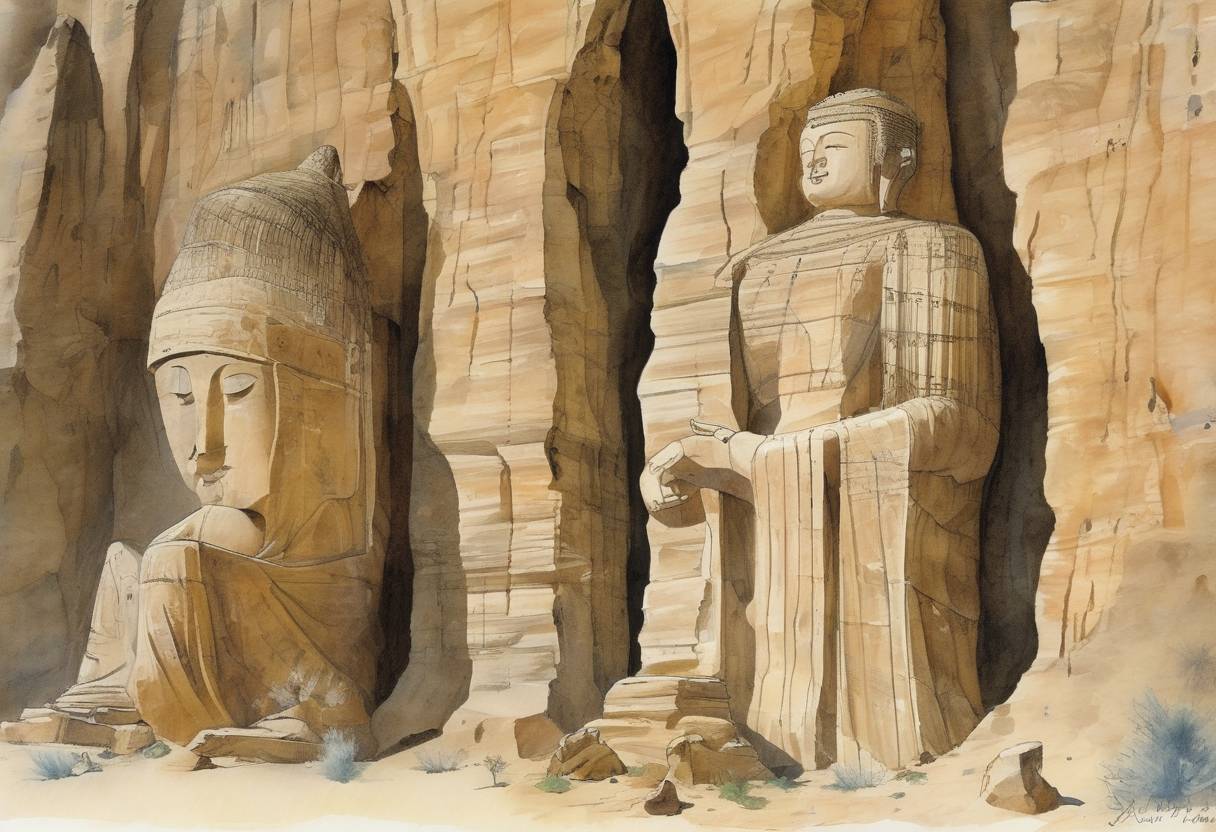
Destruction of the Bamiyan Buddhas - March 4, 2001
On March 4, 2001, the world witnessed a significant cultural and historical loss when the Taliban, the then-ruling regime in Afghanistan, destroyed two monumental Buddha statues in the Bamiyan Valley. These statues, known as the Bamiyan Buddhas, were carved into the side of a cliff in the Hazarajat region of central Afghanistan and had stood for over 1,500 years.
Historical Context
- Construction: The Bamiyan Buddhas were constructed in the 6th century during the height of the Gandhara civilization, which was a center of Buddhist culture and learning. The larger of the two statues stood at approximately 55 meters (180 feet), while the smaller was about 38 meters (125 feet) tall.
- Cultural Significance: These statues were not only significant religious symbols for Buddhists but also represented a fusion of Hellenistic and Indian art styles, reflecting the cultural exchanges along the Silk Road.
Events Leading to the Destruction
- Taliban Regime: The Taliban, an Islamic fundamentalist group, took control of Afghanistan in the mid-1990s. Their interpretation of Islamic law led to the prohibition of many cultural and religious practices they deemed un-Islamic.
- Decision to Destroy: In early 2001, the Taliban, led by Mullah Mohammed Omar, decreed that all non-Islamic statues in Afghanistan should be destroyed, claiming they were idols. Despite international pleas and offers to preserve the statues, the Taliban proceeded with their demolition.
The Destruction
- Method: The destruction was carried out using dynamite and artillery over several weeks, culminating in the complete obliteration of the statues by March 2001.
- International Reaction: The act was met with widespread condemnation from governments, cultural organizations, and religious leaders worldwide. It was seen as a significant loss to global cultural heritage and an affront to the principles of cultural preservation.
Aftermath and Significance
- Cultural Impact: The destruction of the Bamiyan Buddhas highlighted the vulnerability of cultural heritage sites in conflict zones and sparked a global dialogue on the protection of such sites.
- Reconstruction Efforts: Since the fall of the Taliban regime in 2001, there have been discussions and efforts to reconstruct the statues, though challenges remain due to the extensive damage and political instability in the region.
- Symbol of Resilience: The site of the Bamiyan Buddhas has become a symbol of resilience and a reminder of the importance of preserving cultural heritage for future generations.
The destruction of the Bamiyan Buddhas remains a poignant example of the impact of ideological extremism on cultural heritage and continues to influence international policies on cultural preservation.