Italy Surrenders to the Allies - September 8, 1943
1943 · Rome, Italy
Italy surrenders to the Allies during World War II.
June 10, 1940
Italy declared war on France and the United Kingdom during World War II.
Rome, Italy | Kingdom of Italy
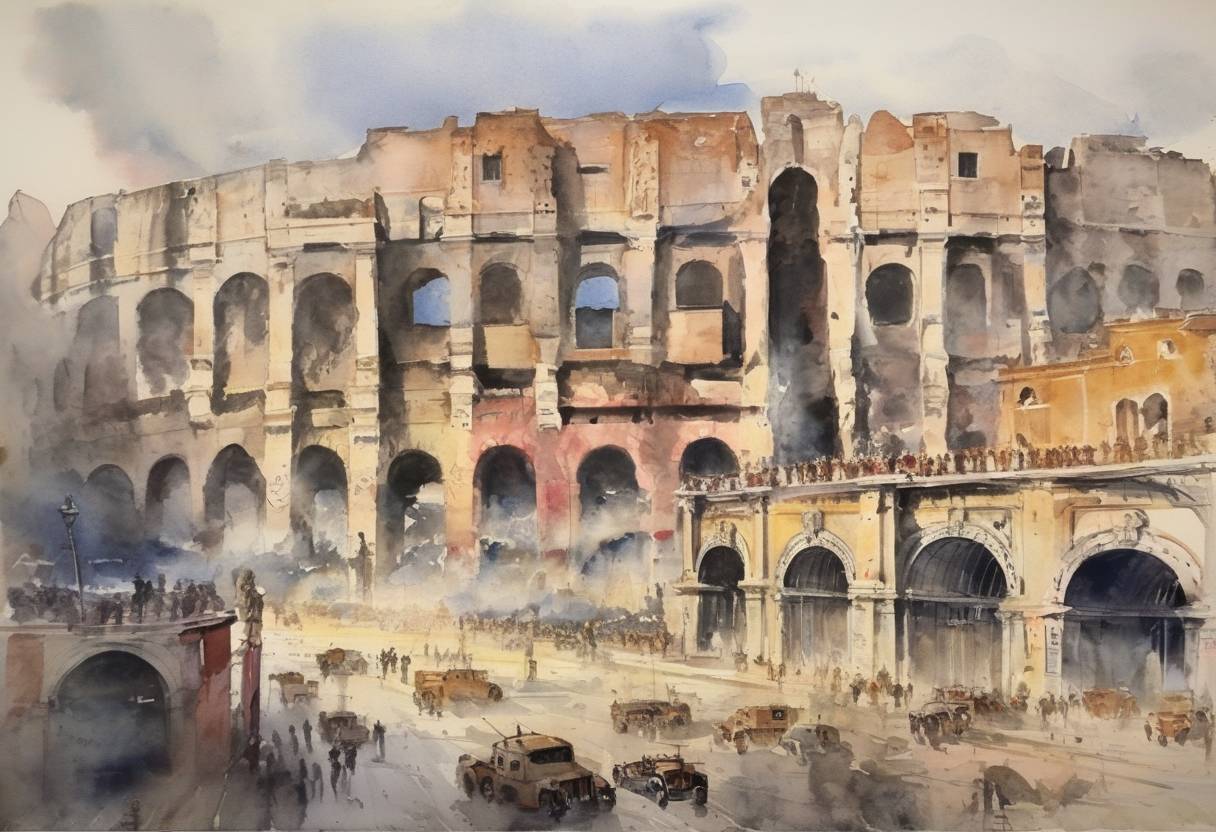
On June 10, 1940, Italy, under the leadership of Benito Mussolini, officially declared war on France and the United Kingdom, marking its entry into World War II on the side of the Axis powers. This decision was a significant turning point in the war, as it expanded the conflict into the Mediterranean and opened new fronts.
Fascist Ambitions: Mussolini had long harbored ambitions of expanding Italy’s influence and recreating a Roman Empire-like dominance in the Mediterranean. Aligning with Nazi Germany, Italy sought to capitalize on the rapid successes of the German military in Europe.
The Fall of France: By June 1940, Germany had launched a successful blitzkrieg campaign against France, which was on the brink of collapse. Mussolini saw this as an opportune moment to join the war and gain territorial concessions from a weakened France.
Axis Alliance: Italy had signed the Pact of Steel with Germany in 1939, committing to mutual support in the event of war. Mussolini’s declaration was partly to honor this alliance and partly to ensure Italy’s place at the post-war negotiating table.
Mussolini’s Speech: On June 10, Mussolini addressed a large crowd from the balcony of the Palazzo Venezia in Rome, announcing Italy’s entry into the war. He declared that Italy could not remain passive while the Axis powers reshaped Europe.
Military Readiness: Despite the declaration, Italy’s military was not fully prepared for a prolonged conflict. The Italian armed forces were under-equipped and lacked the industrial capacity of their German allies.
Opening of New Fronts: Italy’s declaration of war opened new fronts in the Mediterranean and North Africa. Italian forces launched an invasion of southern France and began military operations in British-controlled territories in Africa.
Allied Response: The United Kingdom and France responded by declaring war on Italy. The British Royal Navy quickly moved to secure the Mediterranean, targeting Italian naval and air bases.
Mediterranean Theater: Italy’s entry into the war significantly impacted the Mediterranean theater, leading to prolonged campaigns in North Africa and the Mediterranean islands.
Axis Strategy: Italy’s involvement forced Germany to divert resources to support its weaker ally, impacting the overall Axis strategy and stretching their military capabilities.
Post-War Consequences: Italy’s participation in the war ultimately led to significant losses and contributed to the downfall of Mussolini’s regime. The war left Italy economically devastated and politically unstable, leading to a post-war period of reconstruction and realignment.
Italy’s declaration of war on June 10, 1940, was a pivotal moment in World War II, illustrating the complex alliances and strategic calculations that characterized the conflict. Despite initial ambitions, Italy’s involvement would prove costly and ultimately contribute to the Axis powers’ defeat.
Source: en.wikipedia.org