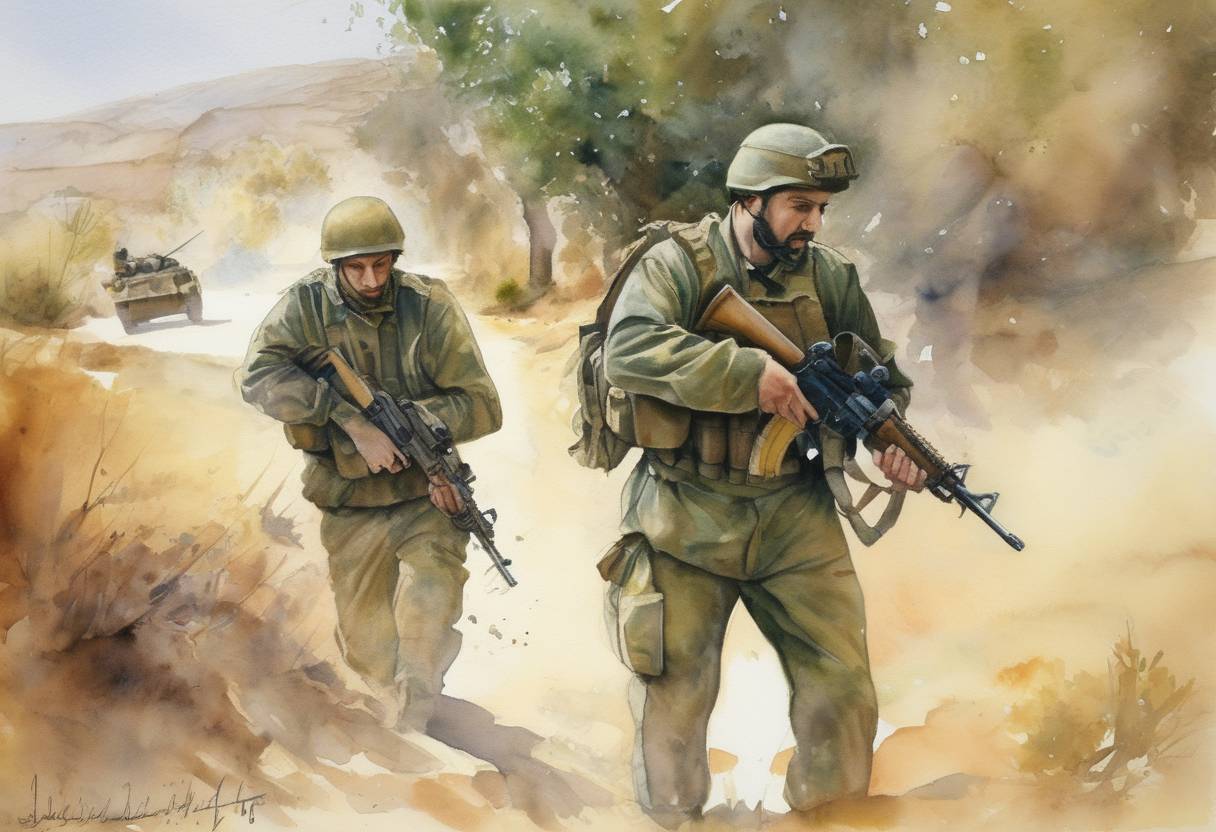
The 2006 Lebanon War: Hezbollah’s Cross-Border Raid
On July 12, 2006, a significant and provocative event occurred that escalated into a full-scale conflict known as the 2006 Lebanon War. On this day, Hezbollah, a Shiite militant group and political party based in Lebanon, launched a cross-border raid into northern Israel. This operation resulted in the capture of two Israeli soldiers, Ehud Goldwasser and Eldad Regev, and the deaths of eight others. The incident marked the beginning of a 34-day military conflict between Hezbollah and Israel.
Context Leading Up to the Raid
The roots of the 2006 Lebanon War can be traced back to longstanding tensions between Israel and Hezbollah. Since Israel’s withdrawal from southern Lebanon in 2000, Hezbollah had maintained a presence along the border, occasionally engaging in skirmishes with Israeli forces. The group, which receives support from Iran and Syria, had been building its military capabilities and political influence within Lebanon.
The border region remained volatile, with sporadic exchanges of fire and ongoing disputes over territories such as the Shebaa Farms. Hezbollah’s stated aim was to pressure Israel into releasing Lebanese prisoners and to assert its role as a defender against Israeli aggression.
On the morning of July 12, 2006, Hezbollah fighters crossed into Israel near the town of Zar’it. They attacked an Israeli military patrol, killing three soldiers and capturing two. In the ensuing chaos, five more Israeli soldiers were killed in a failed rescue attempt. Hezbollah’s leader, Hassan Nasrallah, announced the capture of the soldiers, demanding the release of Lebanese prisoners in exchange for their return.
Israel’s response was swift and forceful. The Israeli government, led by Prime Minister Ehud Olmert, viewed the raid as an act of war. Israel launched a military campaign against Hezbollah targets in Lebanon, aiming to weaken the group’s military capabilities and secure the release of the captured soldiers.
The Conflict and Its Consequences
The conflict quickly escalated, with Israel conducting extensive airstrikes across Lebanon, targeting Hezbollah’s infrastructure, including its headquarters in Beirut, and key transportation routes. Hezbollah retaliated by firing thousands of rockets into northern Israel, reaching as far as the city of Haifa.
The war resulted in significant casualties and destruction. Over 1,000 Lebanese, mostly civilians, were killed, and approximately 4,500 were injured. On the Israeli side, 165 people, including soldiers and civilians, lost their lives. The conflict displaced around one million Lebanese and half a million Israelis.
The war ended on August 14, 2006, following a United Nations-brokered ceasefire under Resolution 1701. The resolution called for the disarmament of Hezbollah, the withdrawal of Israeli forces from Lebanon, and the deployment of the Lebanese army and an expanded UN peacekeeping force in southern Lebanon.
Broader Historical Significance
The 2006 Lebanon War had lasting implications for the region. It highlighted the complexities of Israeli-Lebanese relations and the influence of external actors like Iran and Syria. The conflict also underscored the challenges of asymmetric warfare, as a non-state actor like Hezbollah was able to engage a conventional military power like Israel.
The war’s aftermath saw Hezbollah emerge with increased political clout in Lebanon, despite the heavy toll on the country’s infrastructure and civilian population. For Israel, the conflict prompted introspection and criticism over military preparedness and strategic decision-making.
In summary, the events of July 12, 2006, and the subsequent war reshaped the geopolitical landscape of the Middle East, influencing future conflicts and diplomatic efforts in the region.