Assassination of Emperor Elagabalus and Ascension of Severus Alexander
222 · Rome, Roman Empire
Emperor Elagabalus is assassinated by the Praetorian Guard during a revolt. His cousin, Severus Alexander, is proclaimed emperor.
June 1, 0193
Didius Julianus, Roman Emperor, is assassinated in Rome by order of the Senate.
Rome, Roman Empire | Roman Senate
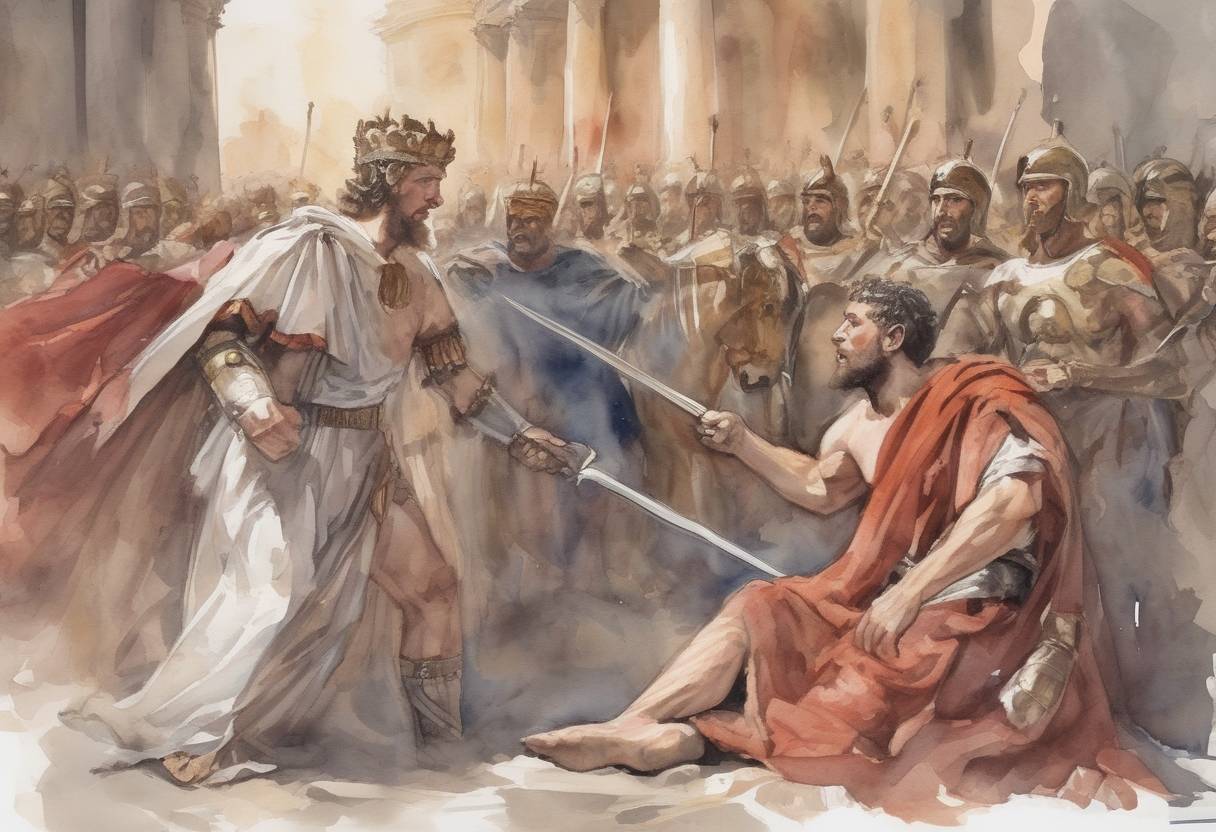
Didius Julianus became Roman Emperor under unusual and tumultuous circumstances. His rise to power was marked by the infamous auction of the Roman Empire by the Praetorian Guard following the assassination of Emperor Pertinax. On March 28, 193, Julianus outbid his rival, Titus Flavius Sulpicianus, by offering a substantial donative to the guards, securing his position as emperor.
Julianus’s reign was fraught with challenges from the outset. His legitimacy was questioned due to the manner of his ascension, and he faced widespread disapproval from both the Roman Senate and the general populace. His rule was further destabilized by the emergence of several claimants to the throne, each commanding significant military support:
As Severus advanced towards Rome with his legions, Julianus’s position became increasingly untenable. The Senate, recognizing the inevitability of Severus’s victory and seeking to preserve their own status, decided to act against Julianus. On June 1, 193, the Senate officially condemned Julianus to death. He was assassinated in the palace by a soldier, marking the end of his brief and troubled reign.
The assassination of Didius Julianus paved the way for Septimius Severus to enter Rome unopposed. Severus’s ascension marked the beginning of the Severan Dynasty, which would rule the Roman Empire for several decades. This period was characterized by military expansion and significant administrative reforms.
Julianus’s downfall highlighted the volatility of the Roman imperial succession during this era, underscoring the critical role of military power and the Praetorian Guard in determining the fate of emperors. His assassination also reflected the Senate’s diminishing influence, as they were compelled to align with military leaders to maintain their relevance.
In summary, the assassination of Didius Julianus was a pivotal moment in Roman history, illustrating the complex interplay of power, military influence, and political maneuvering that defined the Roman Empire during the late 2nd century.
Source: en.wikipedia.org