The Egyptian Military Crackdown on August 14, 2013
2013 · Cairo, Egypt
The Egyptian military launched a violent crackdown on supporters of ousted President Mohamed Morsi in Cairo, resulting in hundreds of deaths.
February 11, 2011
Egyptian President Hosni Mubarak resigned after 18 days of mass protests, ending his 30-year rule.
Cairo, Egypt | Egyptian Government
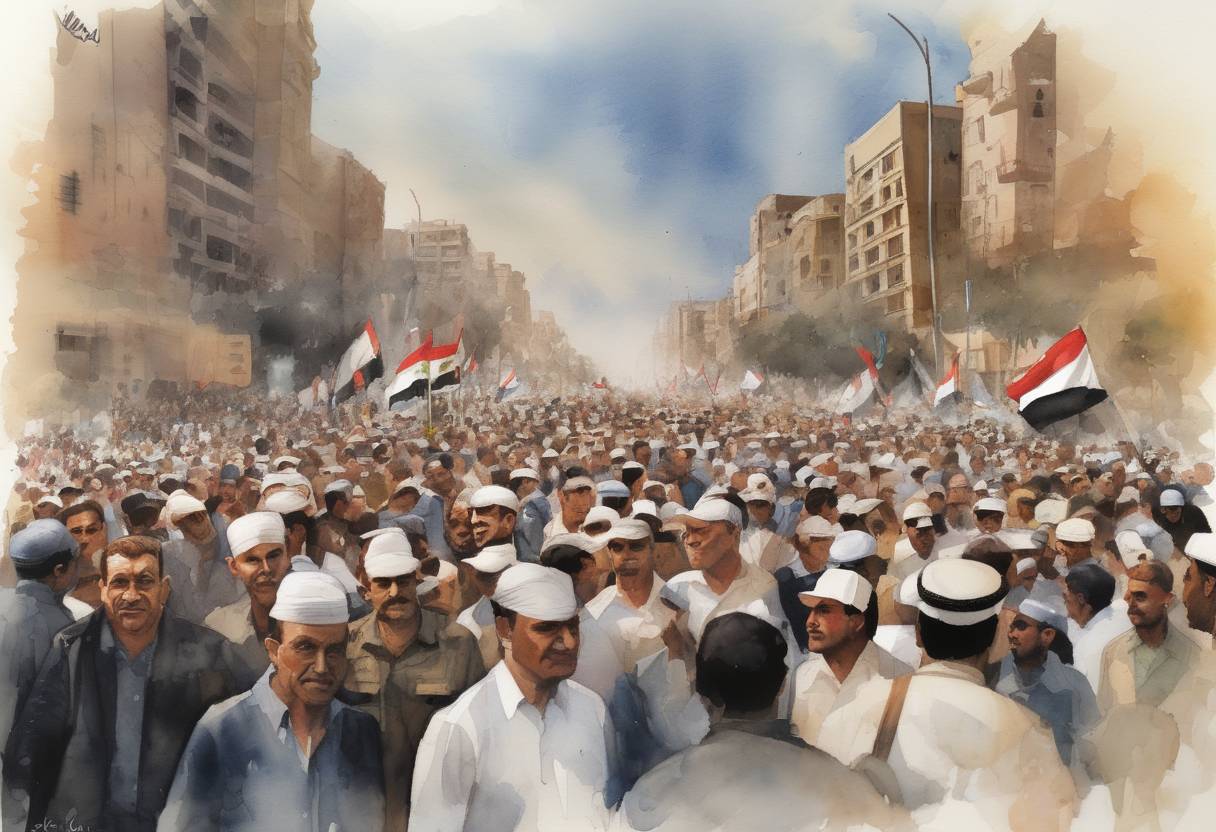
On February 11, 2011, Egyptian President Hosni Mubarak resigned from office, marking the end of his 30-year rule. This pivotal moment in Egyptian history was the culmination of 18 days of mass protests, part of a larger wave of uprisings known as the Arab Spring that swept across the Middle East and North Africa.
Hosni Mubarak’s Rule: Mubarak came to power in 1981 following the assassination of President Anwar Sadat. His presidency was characterized by a strong authoritarian regime, with a focus on maintaining stability and security, often at the expense of political freedoms and human rights.
Economic and Social Issues: Under Mubarak, Egypt faced significant economic challenges, including high unemployment, widespread poverty, and corruption. These issues contributed to growing public discontent.
Start of the Uprising: The protests began on January 25, 2011, known as the “Day of Revolt,” when thousands of Egyptians took to the streets demanding political reform, economic improvements, and an end to Mubarak’s rule.
Tahrir Square: The epicenter of the protests was Cairo’s Tahrir Square, where demonstrators gathered in large numbers, calling for Mubarak’s resignation. The protests were largely peaceful but occasionally met with violent crackdowns by security forces.
Role of Social Media: Social media played a crucial role in organizing and sustaining the protests, allowing activists to communicate and share information rapidly.
Pressure Mounts: As the protests continued, pressure on Mubarak increased both domestically and internationally. The Egyptian military, a powerful institution in the country, eventually signaled its support for the protesters’ demands.
Announcement: On February 11, Vice President Omar Suleiman announced Mubarak’s resignation on state television. Mubarak handed over power to the Supreme Council of the Armed Forces (SCAF), which promised to oversee a transition to democratic governance.
Transition Period: Following Mubarak’s resignation, Egypt entered a period of political transition. The military’s role in this transition was critical, though it faced criticism for its handling of the process.
Elections and Political Change: In the years following Mubarak’s resignation, Egypt experienced significant political changes, including the election of Mohamed Morsi in 2012 and the subsequent military coup in 2013 that brought Abdel Fattah el-Sisi to power.
Impact of the Arab Spring: Mubarak’s resignation was a significant moment in the Arab Spring, inspiring similar movements in other countries and highlighting the power of popular protest in effecting political change.
Mubarak’s resignation marked a turning point in Egyptian history, reflecting the deep-seated desire for change among the Egyptian populace and setting the stage for ongoing political and social transformation in the region.
Source: www.bbc.com