Arrival of Portuguese Merchants in Japan - July 1, 1543
1543 · Tanegashima, Japan
Three Portuguese merchants arrive in Tanegashima, Japan, and introduce firearms, the first documented arrival of Europeans in Japan.
April 22, 1500
Portuguese navigator Pedro Álvares Cabral becomes the first European to sight Brazil, claiming it for Portugal.
Porto Seguro, Brazil | Kingdom of Portugal
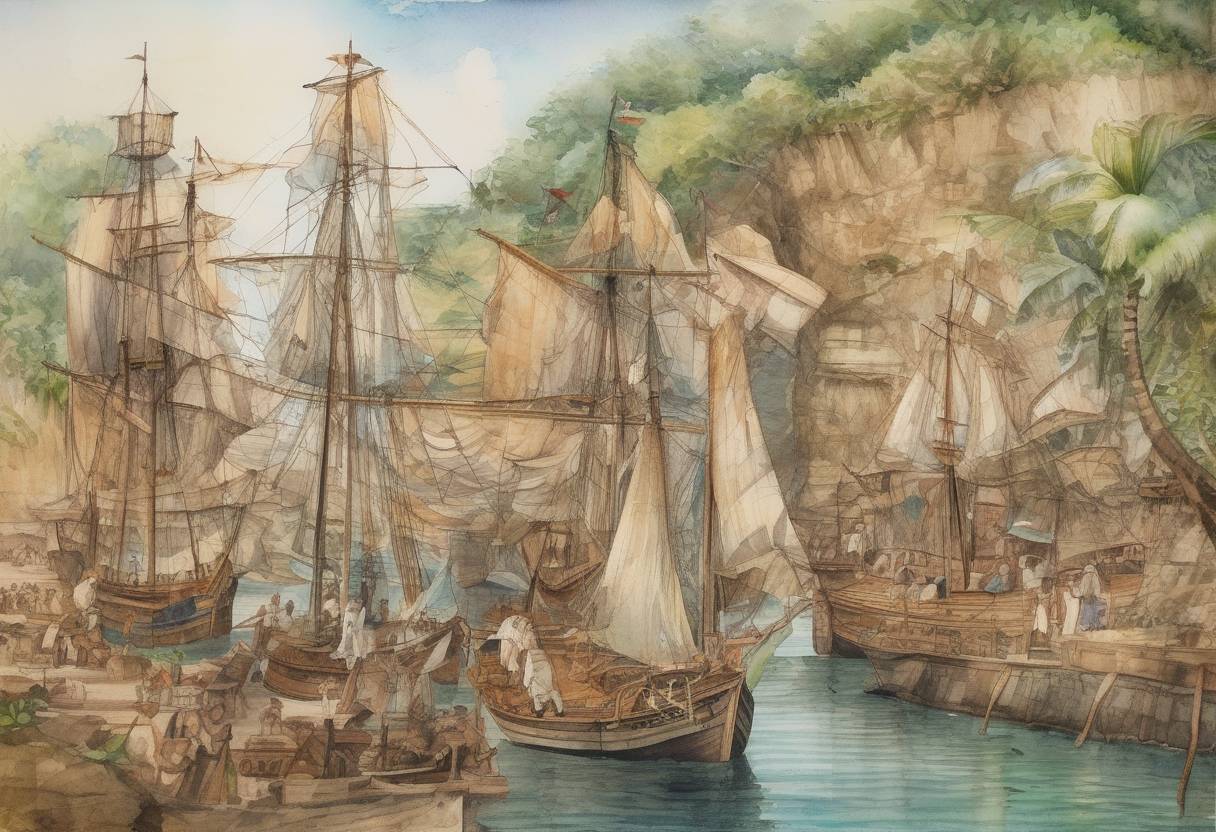
On April 22, 1500, Portuguese navigator Pedro Álvares Cabral became the first European to sight the land that would later be known as Brazil. This event marked a significant moment in the Age of Discovery and had lasting implications for the history of South America and the Portuguese Empire.
The late 15th and early 16th centuries were a period of intense maritime exploration for European powers, particularly Portugal and Spain. Following Vasco da Gama’s successful voyage to India in 1498, the Portuguese were eager to establish a sea route to the lucrative markets of Asia. King Manuel I of Portugal commissioned Pedro Álvares Cabral to lead a fleet to India, intending to capitalize on da Gama’s discoveries.
Cabral’s fleet, consisting of 13 ships and around 1,200 men, set sail from Lisbon on March 9, 1500. The expedition followed a southwesterly course across the Atlantic Ocean, a route that took advantage of the prevailing winds and currents. This path inadvertently led them to the coast of South America.
On April 22, 1500, Cabral and his crew sighted land, which they initially named “Ilha de Vera Cruz” (Island of the True Cross). The land was later renamed “Terra de Santa Cruz” (Land of the Holy Cross) before eventually becoming known as Brazil, likely due to the brazilwood tree found in the region, which was highly valued for its red dye.
Cabral and his men made contact with the indigenous peoples of the area, who were part of the Tupi-Guarani cultural group. The Portuguese conducted a formal ceremony to claim the land for Portugal, in accordance with the Treaty of Tordesillas (1494), which divided newly discovered lands outside Europe between Portugal and Spain.
Cabral’s discovery of Brazil was initially seen as a side note to his primary mission to India. However, the region’s potential for resources, particularly brazilwood and later sugarcane, led to increased Portuguese interest and eventual colonization.
The establishment of Brazil as a Portuguese colony had profound effects on the indigenous populations, leading to significant cultural and demographic changes due to European settlement, the introduction of African slavery, and the spread of Christianity.
Cabral’s discovery also reinforced Portugal’s position as a leading maritime power during the Age of Discovery, contributing to its vast empire that spanned Africa, Asia, and South America.
In summary, Pedro Álvares Cabral’s sighting of Brazil on April 22, 1500, was a pivotal event in global history, setting the stage for the development of one of the largest countries in the world and marking a key moment in the era of European exploration and colonization.
Source: en.wikipedia.org