Inauguration of the First Transatlantic Telegraph Cable
1858 · Washington, D.C., United States
U.S. President James Buchanan inaugurated the first transatlantic telegraph cable by exchanging greetings with Queen Victoria of the United Kingdom.
July 27, 1866
The Atlantic Cable was successfully completed, allowing for telegraphic communication between Europe and North America.
Heart's Content, Canada | Atlantic Telegraph Company
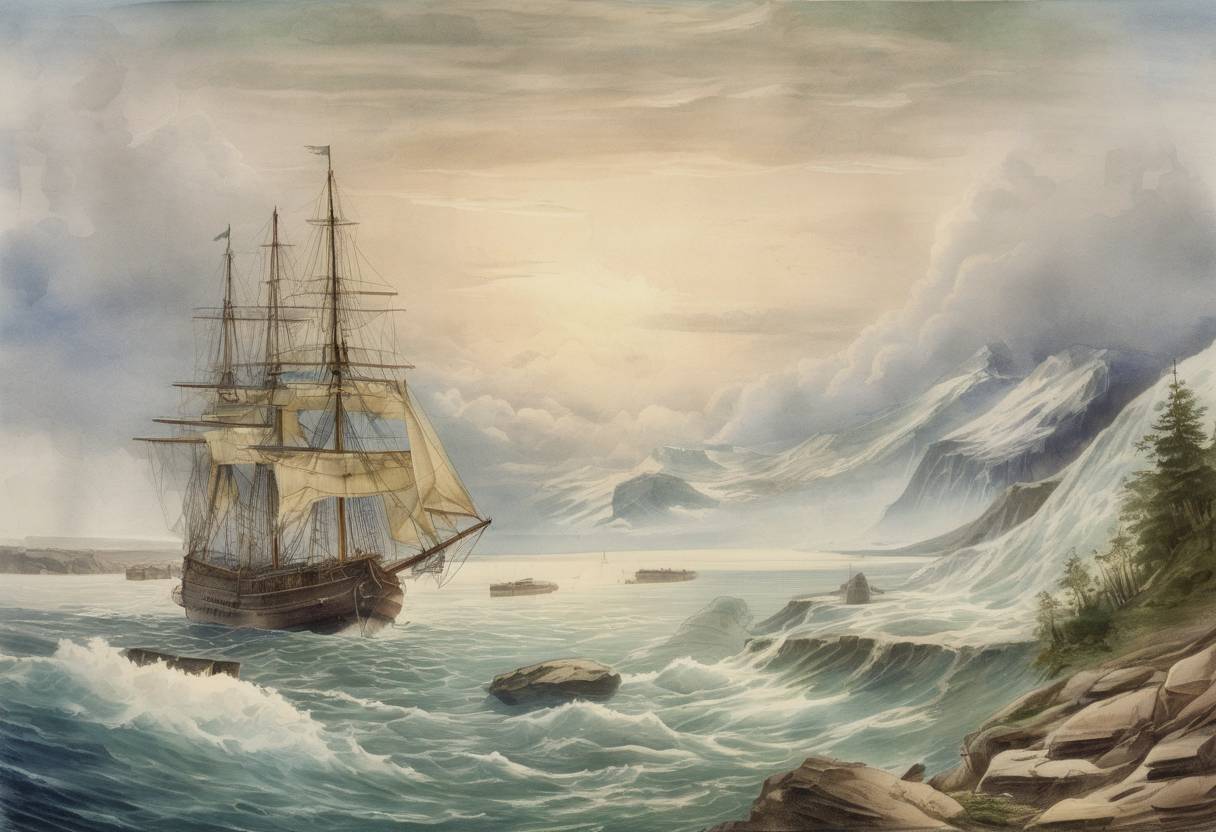
On July 27, 1866, a significant milestone in global communication was achieved with the successful completion of the Atlantic Cable, enabling telegraphic communication between Europe and North America. This event marked a pivotal moment in the history of international communications, effectively shrinking the world by allowing near-instantaneous communication across the Atlantic Ocean.
The idea of a transatlantic telegraph cable was first proposed in the mid-19th century, driven by the rapid expansion of telegraph networks on land. The challenge was to extend this network across the vast Atlantic Ocean, a feat that required overcoming significant technical and financial hurdles.
1858 Attempt: The first attempt to lay a transatlantic cable was made in 1858. The cable was laid by the ships HMS Agamemnon and USS Niagara. Although initial messages were successfully transmitted, the cable failed after just three weeks due to inadequate insulation and the high voltage used in transmission.
Technical Challenges: The early failures highlighted the need for better materials and techniques. The cable had to withstand the immense pressure and cold of the deep ocean, and the technology for transmitting signals over such a long distance needed refinement.
The successful laying of the 1866 cable was spearheaded by Cyrus West Field, an American businessman who had been a driving force behind the project since its inception. The project involved several key innovations and improvements:
Improved Cable Design: The new cable was more robust, with better insulation and a stronger core, designed to withstand the harsh conditions of the ocean floor.
The Great Eastern: The cable was laid by the SS Great Eastern, the largest ship of its time, which provided the stability and capacity needed for such a massive undertaking.
Technical Advances: Advances in telegraphy, including the use of more sensitive receiving equipment and better signal boosting techniques, were crucial to the cable’s success.
The completion of the Atlantic Cable had profound implications:
Communication Revolution: It reduced the time for messages to travel between Europe and North America from weeks (by ship) to mere minutes, revolutionizing international communication.
Economic and Political Impact: The cable facilitated faster business transactions and diplomatic communications, significantly impacting global trade and politics.
Foundation for Future Developments: The success of the Atlantic Cable laid the groundwork for future undersea cables, eventually leading to the global telecommunications network we rely on today.
The successful operation of the 1866 cable inspired further investments in undersea telegraphy, leading to the laying of additional cables and the expansion of the global telegraph network. This achievement is often seen as a precursor to the modern era of global connectivity, highlighting the importance of innovation and perseverance in overcoming technological challenges.
In summary, the completion of the Atlantic Cable on July 27, 1866, was a landmark event that transformed global communication, setting the stage for the interconnected world we live in today.
Source: en.wikipedia.org