Death of Emperor Leo II and Ascension of Zeno
474 · Constantinople, Byzantine Empire
Emperor Leo II dies, and his father Zeno becomes the sole ruler of the Byzantine Empire.
February 7, 0457
Leo I becomes the Byzantine Emperor, marking the beginning of his reign which would last until 474. His rule is noted for strengthening the Eastern Roman Empire and establishing the Leonid dynasty.
Constantinople, Byzantine Empire | Byzantine Empire
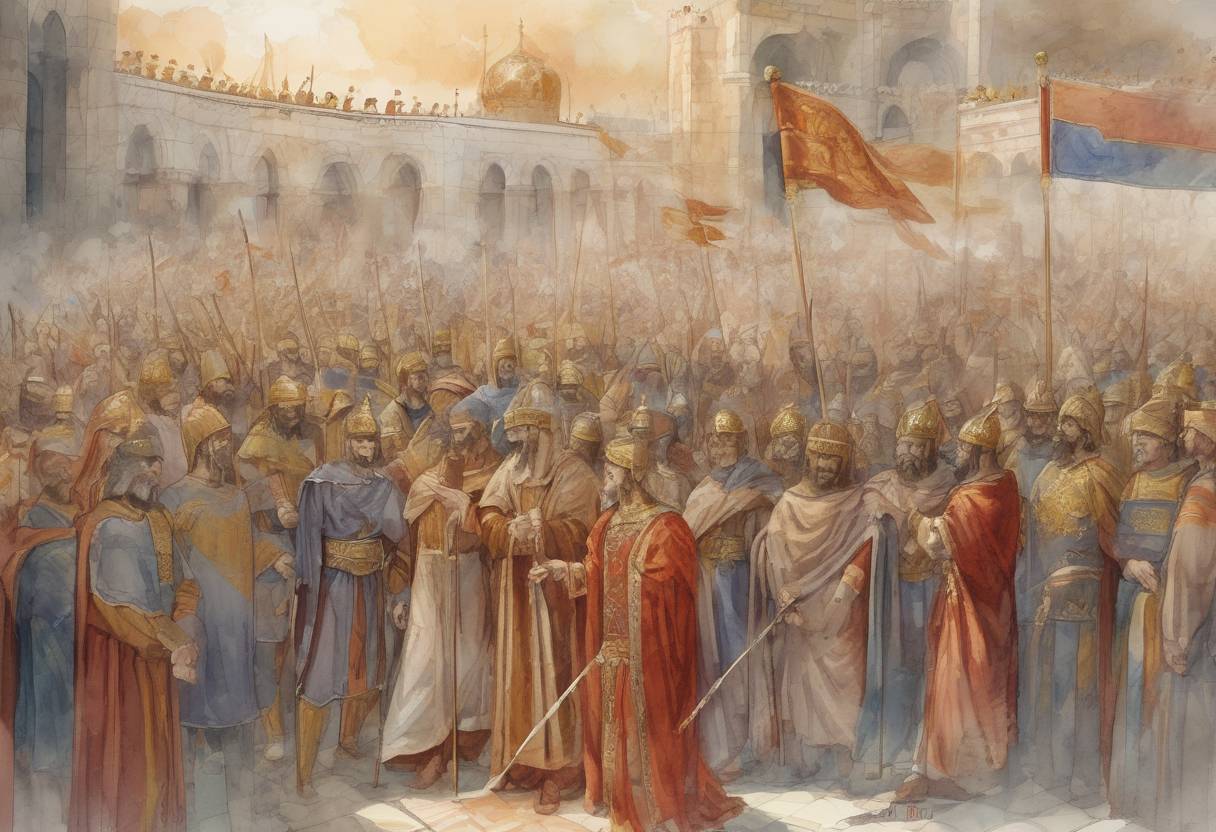
On February 7, 457, Leo I ascended to the throne as the Byzantine Emperor, marking the beginning of a reign that would last until 474. His accession is a significant event in the history of the Eastern Roman Empire, as it heralded the establishment of the Leonid dynasty and a period of consolidation and strengthening for the empire.
Before Leo I’s rise to power, the Eastern Roman Empire was under the rule of Marcian, who died in early 457. The power vacuum left by Marcian’s death created an opportunity for the influential military commander Aspar, a powerful figure of Gothic descent, to exert his influence. Aspar played a crucial role in Leo’s selection as emperor, likely believing he could control the new ruler.
Military Reforms: Leo I is noted for his efforts to strengthen the military capabilities of the Eastern Roman Empire. He sought to reduce the influence of barbarian factions within the military, which had grown under previous emperors. This included diminishing the power of Aspar and his Gothic allies.
Diplomatic Relations: Leo worked to improve diplomatic relations with neighboring powers, including the Western Roman Empire and various barbarian tribes. His reign saw a focus on stabilizing the empire’s borders and securing its territories.
Dynastic Foundations: Leo I’s reign marked the beginning of the Leonid dynasty, which would continue to rule the Eastern Roman Empire until the end of the 5th century. His efforts to establish a stable and enduring dynasty were crucial for the continuity of the empire.
Succession Planning: Leo I took steps to ensure a smooth succession by appointing his son-in-law, Zeno, as co-emperor. This move was part of his broader strategy to secure the dynasty’s future and maintain stability within the empire.
Leo I’s reign is often remembered for its contributions to the stabilization and strengthening of the Eastern Roman Empire during a period of significant challenges. His efforts to reduce barbarian influence in the military and his diplomatic initiatives helped lay the groundwork for the empire’s resilience in the face of external threats.
The Leonid dynasty, established by Leo I, played a crucial role in the continuation of the Eastern Roman Empire, which would eventually evolve into the Byzantine Empire. His reign set a precedent for future emperors in terms of military and administrative reforms, contributing to the empire’s longevity.
Leo I’s legacy is one of strategic foresight and effective governance, ensuring that the Eastern Roman Empire remained a formidable power in the region during a time of great upheaval and change.
Source: en.wikipedia.org