1763 · Hubertusburg, Holy Roman Empire (now Germany)
The Treaty of Hubertusburg was signed, officially ending the Third Silesian War, part of the Seven Years' War, between Prussia and Austria.
May 22, 1762
Sweden and Prussia signed the Treaty of Hamburg, ending Sweden's involvement in the Seven Years' War.
Hamburg, Germany | Sweden and Prussia
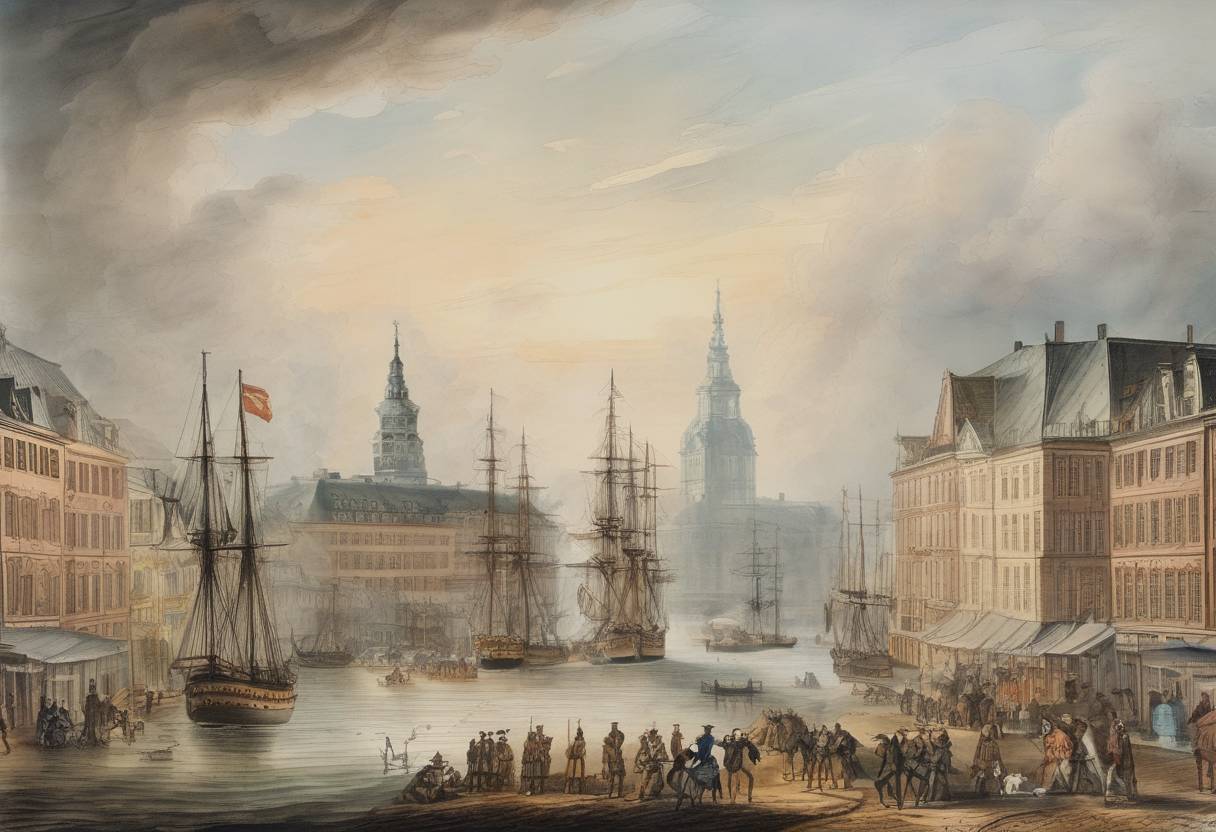
On May 22, 1762, Sweden and Prussia signed the Treaty of Hamburg, marking the end of Sweden’s participation in the Seven Years’ War. This treaty was a significant step in the complex series of negotiations that gradually brought the broader conflict to a close.
The Seven Years’ War (1756-1763) was a global conflict that involved most of the great powers of the time. It is often considered the first “world war” due to its scale and the number of theaters involved, including Europe, North America, Central America, West Africa, India, and the Philippines.
Sweden entered the war in 1757, aligning with France, Austria, and Russia against Prussia and Great Britain. The Swedish involvement was primarily driven by the desire to regain territories lost to Prussia in previous conflicts, particularly Pomerania.
Military Stalemate: By the early 1760s, the war had reached a stalemate in many regions. Sweden’s military efforts in Pomerania were largely unsuccessful, and the costs of war were mounting.
Changing Alliances: The death of Empress Elizabeth of Russia in January 1762 and the subsequent ascension of Peter III, who admired Frederick the Great of Prussia, led to a dramatic shift in alliances. Russia withdrew from the war, significantly weakening the anti-Prussian coalition.
Economic Strain: The prolonged conflict placed a heavy economic burden on Sweden, leading to increased pressure to seek peace.
The Treaty of Hamburg was negotiated between Sweden and Prussia, with the primary aim of restoring peace between the two nations. The terms of the treaty included:
Status Quo Ante Bellum: The treaty essentially restored the territorial status quo, meaning that no significant territorial changes occurred as a result of the treaty.
End of Hostilities: Both nations agreed to cease military operations against each other, effectively ending Sweden’s involvement in the war.
Sweden’s Withdrawal: The treaty allowed Sweden to extricate itself from a costly and largely unproductive conflict, enabling it to focus on internal affairs and economic recovery.
Impact on the War: The withdrawal of Sweden, along with Russia’s earlier exit, isolated Austria and France, contributing to the eventual conclusion of the Seven Years’ War with the Treaty of Paris in 1763.
Long-term Effects: The Treaty of Hamburg exemplified the shifting alliances and diplomatic maneuvers characteristic of 18th-century European politics. It highlighted the limitations of Sweden’s military ambitions and underscored the importance of diplomatic resolution in international conflicts.
In summary, the Treaty of Hamburg was a crucial step in the de-escalation of the Seven Years’ War, reflecting the broader geopolitical shifts of the period and the complex interplay of military, economic, and diplomatic factors.
Source: en.wikipedia.org