Protests in Kenosha, Wisconsin: The Aftermath of Jacob Blake's Shooting
2020 · Kenosha, United States
Protests erupt in Kenosha, Wisconsin, following the police shooting of Jacob Blake, leading to widespread demonstrations against racial injustice.
June 14, 2020
Protests continued across the United States and around the world in response to the death of George Floyd, an African American man who died in police custody in Minneapolis, Minnesota, sparking a global movement against racial injustice and police brutality.
Various, United States | Black Lives Matter
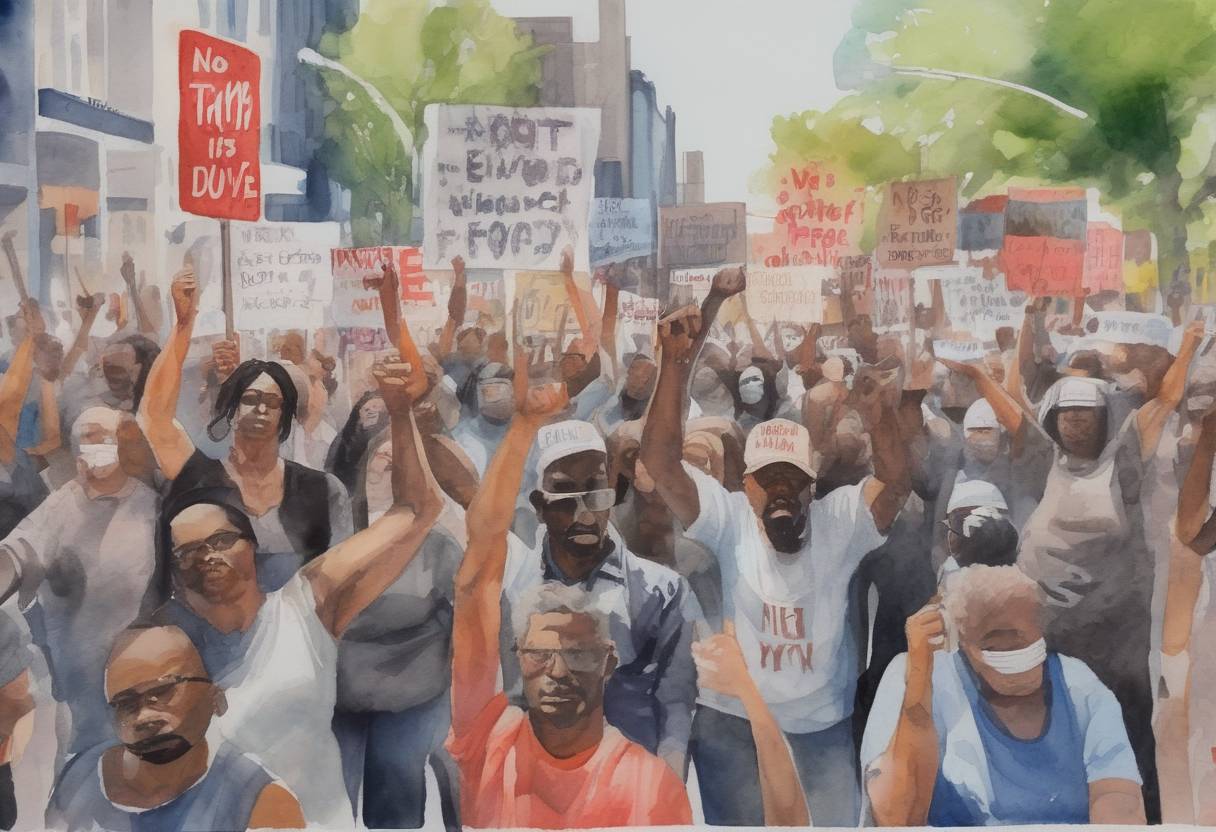
On June 14, 2020, protests continued across the United States and around the world in response to the death of George Floyd, an African American man who died in police custody in Minneapolis, Minnesota, on May 25, 2020. His death, captured on video, showed a police officer kneeling on Floyd’s neck for over nine minutes, sparking outrage and igniting a global movement against racial injustice and police brutality.
George Floyd’s Death: On May 25, 2020, George Floyd was arrested by Minneapolis police officers. During the arrest, Officer Derek Chauvin knelt on Floyd’s neck, despite Floyd’s repeated pleas that he could not breathe. Floyd’s death was ruled a homicide, and the incident was widely condemned.
Initial Protests: Protests began in Minneapolis and quickly spread across the United States, with demonstrators calling for justice for George Floyd and broader reforms to address systemic racism and police violence.
United States: Demonstrations continued in major cities such as New York, Los Angeles, Chicago, and Washington, D.C. Protesters demanded police reform, accountability, and justice for victims of police violence. Many protests were peaceful, though some cities experienced tensions and confrontations with law enforcement.
Global Solidarity: The movement transcended national borders, with protests occurring in countries such as the United Kingdom, Germany, France, Australia, and Japan. These international demonstrations highlighted issues of racial inequality and police brutality within their own societies, showing solidarity with the Black Lives Matter movement.
Key Themes: Protesters carried signs with messages such as “Black Lives Matter,” “No Justice, No Peace,” and “Defund the Police.” The movement called for systemic change, including the reallocation of police funding to community services and the implementation of policies to ensure police accountability.
Impact on Policy: The protests prompted discussions on police reform and racial justice at local, state, and federal levels. Some cities began to reevaluate their police budgets and practices, while legislative proposals aimed at reforming policing were introduced in Congress.
Cultural Shift: The movement sparked a broader cultural reckoning with issues of race and inequality, influencing sectors such as media, sports, and corporate America to address diversity and inclusion more seriously.
Continued Activism: The protests of 2020 became a pivotal moment in the ongoing struggle for civil rights, inspiring continued activism and advocacy for racial justice and equality.
The events of June 14, 2020, were part of a larger, sustained effort to address deep-seated issues of racial injustice and police brutality, reflecting a significant moment in the global fight for equality and human rights.
Source: www.nytimes.com