Opening of the Blackwall Tunnel
1897 · London, United Kingdom
The Blackwall Tunnel under the River Thames is officially opened in London by the Prince of Wales (the future King Edward VII).
August 2, 1870
Tower Subway, the world's first underground tube railway, opened in London, marking a significant development in urban transportation.
London, United Kingdom | Tower Subway Company
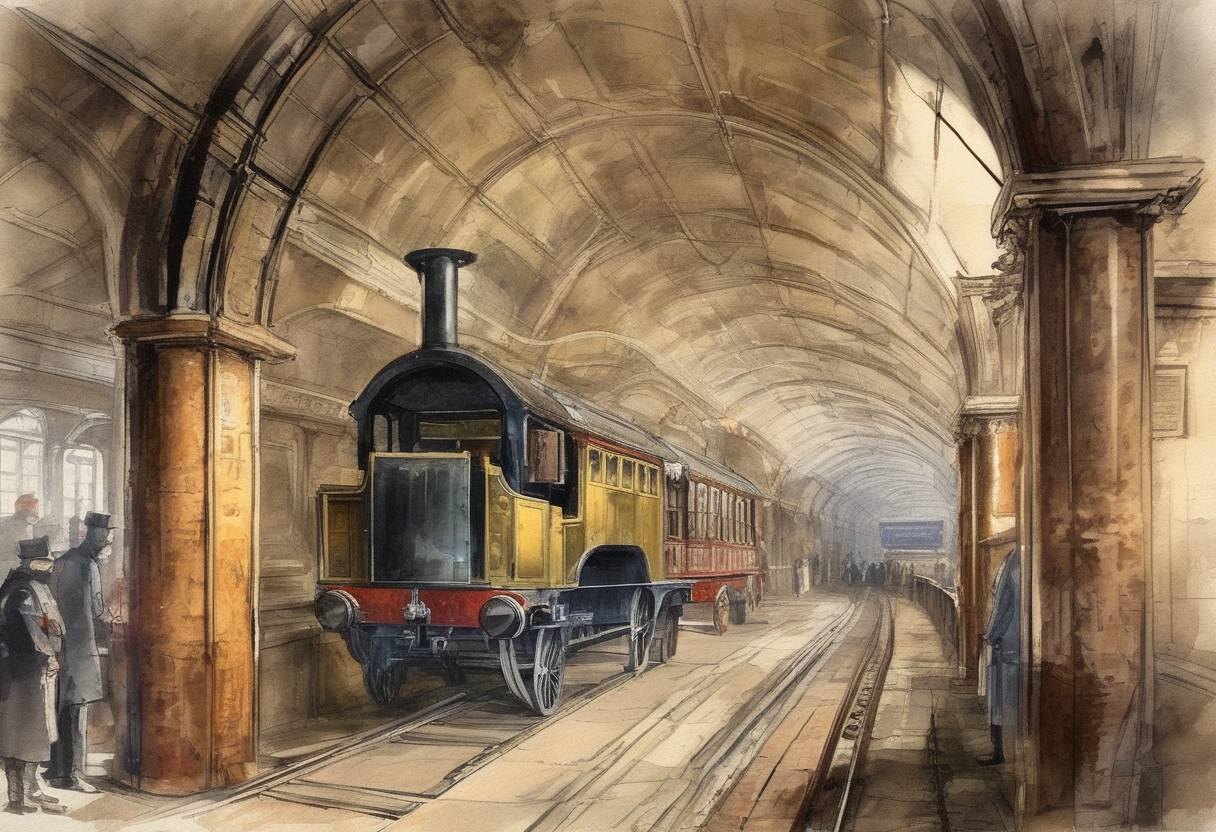
On August 2, 1870, the Tower Subway in London marked a pioneering moment in urban transportation history as it opened to the public. This event signified the advent of underground railways, setting the stage for the development of modern subway systems worldwide.
The Tower Subway was conceived as a solution to the growing congestion on London’s streets. The project was spearheaded by engineer James Henry Greathead, who utilized a revolutionary tunneling shield technique, initially developed by Marc Isambard Brunel and further refined by Greathead himself. This method allowed for safer and more efficient tunneling under the River Thames.
The Tower Subway was initially designed to transport passengers using a cable-hauled carriage system. However, this system faced operational challenges and was soon replaced by pedestrian access.
Although the Tower Subway was short-lived as a passenger railway, closing its operations in 1870, it played a crucial role in demonstrating the feasibility of underground transportation. Its construction techniques and the concept of subterranean travel influenced future projects, including the development of the London Underground.
Despite its closure as a railway, the Tower Subway continued to serve as a utility tunnel, housing telegraph cables and later water mains. Its legacy endures as a testament to the innovative spirit of the Victorian era and its contributions to modern urban infrastructure.
In summary, the opening of the Tower Subway on August 2, 1870, was a landmark event in transportation history, showcasing early engineering ingenuity and laying the groundwork for the future of urban transit systems.
Source: en.wikipedia.org