Luna 17 Mission and Lunokhod 1 Rover
1970 · Moscow, Soviet Union
The Soviet Union's Luna 17 mission successfully delivered the Lunokhod 1 rover to the Moon.
May 12, 1965
The Soviet spacecraft Luna 5 crashed on the Moon, marking a failed attempt to achieve a soft landing on the lunar surface.
Moon, N/A | Soviet Space Program
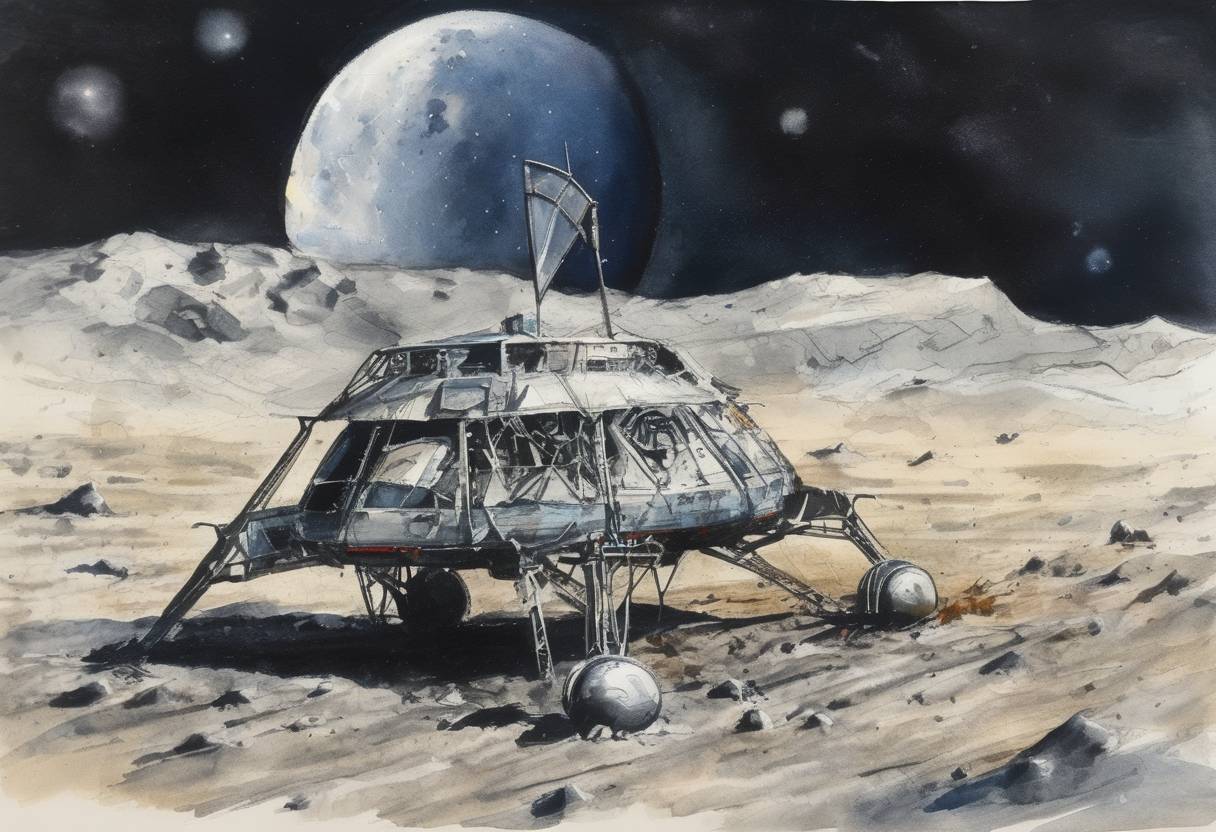
On May 12, 1965, the Soviet spacecraft Luna 5 crashed on the Moon, marking a significant moment in the space race between the United States and the Soviet Union. This event was part of the Soviet Union’s ambitious Luna program, which aimed to explore the Moon and achieve a series of firsts in space exploration.
The Luna program was initiated by the Soviet Union in the late 1950s, with the goal of exploring the Moon and demonstrating the capabilities of Soviet space technology. By the mid-1960s, the program had already achieved several milestones, including the first human-made object to reach the Moon (Luna 2 in 1959) and the first photographs of the far side of the Moon (Luna 3 in 1959).
Luna 5 was launched on May 9, 1965, from the Baikonur Cosmodrome using a Molniya-M rocket. The mission’s primary objective was to achieve a soft landing on the Moon, which would have been a first for any space program. A successful soft landing would have allowed for the deployment of scientific instruments to study the lunar surface.
Launch and Trajectory: Luna 5 was successfully launched and entered a trajectory towards the Moon. Initial phases of the mission proceeded as planned, with the spacecraft performing necessary mid-course corrections.
Technical Malfunctions: As Luna 5 approached the Moon, it encountered a series of technical difficulties. A malfunction in the spacecraft’s gyroscopic system led to a loss of control over its orientation.
Impact on the Moon: Due to the inability to correct its trajectory, Luna 5 crashed into the Moon’s surface on May 12, 1965. The impact occurred in the Sea of Clouds (Mare Nubium), a large lunar mare on the Moon’s near side.
The failure of Luna 5 was a setback for the Soviet space program, highlighting the challenges of achieving a controlled landing on the Moon. Despite the crash, the mission provided valuable data that informed subsequent attempts.
Space Race: The Luna 5 mission took place during the height of the space race, a period of intense competition between the United States and the Soviet Union to achieve dominance in space exploration.
Technological Advancements: The mission underscored the complexity of space exploration and the need for advanced technology and precise engineering to achieve successful lunar landings.
Future Missions: Lessons learned from Luna 5 contributed to the success of later Soviet missions, including Luna 9, which achieved the first successful soft landing on the Moon in February 1966.
In conclusion, while Luna 5 did not achieve its primary objective, it played a crucial role in the iterative process of space exploration, paving the way for future successes in lunar exploration.
Source: en.wikipedia.org