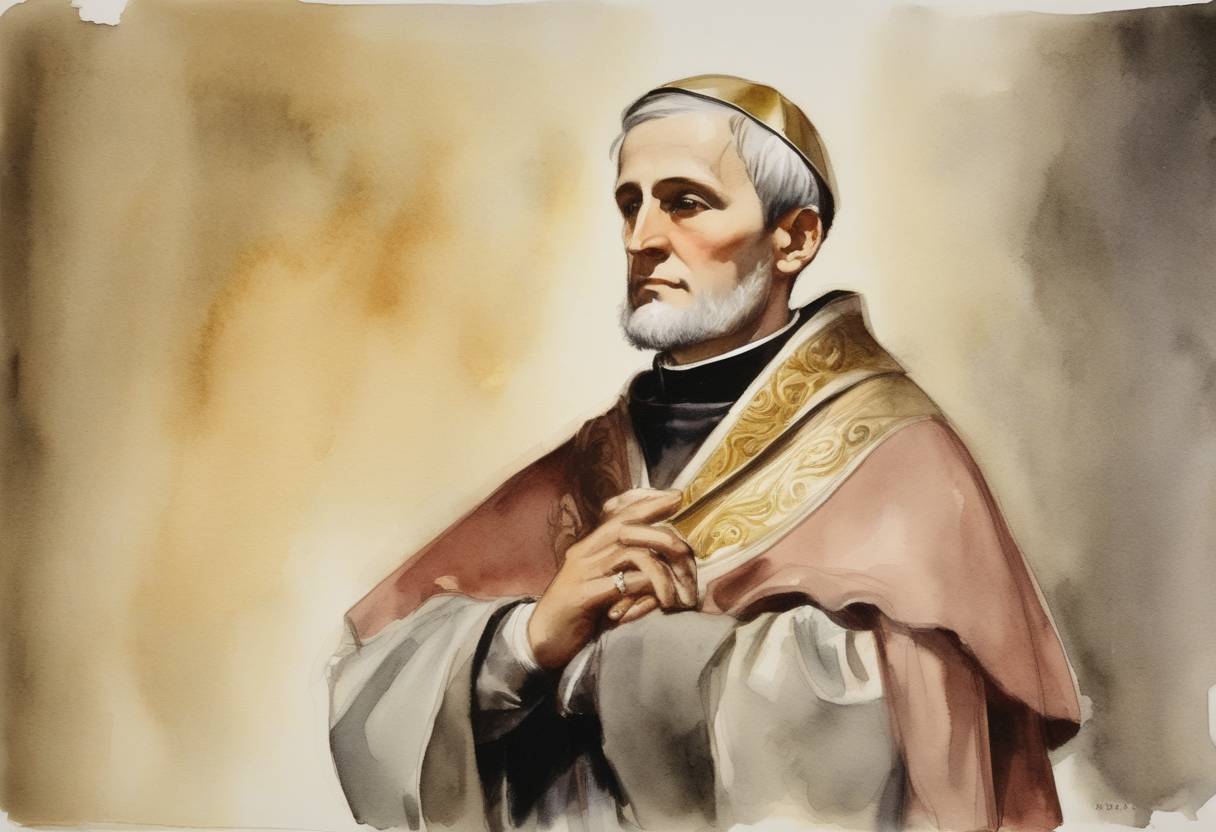
Canonization of Saint Gerard of Csanád
Saint Gerard of Csanád was canonized on October 16, 1094, in the Kingdom of Hungary. His canonization was a significant moment in the history of the Catholic Church in Hungary and brought formal recognition to his contributions and martyrdom. Gerard is recognized as one of Hungary’s patron saints and holds a pivotal place in the development of Christianity in the region.
Early Life and Ecclesiastical Role
- Birthplace and Education: Gerard was born around 980 in Venice, in the Venetian Republic. He was educated in the prominent monastic schools of Italy, where he became a member of the Benedictine order.
- Arrival in Hungary: In 1020, Gerard traveled to the Kingdom of Hungary, initially intending to go on a pilgrimage to the Holy Land but decided to stay upon the advice of King Stephen I of Hungary.
Bishop of Csanád
- Episcopal Appointment: Around 1030, Gerard became the first bishop of Csanád. His appointment was part of King Stephen’s efforts to promote Christianity across his realm. Gerard played a crucial role in organizing the church hierarchy and establishing diocesan structures.
- Missionary Work and Administration: Bishop Gerard was pivotal in the conversion of the local populace to Christianity. He was instrumental in establishing churches and monasteries, promoting religious education, and instituting ecclesiastical reforms.
Martyrdom
- Martyr’s Death: In 1046, during a pagan revolt against King Andrew I’s Christian regime, Gerard was martyred. He was attacked by rebels near Buda, who either rolled him down a hill in a barrel or, according to other accounts, stabbed him to death.
- Significance of Martyrdom: Gerard’s death underscored the volatile clash between pagan traditions and the growing Christian influence in Hungary.
Canonization and Legacy
- Canonization Process: The canonization of Saint Gerard was part of a larger movement in the 11th century to sanctify individuals who played crucial roles in Christianizing Europe. His canonization was an affirmation of his contributions to the Church and a recognition of his martyrdom.
- Patron Saint of Hungary: Gerard is considered a patron saint of Hungary, symbolizing the nation’s Christian heritage and the enduring strength of its faith through adversity.
- Cultural Impact: His legacy is celebrated in Hungary, with numerous churches and institutions named in his honor. His life and works remain a source of inspiration for fostering cultural and religious identity.
Gerard of Csanád’s canonization cemented his position in the pantheon of saints, reflecting his profound influence on the spiritual and cultural formation of Hungary.