Death of Otto III, Holy Roman Emperor
1002 · Civita Castellana, Italy
Otto III, Holy Roman Emperor, died in the castle of Paterno near Civita Castellana of malaria.
December 13, 1250
The death of Frederick II marks a turning point in the Holy Roman Empire. Frederick II, a member of the Hohenstaufen dynasty, was one of the most powerful and ambitious Holy Roman Emperors. His death led to a period of instability and decline for the empire.
Castel Fiorentino, Italy | Holy Roman Empire
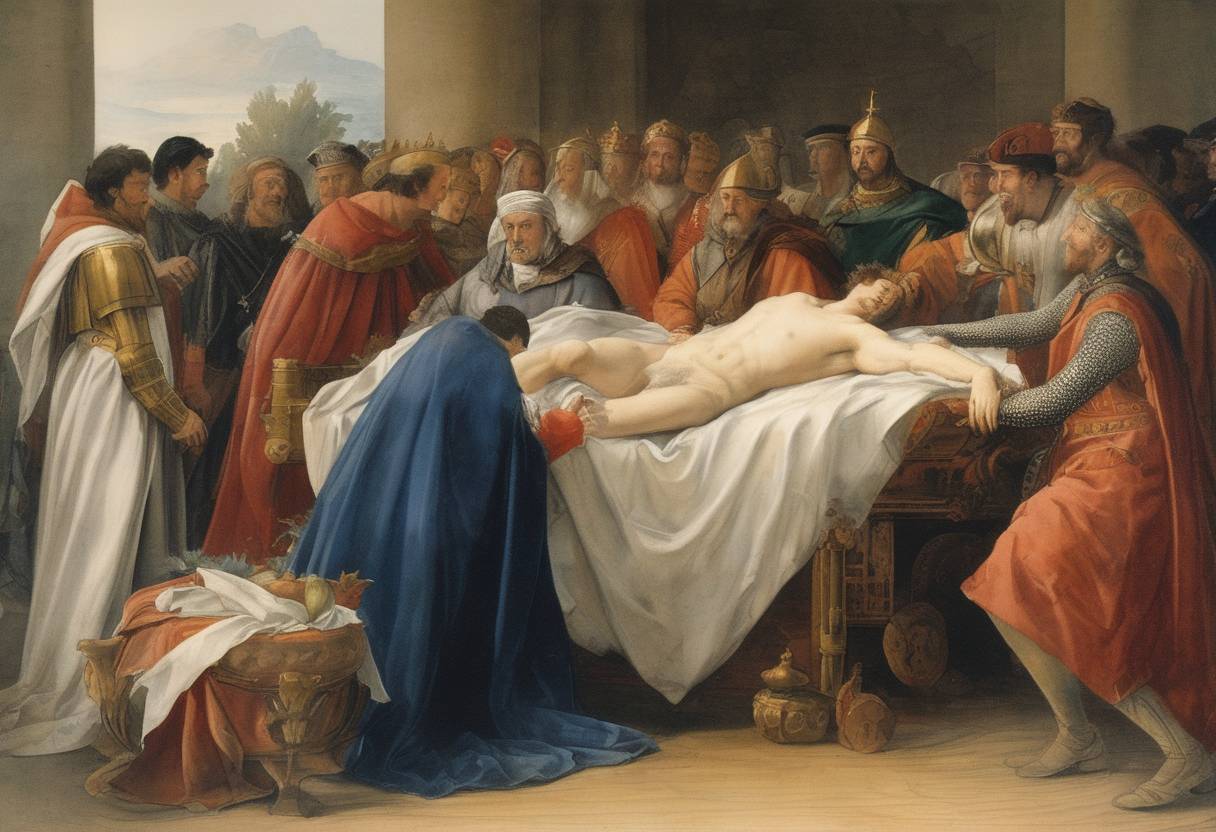
On December 13, 1250, Frederick II, one of the Holy Roman Empire’s most compelling figures, passed away in Castel Fiorentino, Apulia, in present-day Italy. His death marked a critical turning point that led to a period of significant instability within the empire.
Frederick II, a member of the Hohenstaufen dynasty, reigned as Holy Roman Emperor from 1220 until his death in 1250. Notably known for his ambitious rule, Frederick sought to consolidate his power across the territories comprising the empire, stretching from Germany to Sicily. His reign was characterized by attempts to reinforce imperial authority over autonomous German princes and secure the empire’s influence in Italy.
Frederick II’s death precipitated a longstanding period of upheaval known as the Great Interregnum (1250-1273). This period was characterized by:
Frederick II’s death diminished the cohesion of the Holy Roman Empire. The ensuing political fragmentation paved the way for decentralized power structures and foreshadowed the empire’s future struggles in maintaining cohesive governance across its vast territories. The legacy of Frederick’s ambitions and the cultural and administrative marks he left continued to influence European history throughout the ensuing centuries.
Source: en.wikipedia.org