The Battle of Fleurus: June 26, 1794
1794 · Fleurus, Belgium
The Battle of Fleurus was fought during the French Revolutionary Wars, resulting in a victory for the French forces.
August 29, 1793
The Battle of Hondschoote began during the French Revolutionary Wars, resulting in a crucial French victory.
Hondschoote, France | French Revolutionary Army
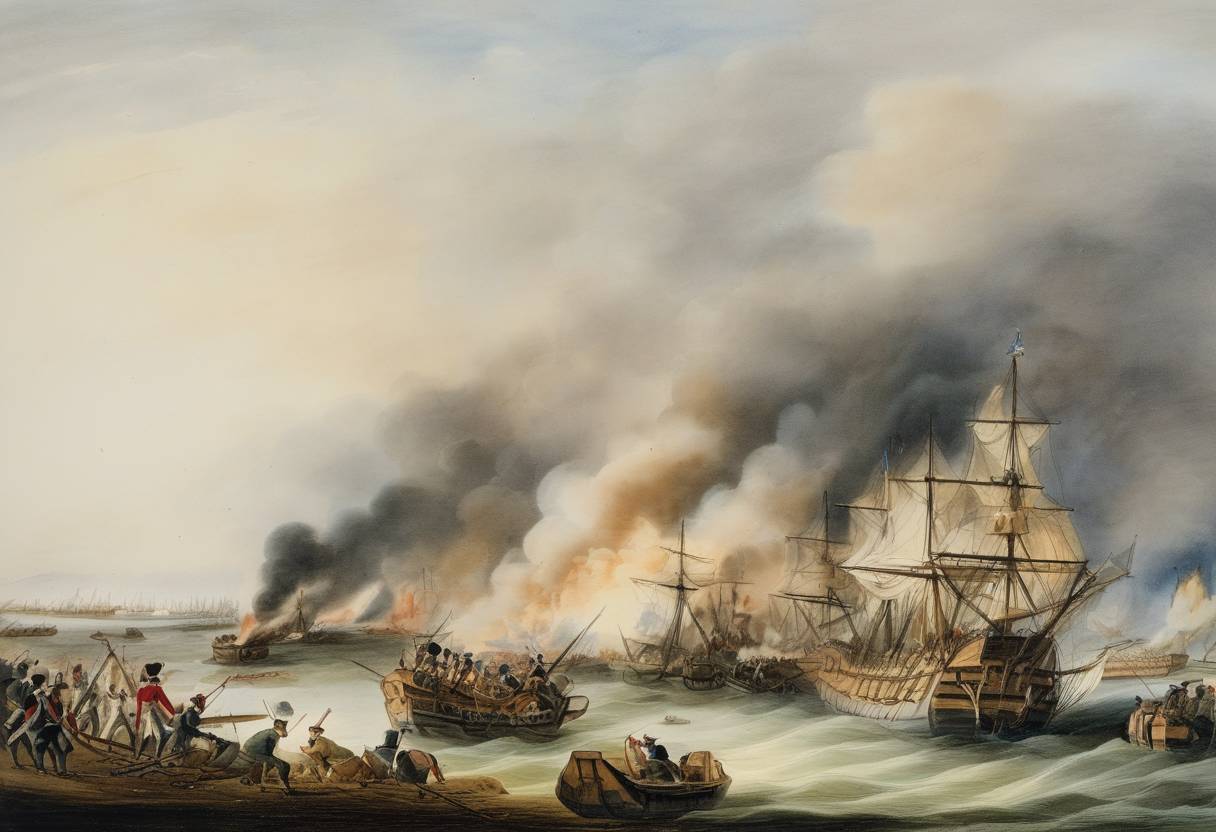
The Battle of Hondschoote marked a pivotal engagement during the French Revolutionary Wars, specifically as part of the War of the First Coalition. On August 29, 1793, fighting commenced between the French Revolutionary forces and the Coalition troops, chiefly composed of British and Dutch forces. This confrontation would culminate in a significant French victory, which played a critical role in lifting the Siege of Dunkirk and bolstering the French Republic’s position.
In 1793, the British and their allies embarked on a campaign to capture strategic locations along the northern French coasts. Dunkirk, a key port city, was under siege by a combined force of British and Dutch troops under the command of the Duke of York. The siege threatened to cut off French access to valuable supply lines and exert pressure on the fledgling Republic.
In response, the French, under General Jean Nicolas Houchard, mobilized to relieve Dunkirk and halt the Coalition’s advance. Understanding the strategic importance of the operation, the French mustered a force of approximately 40,000 soldiers against the Coalition’s 20,000-strong contingent.
On August 29, hostilities commenced near the small village of Hondschoote. Although outnumbered and facing a seasoned enemy, French forces capitalized on aggressive tactics and strategic maneuvering. They initiated a series of attacks across the Coalition lines, frequently engaging in fierce close-combat and utilizing their numerical advantage.
Throughout the engagement, Houchard’s leadership helped to rally the often-inexperienced French troops, bolstered by their revolutionary zeal and commitment to the Republic. The French forces sought to exploit gaps in the British and Dutch formations, ultimately driving a wedge between enemy units and compromising their defensive alignment.
The French emerged victorious following concerted assaults over the course of the battle. By September 8, Houchard’s troops decisively pushed back the Coalition forces, effectively lifting the siege of Dunkirk. This success was not only a tactical triumph but also a crucial morale booster for the French Republic during a tumultuous period of internal and external threats.
The outcome at Hondschoote helped to secure the northern frontier of France, ensuring continued resistance against Coalition forces. Moreover, it underscored the effectiveness of France’s mass levy of troops and the resilience of Revolutionary fervor. This victory served to further stabilize the French Republic at a critical juncture, allowing it to redirect its efforts against the broader coalition arrayed against it.
The battle demonstrated the adaptability and tenacity of the French military, foreshadowing future successes under subsequent French leadership in the Revolutionary and Napoleonic wars.
Source: www.britannica.com