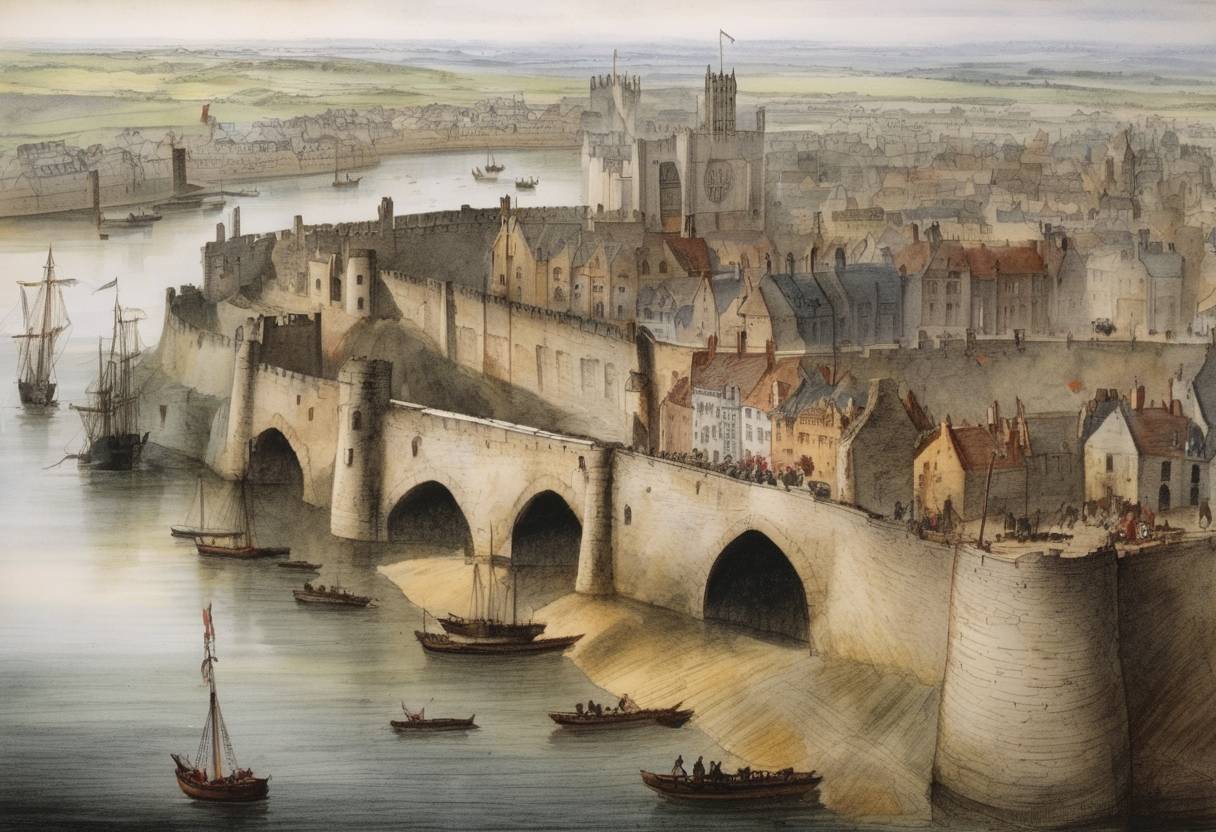
The Siege and Fall of Drogheda - September 11, 1649
On September 11, 1649, the city of Drogheda in Ireland fell to English forces under the command of Oliver Cromwell. This event marked a significant and brutal turning point in the Cromwellian conquest of Ireland.
Background
The fall of Drogheda occurred during the Irish Confederate Wars, a series of conflicts tied to the wider Wars of the Three Kingdoms, including the English Civil War. Following the execution of King Charles I in January 1649, Oliver Cromwell was appointed Lord Lieutenant and Commander-in-Chief of the English forces in Ireland by the new Commonwealth government. His campaign aimed to subdue Ireland, which had been in rebellion since 1641, and eliminate royalist support on the island.
The Siege
Cromwell landed in Ireland in August 1649 with a well-equipped army and quickly advanced towards Drogheda, a strategically important town on the east coast, north of Dublin. The town was held by a garrison of approximately 2,500 troops, commanded by Sir Arthur Aston, and fortified with walls and defenses.
The siege began on September 3, with Cromwell’s forces surrounding the town and commencing artillery bombardment to breach the walls. On September 10, a breach was successfully made, and Cromwell called for the town’s surrender, which was refused by the defenders.
The Assault and Aftermath
On September 11, Cromwell ordered the storming of Drogheda. His forces overwhelmed the defenders and entered the town. What followed was a massacre, with the English troops killing much of the garrison and numerous civilians. Reports suggest that up to 3,500 were killed, with Cromwell’s own letters citing that “not more than thirty of the whole number” were spared.
Cromwell justified the action as a necessary measure to subdue resistance and serve as a warning to other Irish towns. This brutal tactic was intended to hasten the conquest of Ireland by breaking the will of opposition.
Broader Significance
The fall of Drogheda and subsequent massacre marked the beginning of a harsh campaign in Ireland, characterized by severe military action and the subjugation of Irish resistance. The events at Drogheda and later at Wexford helped cement Cromwell’s reputation as a formidable and ruthless military leader. The siege is often remembered as one of the most infamous episodes in the turbulent history of the Anglo-Irish conflicts.
Cromwell’s campaign had profound consequences for Ireland, contributing to widespread devastation, loss of life, and the redistribution of land from Catholic landowners to English settlers, reshaping the social and political landscape of Ireland for generations.