Discovery of the Venus de Milo
1820 · Milos, Greece
The Venus de Milo, an ancient Greek statue, was discovered on the island of Milos in the Aegean Sea.
December 17, 1790
The Aztec Calendar Stone, also known as the Sun Stone, is discovered in the main plaza of Mexico City. The stone is a crucial piece of Aztec culture, providing insight into their calendar system and cosmology, and it becomes an iconic symbol of pre-Columbian civilization in the Americas.
Mexico City, Mexico
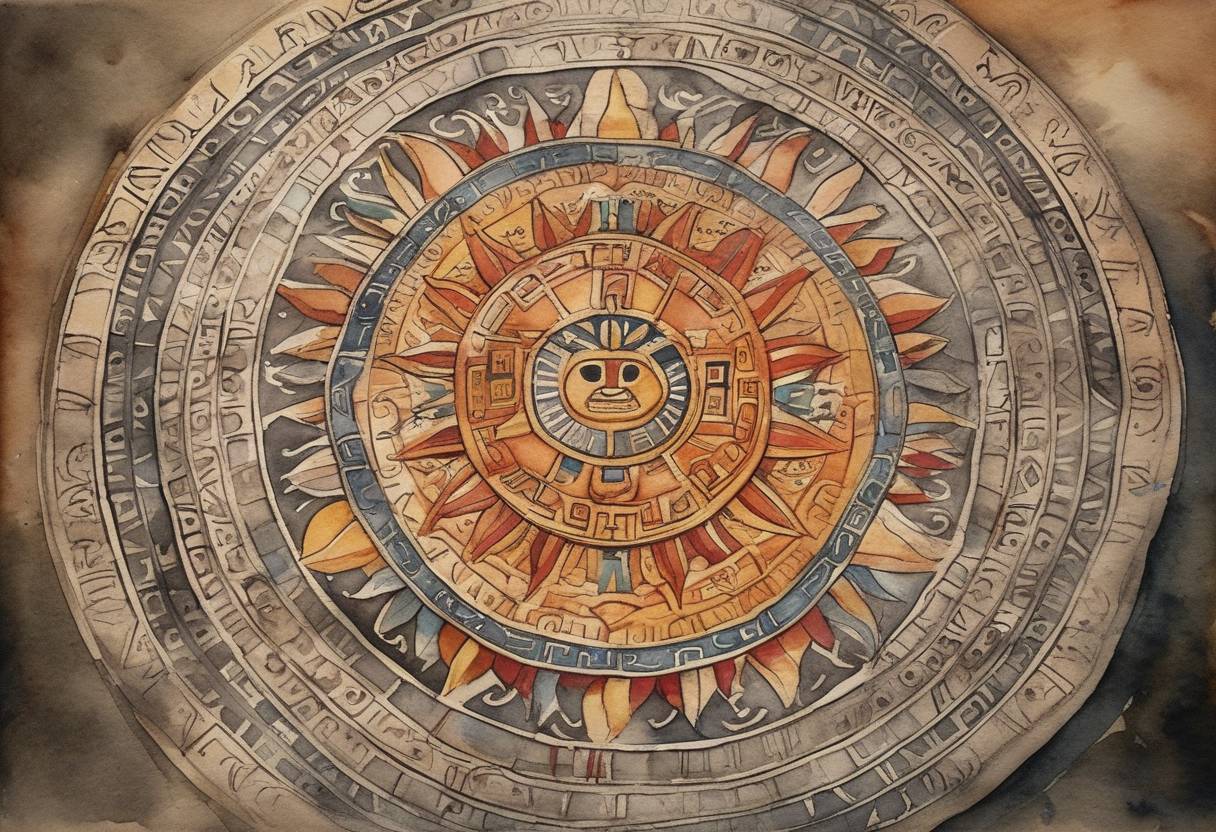
On December 17, 1790, a significant archaeological discovery occurred in the main plaza of Mexico City: the Aztec Calendar Stone, often referred to as the Sun Stone, was unearthed. This monumental stone is a crucial artifact of Aztec culture, providing profound insights into their intricate calendar system and cosmology. The stone quickly became an iconic symbol of pre-Columbian civilization in the Americas, representing both its artistic achievements and sophisticated scientific knowledge.
The discovery of the Aztec Calendar Stone came during a period of significant urban development in Mexico City’s central plaza, known as the Zócalo. As part of renovations and excavations intended to modernize the area, laborers stumbled upon the massive stone disc buried beneath the city’s surface.
The stone, measuring approximately 12 feet in diameter and weighing over 24 tons, is elaborately carved with symbols and inscriptions. At the center of the stone is the face of the sun god Tonatiuh, surrounded by representations of the Aztec cosmogony, including the four previous eras, or suns, according to Aztec belief. The rim of the stone includes symbols that represent the 20 days of the Aztec calendar month.
The Aztec Calendar Stone is more than just a calendar; it serves as a cosmological map and cultural emblem that encapsulates the Aztecs’ understanding of the universe, time, and their place within it. It is now housed in the National Anthropology Museum in Mexico City, where it remains one of the most studied and admired pieces of Aztec history.
The stone’s uncovering during a time when Mexico was still a Spanish colony fueled a renewed interest in pre-Hispanic history and culture. This finding contributed to a growing awareness and appreciation of the rich heritage of indigenous civilizations in the Americas.
The Aztec Calendar Stone continues to be studied by historians, archaeologists, and scholars. It serves not only as an essential tool for understanding Aztec society but also as an emblem of Mexican cultural identity. The stone’s intricate design and historical richness ensure its lasting prominence as an artifact of immense archaeological and cultural value.
Source: www.thoughtco.com