The Battle of Naseby - June 14, 1645
1645 · Naseby, England
In the Battle of Naseby, a key engagement during the English Civil War, the Royalist forces suffered a significant defeat by the Parliamentarian army.
November 29, 1644
The Battle of Torrington was fought during the English Civil War as Royalist forces attempted to check the advance of the Parliamentarians in Devon.
Torrington, England | Royalists and Parliamentarians
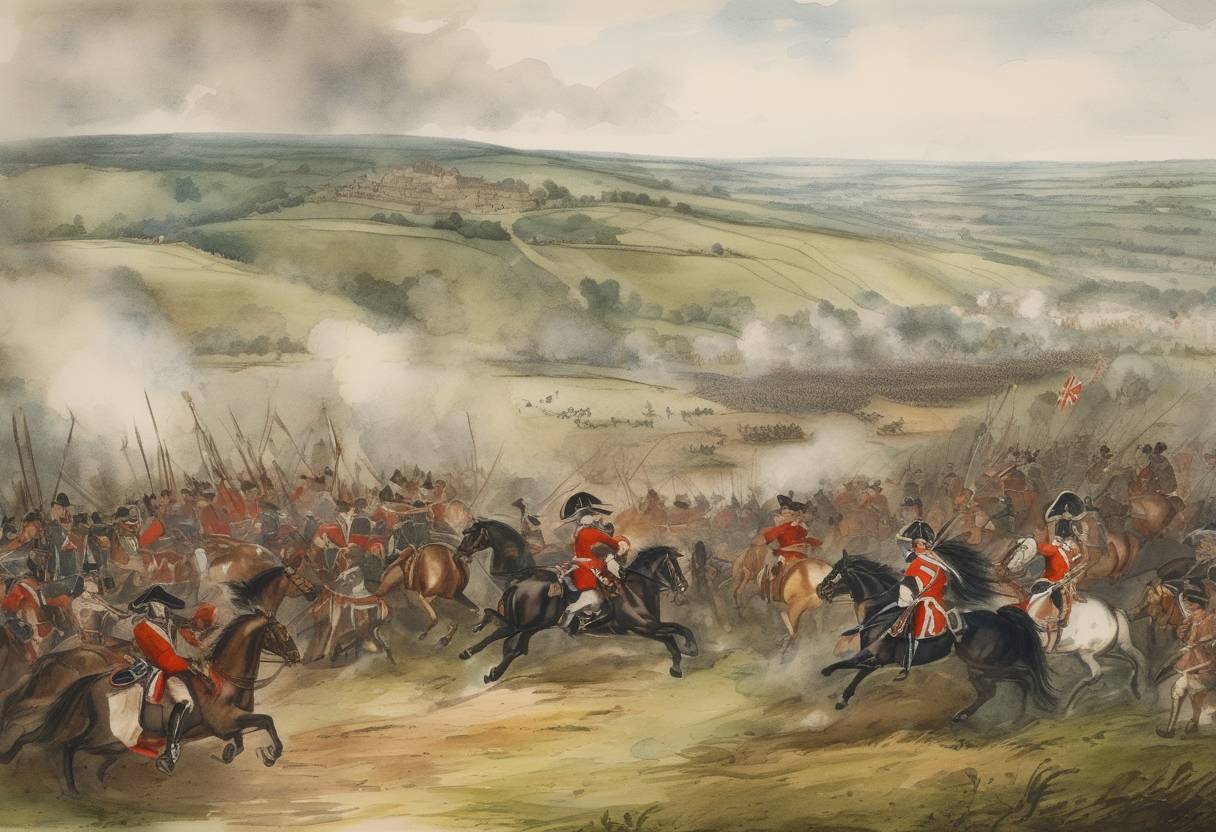
The Battle of Torrington took place on February 16, 1646, not on November 29, 1644. Unfortunately, there aren’t significant events on November 29, 1644, related to the English Civil War or the Battle of Torrington. Below is information on the correct date of the battle.
Date: February 16, 1646
Location: Torrington, Devon, England
Context: The Battle of Torrington was one of the concluding engagements of the First English Civil War. It was pivotal in the struggle between Royalist forces loyal to King Charles I and the Parliamentarians led by Sir Thomas Fairfax. The West Country, including Devon, was a Royalist stronghold, making it a critical area for both sides.
Events Leading Up: Throughout 1645, the Parliamentarians had gained the upper hand due to strategic victories and the formation of the New Model Army. By early 1646, Royalist forces were on the defensive, and the Parliamentarians aimed to consolidate their control over the southwest.
The Battle:
Aftermath:
Significance: The Battle of Torrington highlighted the declining power of the Royalist cause and demonstrated the effectiveness of the New Model Army under Fairfax’s command. This engagement was key in cementing parliamentary control over the West Country and paved the way for the imminent political changes in England.
Source: en.wikipedia.org