1916 · Verdun, France
The Battle of Verdun, one of the largest battles of World War I between German and French forces, continues with intense fighting. This battle eventually becomes one of the longest and most costly battles in human history.
September 9, 1914
The Siege of Maubeuge concluded with the surrender of the French fortress to German forces during World War I.
Maubeuge, France | German Empire, French Third Republic
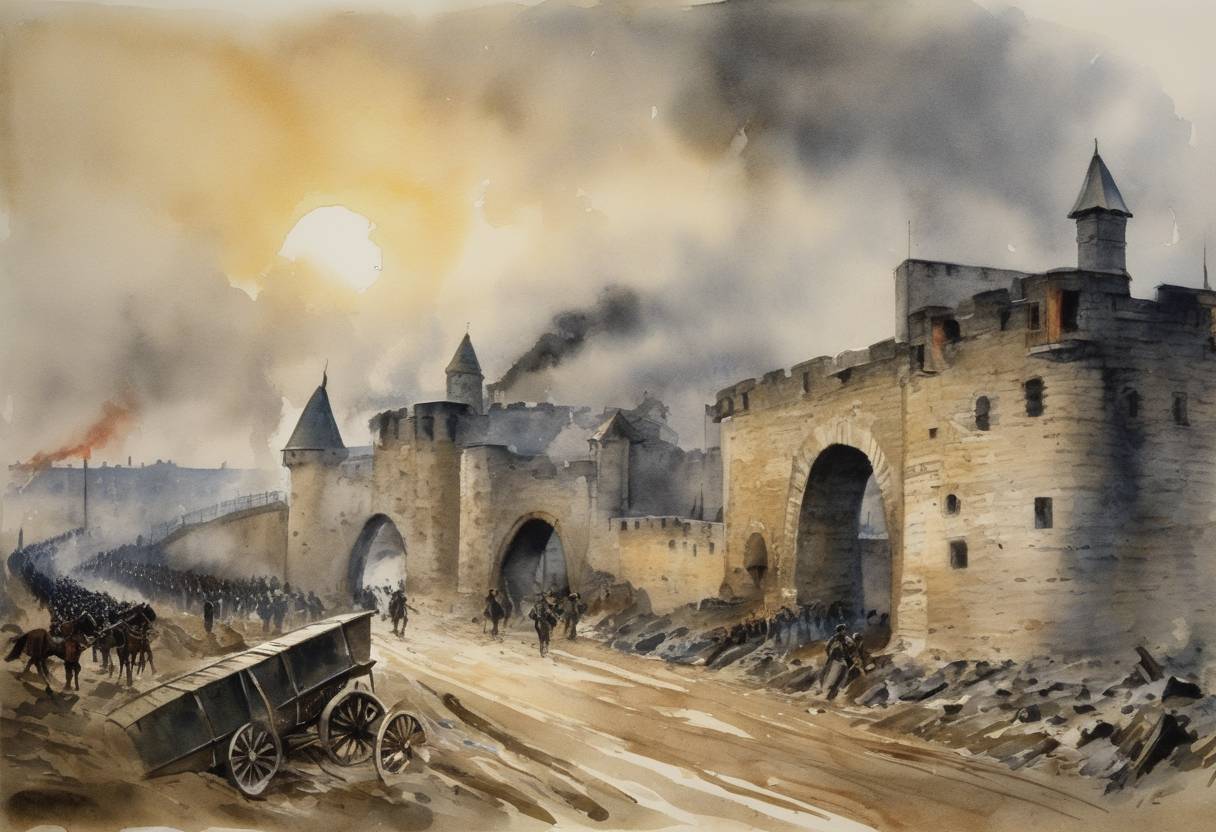
The Siege of Maubeuge concluded on September 9, 1914, marking a significant early German victory during World War I. The fortress, situated in northern France, fell to German forces after a determined siege that began in late August 1914, during the early stages of the war.
Located near the Belgian border, Maubeuge was a strategic stronghold equipped with a fortified ring of defenses established in the late 19th century. The fortress had become key to France’s northern defensive strategy. When World War I erupted in August 1914, Maubeuge’s fortifications and garrison of around 45,000 troops under the command of General Joseph Fournier were pivotal in delaying the German advance.
The German army, implementing the Schlieffen Plan, sought a quick victory in the west by swiftly defeating France. The fortress of Maubeuge was directly in the path of the German 7th Army, led by General Josias von Heeringen, which sought to break through French defenses as part of their incursion into France.
The siege commenced after German forces successfully bypassed other French defenses and surrounded Maubeuge. On August 27, German forces began the bombardment of the fortress with heavy artillery, including the formidable Krupp 42 cm t M-Gerät howitzers, known as “Big Berthas,” which were crucial in penetrating modern fortifications.
Despite a valiant defense and attempts to hold key outlying forts, French forces were eventually overwhelmed by the sustained artillery assault. Over the course of the two-week siege, German artillery systematically dismantled the French defenses.
By September 7, the situation had become untenable for the French defenders. The consistent artillery bombardment had devastated the fortress’s infrastructure, making a prolonged resistance impossible. On September 8, General Fournier entered into surrender negotiations, with the formal capitulation occurring the following day on September 9, 1914.
The surrender of Maubeuge resulted in the capture of a significant number of French troops and valuable military equipment for the Germans. It temporarily bolstered the German advance, but despite this tactical victory, the broader strategic goals of the German army were stymied as the war settled into a protracted conflict.
The fall of Maubeuge illustrated the effectiveness of heavy artillery in siege warfare and the challenges faced by traditional fortifications in the face of modern weaponry. While the siege was a triumph for German forces, it underscored the evolving nature of military strategy that characterized the early phase of World War I. The battle contributed to the shifting dynamics on the Western Front and foreshadowed the era of trench warfare that soon came to define the conflict.
Source: en.wikipedia.org