The Haymarket Affair: May 1, 1886
1886 · Chicago, United States
The Haymarket affair began in Chicago as part of a nationwide movement for an eight-hour workday, leading to a violent confrontation.
September 5, 1882
The first United States Labor Day was celebrated on a Tuesday in New York City, organized by the Central Labor Union, with a procession of workers marching with their respective trades represented. This event helped to lay the groundwork for the Labor Day holiday.
New York City, United States | Central Labor Union
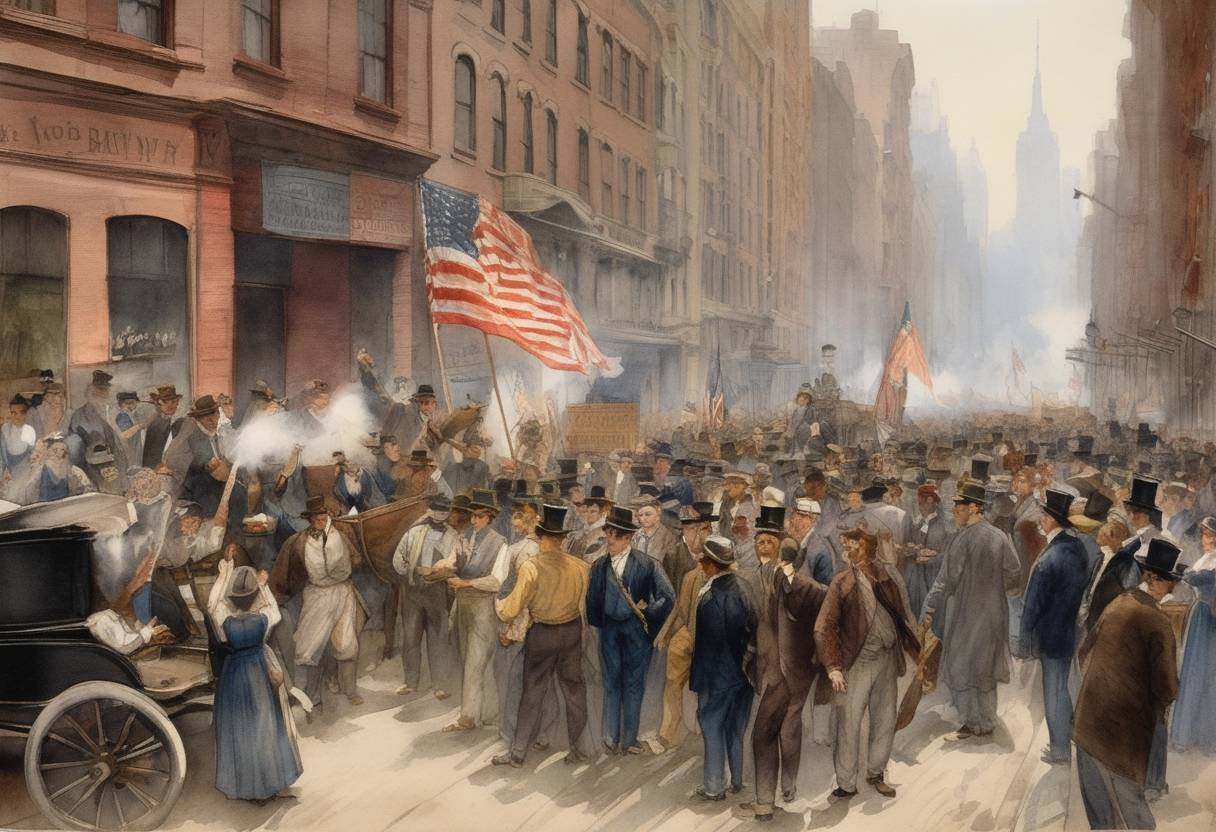
On September 5, 1882, the first United States Labor Day was celebrated in New York City, marking a seminal moment in the labor movement. This event was organized by the Central Labor Union (CLU), an organization that played a crucial role in advocating for workers’ rights during the late 19th century.
The idea of a “workers’ holiday” had been gaining momentum throughout the 19th century amidst rapid industrialization, which had increased the strain on the working class. Workers faced long hours, unsafe conditions, and minimal pay. The labor movement sought to address these issues, and the celebration in New York City was an attempt to bring workers together in solidarity and to highlight their grievances and contributions.
Procession: The day’s centerpiece was a large parade, a public demonstration of unity and strength among the working class. Various trades were represented, with workers marching according to their affiliations. The parade began in New York’s Union Square and featured about 10,000 participants.
Speakers and Entertainment: The event included speeches from prominent labor leaders, which were aimed at raising awareness about labor issues and rallying support for reforms. Additionally, there were leisure activities available, catered to both workers and their families, such as picnics and concerts.
The inaugural Labor Day celebration in New York City set a precedent for future observances. It underscored the importance of organized labor and provided a model for similar celebrations to take place across the United States. This demonstration greatly contributed to the broader labor reforms that would eventually lead to the establishment of Labor Day as a national holiday.
In 1894, following years of labor disputes and increasing pressure from workers’ groups nationwide, President Grover Cleveland signed the bill designating the first Monday in September as Labor Day, making it a federal holiday dedicated to the achievements and contributions of American workers.
Source: www.dol.gov