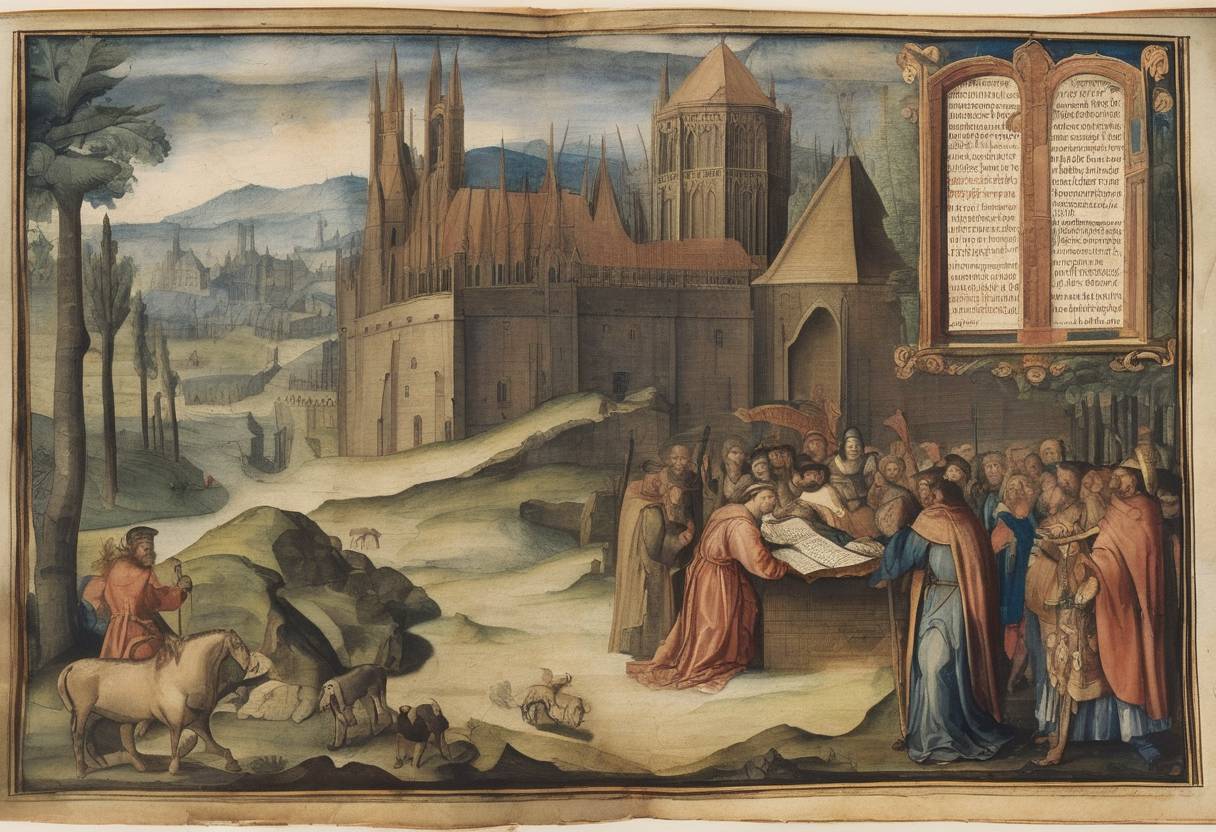
The Coverdale Bible Printed on October 4, 1535
The Coverdale Bible, completed on October 4, 1535, stands as a significant landmark in the history of the English Reformation and the dissemination of Christianity. It was the first complete Bible printed in the English language, translated by Myles Coverdale.
Myles Coverdale
Myles Coverdale (1488–1569) was an English Bible translator, reformer, and bishop. Not originally a scholar of the Hebrew and Greek biblical languages, Coverdale relied heavily on existing German and Latin translations, most notably the works of Martin Luther and Jerome’s Latin Vulgate. Despite this, he was able to produce a readable and accessible English text that would contribute significantly to future English translations.
Context and Background
The early 16th century was a time of religious upheaval and reform, fueled by the broader Protestant Reformation, which sought to address corruption within the Catholic Church and advocate for direct access to the scriptures by laypeople. Prior to the Coverdale Bible, church authorities largely prohibited English translations of the Bible, maintaining the Latin Vulgate as the liturgical standard. This was partly a means of controlling doctrinal interpretation and maintaining ecclesiastical authority.
The groundwork for English translations had been laid by earlier translators, such as John Wycliffe in the 14th century, though those efforts often faced condemnation. In the early 1520s, William Tyndale embarked on translating the New Testament into English, an endeavor that influenced Coverdale’s work. Despite Tyndale’s execution for his efforts, his translations remained influential.
Characteristics and Impact
The Coverdale Bible was printed in Cologne, Germany, away from English ecclesiastical jurisdiction, allowing Coverdale greater freedom and safety. Unlike Tyndale, Coverdale included both the Old and New Testaments, making his the first complete English Bible.
The Coverdale Bible introduced several key elements:
- Plain Language: It was notable for its simple and clear English, making the scriptures understandable to the common English speaker.
- Versification: Though not a pioneering feature of the Coverdale translation, it contributed to the later standardization of versification, which facilitated reference and study.
- Influence: The translation greatly influenced subsequent versions, particularly the Great Bible (1539) and, eventually, the King James Version (1611).
Aftermath and Significance
The introduction of the Coverdale Bible was a turning point for English Christianity. By providing an English Bible sanctioned under the Protestant ethos of “sola scriptura” (scripture alone), Coverdale contributed to a shift in religious power away from the traditional ecclesiastical hierarchy to individual interpretation and personal faith.
His work helped pave the way for future translations and was fundamental in advancing the English Reformation. Coupled with the advent of the printing press, this laid the groundwork for mass dissemination of biblical texts and literacy, fostering greater religious and cultural transformations in England and beyond.