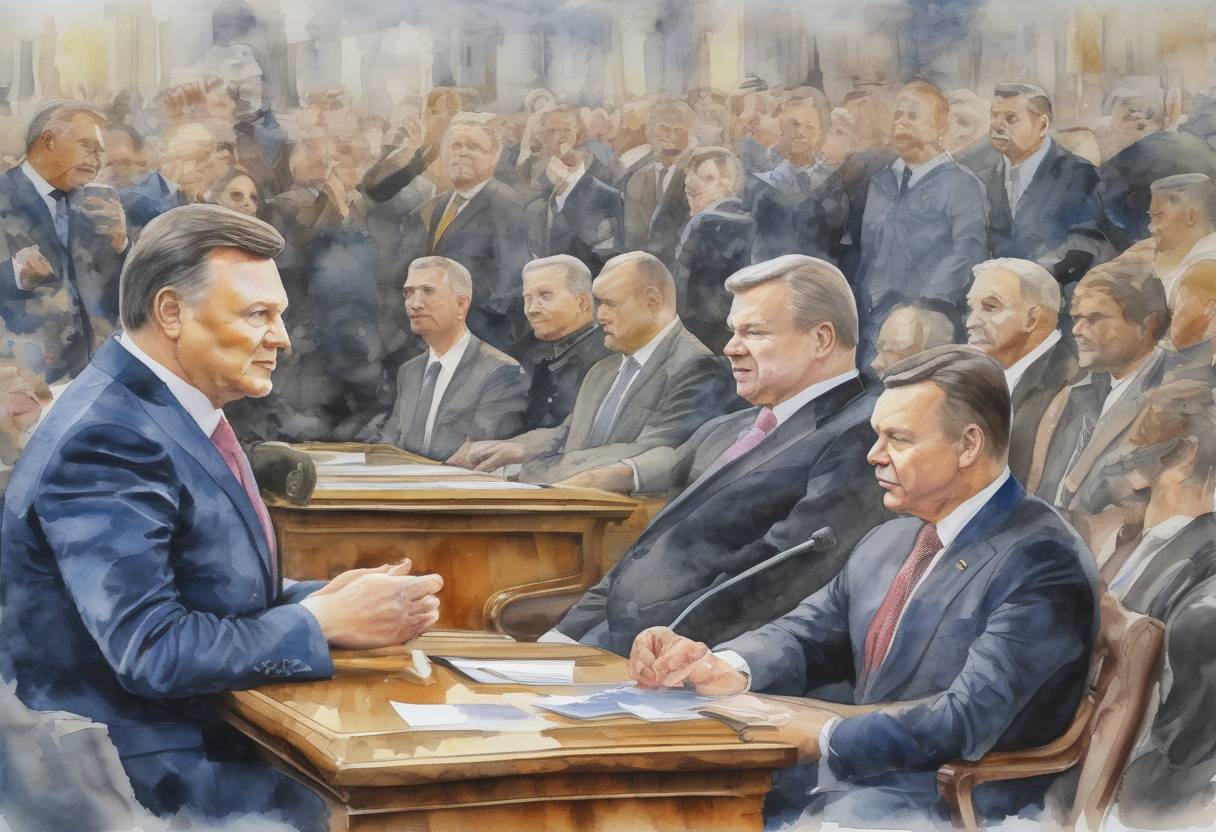
Suspension of EU Association Agreement by Viktor Yanukovych - November 21, 2013
On November 21, 2013, Ukrainian President Viktor Yanukovych made a pivotal decision to suspend preparations for signing an association agreement with the European Union (EU). This decision marked a significant turning point in Ukraine’s political landscape and served as the catalyst for the Euromaidan protests.
Background
In the years leading up to 2013, Ukraine had been negotiating an association agreement with the EU, which was seen as a crucial step towards European integration. The agreement aimed to establish a closer political and economic relationship between Ukraine and the EU, promoting reforms in Ukraine to align with European standards.
Key Events Leading to the Suspension
- Economic Pressures: Ukraine was facing severe economic challenges, including a substantial trade deficit and dwindling foreign reserves. The government was under pressure to secure financial support.
- Russian Influence: Russia, a key trading partner and energy supplier to Ukraine, opposed the EU agreement. It exerted significant pressure on Ukraine, including threats of trade restrictions and economic sanctions.
- Internal Political Dynamics: Yanukovych’s government was divided, with some factions favoring closer ties with Russia over the EU.
The Decision
On November 21, 2013, the Ukrainian government announced the suspension of the EU association agreement preparations. The official reason cited was the need to improve trade relations with Russia and other Commonwealth of Independent States (CIS) countries. This decision was perceived by many Ukrainians as a pivot away from European integration and towards closer ties with Russia.
The Euromaidan Protests
The suspension sparked widespread protests, known as the Euromaidan movement, named after Kyiv’s Maidan Nezalezhnosti (Independence Square), where the protests began. Key features of the protests included:
- Public Outcry: Thousands of Ukrainians took to the streets, demanding the government reverse its decision and pursue closer ties with the EU.
- Diverse Participation: The protests attracted a wide range of participants, including students, civil society activists, and ordinary citizens, united by a desire for democratic reforms and European integration.
- Escalation: The protests grew in size and intensity, eventually leading to violent clashes between demonstrators and security forces.
Aftermath and Consequences
- Political Change: The protests culminated in February 2014 with the ousting of President Yanukovych, who fled to Russia. This led to a change in government and a renewed push for European integration.
- Annexation of Crimea: In the wake of Yanukovych’s removal, Russia annexed Crimea in March 2014, escalating tensions between Russia and Ukraine.
- Conflict in Eastern Ukraine: The political upheaval contributed to the outbreak of conflict in Eastern Ukraine, with pro-Russian separatists declaring independence in parts of the Donetsk and Luhansk regions.
Broader Historical Significance
The events of November 21, 2013, and the subsequent Euromaidan protests had profound implications for Ukraine’s geopolitical orientation, its internal political dynamics, and its relations with both the EU and Russia. The movement underscored the deep divisions within Ukraine regarding its future direction and highlighted the broader struggle between Western and Russian influences in the region.