The United Kingdom Declares War on Finland, Hungary, and Romania
1941 · London, United Kingdom
The United Kingdom declared war on Finland, Hungary, and Romania during World War II, retaliating against their support for the Axis Powers.
September 3, 1939
Britain and France declared war on Germany following Germany's invasion of Poland, marking the beginning of World War II.
London, United Kingdom | Allied Powers
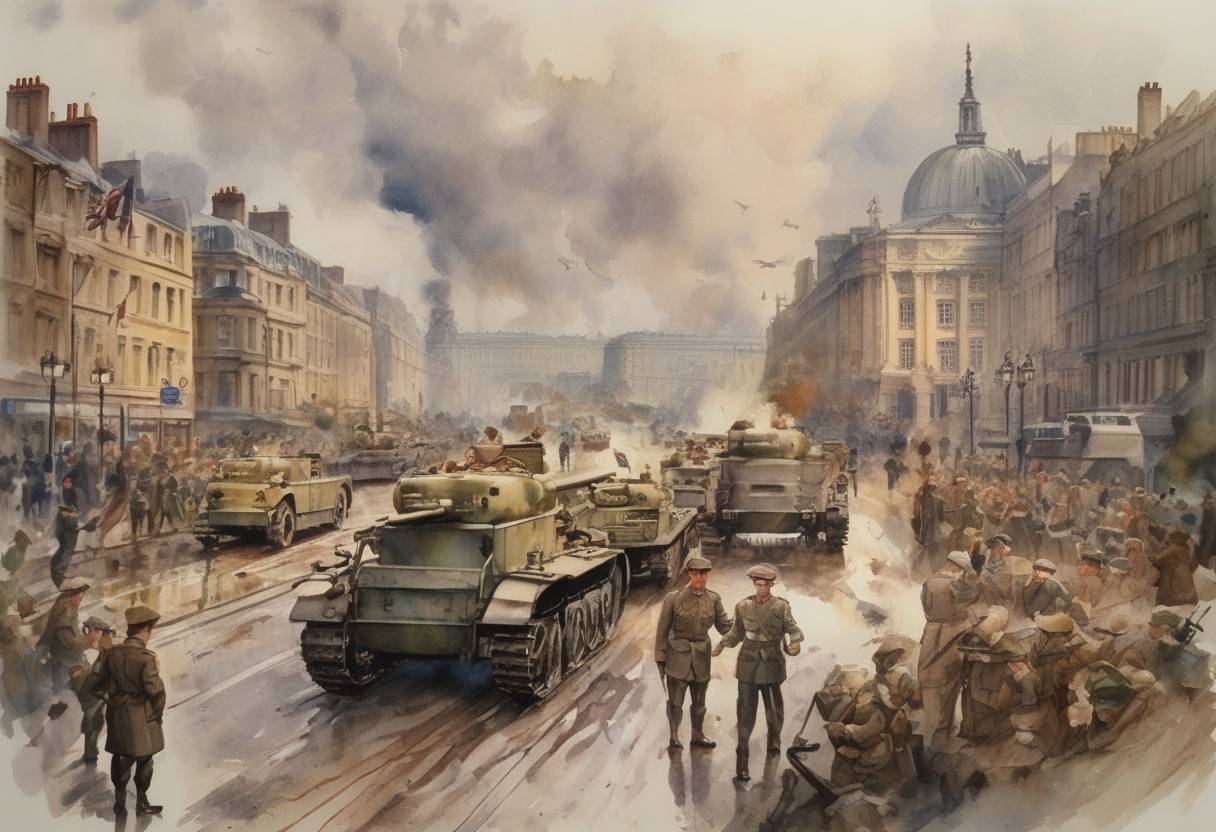
On September 3, 1939, Britain and France declared war on Germany, marking a pivotal moment in history as the beginning of World War II. This declaration was a direct response to Germany’s invasion of Poland, which had commenced on September 1, 1939.
Treaty of Versailles: The end of World War I saw the signing of the Treaty of Versailles in 1919, which imposed heavy reparations and territorial losses on Germany. This treaty sowed seeds of resentment and economic hardship in Germany, contributing to the rise of Adolf Hitler and the Nazi Party.
Rise of Nazi Germany: Adolf Hitler became Chancellor of Germany in 1933 and swiftly consolidated power, establishing a totalitarian regime. His aggressive foreign policy aimed at expanding German territory, defying the Treaty of Versailles.
Appeasement Policy: Throughout the 1930s, European powers, particularly Britain and France, adopted a policy of appeasement, allowing Hitler to annex territories such as the Rhineland, Austria (Anschluss), and the Sudetenland in Czechoslovakia, in hopes of avoiding another war.
Nazi-Soviet Pact: On August 23, 1939, Germany and the Soviet Union signed the Molotov-Ribbentrop Pact, a non-aggression treaty that included secret protocols for the division of Poland between the two powers.
Blitzkrieg Tactics: On September 1, 1939, Germany launched a surprise attack on Poland using blitzkrieg tactics, characterized by rapid and highly mobile warfare, combining air raids and ground assaults.
Poland’s Response: Despite fierce resistance, Poland was ill-prepared for the scale and speed of the German assault. The Polish military was quickly overwhelmed.
Ultimatum to Germany: In response to the invasion, Britain and France issued ultimatums to Germany, demanding the withdrawal of German forces from Poland. These ultimatums were ignored by Hitler.
Formal Declaration: On September 3, 1939, at 11:15 AM, British Prime Minister Neville Chamberlain announced that Britain was at war with Germany. Shortly thereafter, France also declared war.
Phoney War: Following the declarations, a period known as the “Phoney War” ensued, characterized by a lack of major military operations on the Western Front until the spring of 1940.
Global Conflict: The declarations marked the official start of World War II, a conflict that would eventually involve most of the world’s nations and result in unprecedented destruction and loss of life.
Allied and Axis Powers: The war saw the formation of two major military alliances: the Allies, including Britain, France, and later the United States and the Soviet Union, and the Axis Powers, led by Germany, Italy, and Japan.
The declaration of war by Britain and France was a significant turning point, signaling the failure of appeasement and the beginning of a global conflict that would reshape the world order.
Source: en.wikipedia.org