New Zealand Grants Women the Right to Vote: September 19, 1893
1893 · Wellington, New Zealand
New Zealand became the first country to grant women the right to vote, a significant milestone in the global women's suffrage movement.
November 28, 1893
New Zealand becomes the first country to allow women to vote in a national election.
Wellington, New Zealand | New Zealand Government
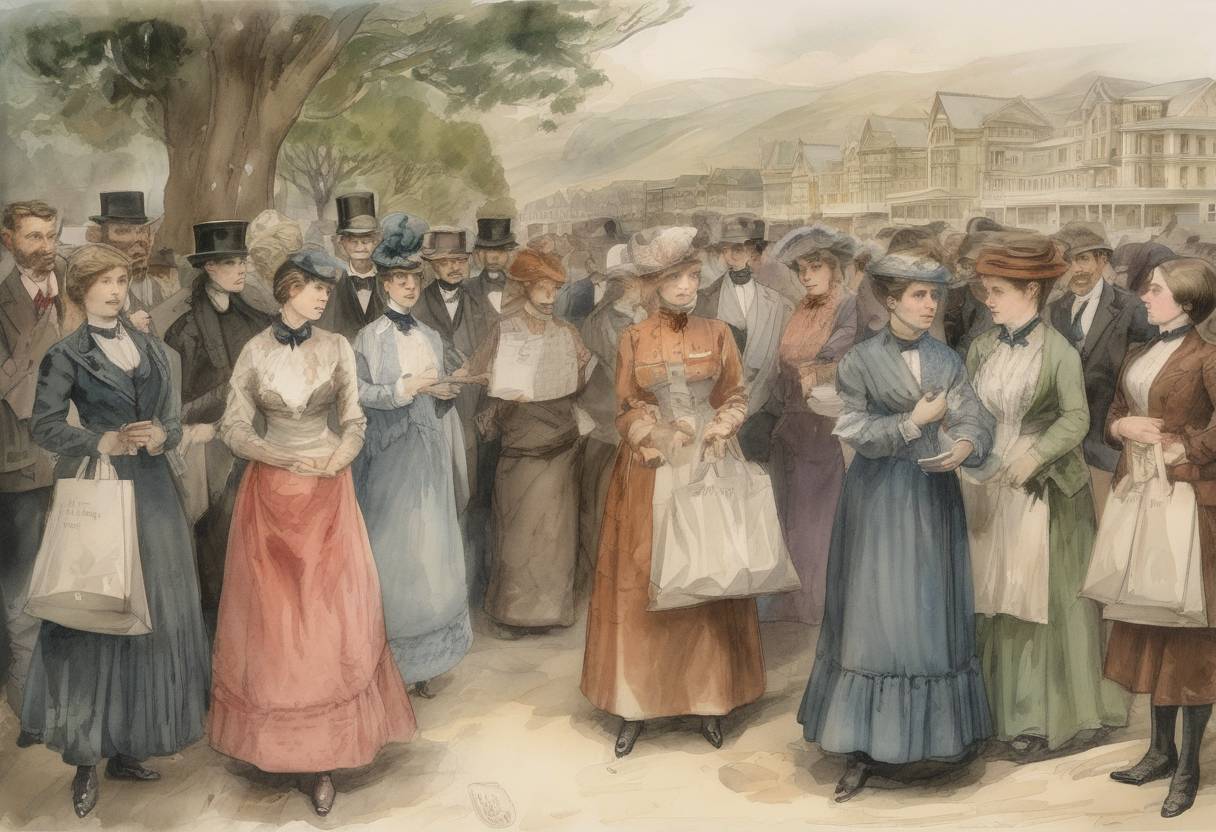
On November 28, 1893, New Zealand made history by becoming the first self-governing country to grant women the right to vote in national elections. This landmark event was the culmination of years of activism and advocacy by women’s suffrage movements within the country.
The movement for women’s suffrage in New Zealand gained momentum in the late 19th century, influenced by similar movements in the United States and the United Kingdom. The campaign was spearheaded by the Women’s Christian Temperance Union (WCTU) and other suffrage groups, with prominent leaders like Kate Sheppard, who became a central figure in the movement.
Petitions and Advocacy: The suffragists organized petitions and lobbied members of parliament. The most significant petition, presented in 1893, contained nearly 32,000 signatures, a substantial number considering the population at the time.
Legislative Attempts: Prior to 1893, several attempts were made to pass women’s suffrage legislation in the New Zealand Parliament. Bills were introduced in 1878, 1879, and 1887, but each failed to pass.
Political Support: The suffrage movement gained support from various political figures, including Premier John Ballance and later, Premier Richard Seddon. However, Seddon’s support was somewhat reluctant, and he attempted to block the bill’s passage.
The Electoral Bill, which included provisions for women’s suffrage, was introduced in 1893. Despite opposition, the bill passed through the House of Representatives and the Legislative Council, thanks in part to strategic political maneuvering and the efforts of suffrage advocates.
First Election: Women participated in their first national election on November 28, 1893. The turnout was impressive, with about 65% of eligible women casting their votes.
Global Impact: New Zealand’s decision to grant women the right to vote had a profound influence on the global suffrage movement. It set a precedent and provided inspiration for suffrage movements worldwide, including those in the United States and the United Kingdom.
Legacy: The success of the suffrage movement in New Zealand is commemorated and celebrated as a significant step towards gender equality. Kate Sheppard’s image now appears on the New Zealand ten-dollar note, symbolizing her pivotal role in this historic achievement.
The enfranchisement of women in New Zealand in 1893 was a groundbreaking event that not only transformed the political landscape of the country but also contributed to the global advancement of women’s rights. It remains a testament to the power of grassroots activism and the enduring impact of committed advocacy for social change.
Source: en.wikipedia.org