Babi Yar Massacre - September 29, 1941
1941 · Kiev, Ukraine
The Babi Yar massacre began near Kiev, where Nazi SS troops executed approximately 33,771 Jewish people as part of the Holocaust.
September 19, 1941
The German Army captured Kiev during Operation Barbarossa, resulting in a significant victory for Nazi Germany on the Eastern Front of World War II.
Kiev, Ukraine | Nazi Germany
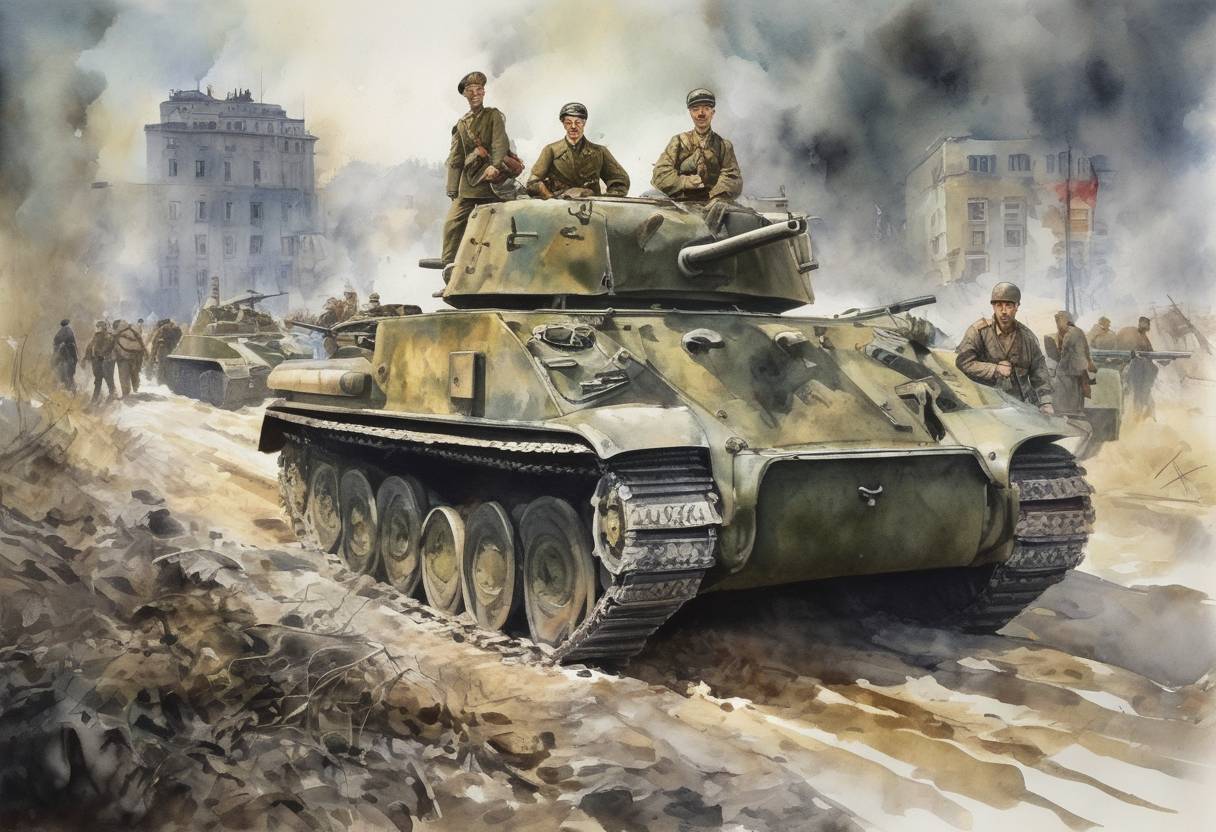
On September 19, 1941, during World War II, the German Army achieved a significant victory by capturing Kiev, the capital of Soviet Ukraine, as part of Operation Barbarossa. This event marked one of the largest encirclements in military history and was a pivotal moment on the Eastern Front.
Operation Barbarossa: Launched on June 22, 1941, Operation Barbarossa was Nazi Germany’s ambitious military campaign to invade the Soviet Union. The operation aimed to quickly defeat Soviet forces and secure key territories, including Ukraine, which was vital for its agricultural and industrial resources.
Strategic Importance of Kiev: Kiev was a major Soviet city and a crucial transportation hub. Its capture was essential for the Germans to secure the southern flank of their advance and to cut off Soviet forces in the south from those in the north.
German Strategy: The German Army Group South, led by Field Marshal Gerd von Rundstedt, was tasked with capturing Kiev. The plan involved a pincer movement to encircle Soviet forces defending the city.
Soviet Defense: The Soviet Southwestern Front, commanded by Semyon Budyonny, was responsible for defending Kiev. Despite being aware of the German threat, the Soviet forces were hampered by poor communication and Stalin’s insistence on holding the city at all costs.
Encirclement and Capture: By mid-September, German forces had successfully encircled Kiev, trapping a large number of Soviet troops. The encirclement was completed on September 16, and after intense fighting, the city fell to the Germans on September 19, 1941.
Soviet Losses: The fall of Kiev resulted in a catastrophic defeat for the Soviet Union. Approximately 600,000 Soviet soldiers were captured, along with vast amounts of equipment and supplies. This was one of the largest encirclements in history and a severe blow to Soviet military capabilities.
German Gains: The victory at Kiev allowed the Germans to advance further into Soviet territory, pushing towards the industrial heartlands and the oil-rich Caucasus region. It also temporarily boosted German morale and confidence in their campaign.
Long-term Impact: Despite the victory, the German advance eventually stalled due to logistical challenges, harsh weather, and fierce Soviet resistance. The capture of Kiev, while significant, did not lead to the quick collapse of the Soviet Union as Hitler had hoped.
The capture of Kiev was a testament to the initial success of Operation Barbarossa and highlighted the vulnerabilities in Soviet military strategy and command. However, it also foreshadowed the eventual overextension of German forces on the Eastern Front, which would contribute to their ultimate defeat in the war. The battle underscored the brutal nature of the conflict on the Eastern Front, characterized by massive casualties and the harsh realities of total war.
Source: en.wikipedia.org