June 8, 2017

Former FBI Director James Comey testifies before the U.S. Senate Intelligence Committee, discussing his interactions with President Donald Trump and the investigation into Russian interference in the 2016 election.


Washington D.C., United States | FBI
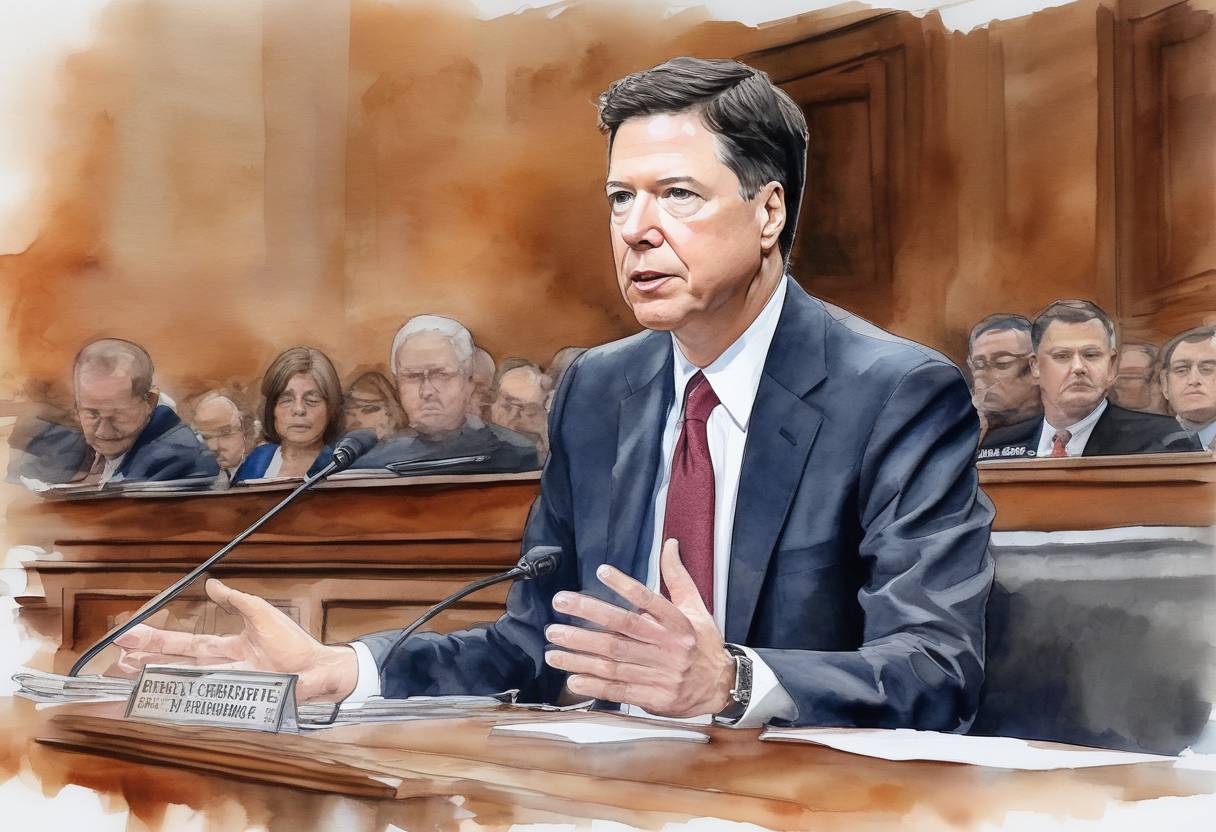
Watercolor painting based depiction of Former FBI Director James Comey testifies before the U.S. Senate Intelligence Committee, discussing his interactions with President Donald Trump and the investigation into Russian interference in the 2016 election. (2017)

James Comey’s Testimony Before the U.S. Senate Intelligence Committee

On June 8, 2017, former FBI Director James Comey testified before the U.S. Senate Intelligence Committee. This highly anticipated event centered around his interactions with President Donald Trump and the FBI’s investigation into Russian interference in the 2016 U.S. presidential election.

Background

James Comey was appointed as the FBI Director in 2013 by President Barack Obama. During his tenure, the FBI began investigating Russian interference in the 2016 election, including potential connections between Russia and members of Donald Trump’s campaign team. On May 9, 2017, President Trump dismissed Comey from his position, a move that sparked significant controversy and led to allegations of obstruction of justice.

Key Points of the Testimony

  1. Interactions with President Trump:

    • Comey detailed several meetings and phone calls with President Trump, during which he felt uncomfortable with the President’s requests. Notably, Comey recounted a private meeting in the Oval Office on February 14, 2017, where Trump allegedly asked him to “let go” of the investigation into former National Security Advisor Michael Flynn.
  2. Documentation of Conversations:

    • Comey testified that he documented his conversations with President Trump in memos, a practice he did not typically follow with other presidents. He stated this was due to the nature of their interactions and his concern over potential misrepresentations.
  3. Russian Interference Investigation:

    • Comey confirmed that the FBI was investigating Russian interference in the 2016 election and any links between Russia and the Trump campaign. He emphasized the seriousness of the threat posed by Russian actions to U.S. democracy.
  4. Allegations of Obstruction:

    • While Comey did not explicitly accuse President Trump of obstruction of justice, his testimony provided a detailed account of actions that some interpreted as attempts to influence or impede the investigation.
  5. Public and Political Reactions:

    • The testimony was broadcast live and drew significant public and media attention. It intensified the debate over the Trump administration’s conduct and the integrity of the ongoing investigations.

Aftermath and Significance

Comey’s testimony had several immediate and long-term impacts:

  • Special Counsel Investigation: The controversy surrounding Comey’s firing and his testimony contributed to the appointment of Robert Mueller as Special Counsel to oversee the Russia investigation.
  • Political Repercussions: The testimony fueled partisan debates and further polarized opinions regarding President Trump’s actions and the legitimacy of the investigation.
  • Public Awareness: The event heightened public awareness of the issues surrounding Russian interference and the importance of safeguarding democratic processes.

James Comey’s testimony remains a pivotal moment in the broader narrative of the investigations into Russian interference and the Trump administration’s response to those inquiries.

Source: www.nytimes.com