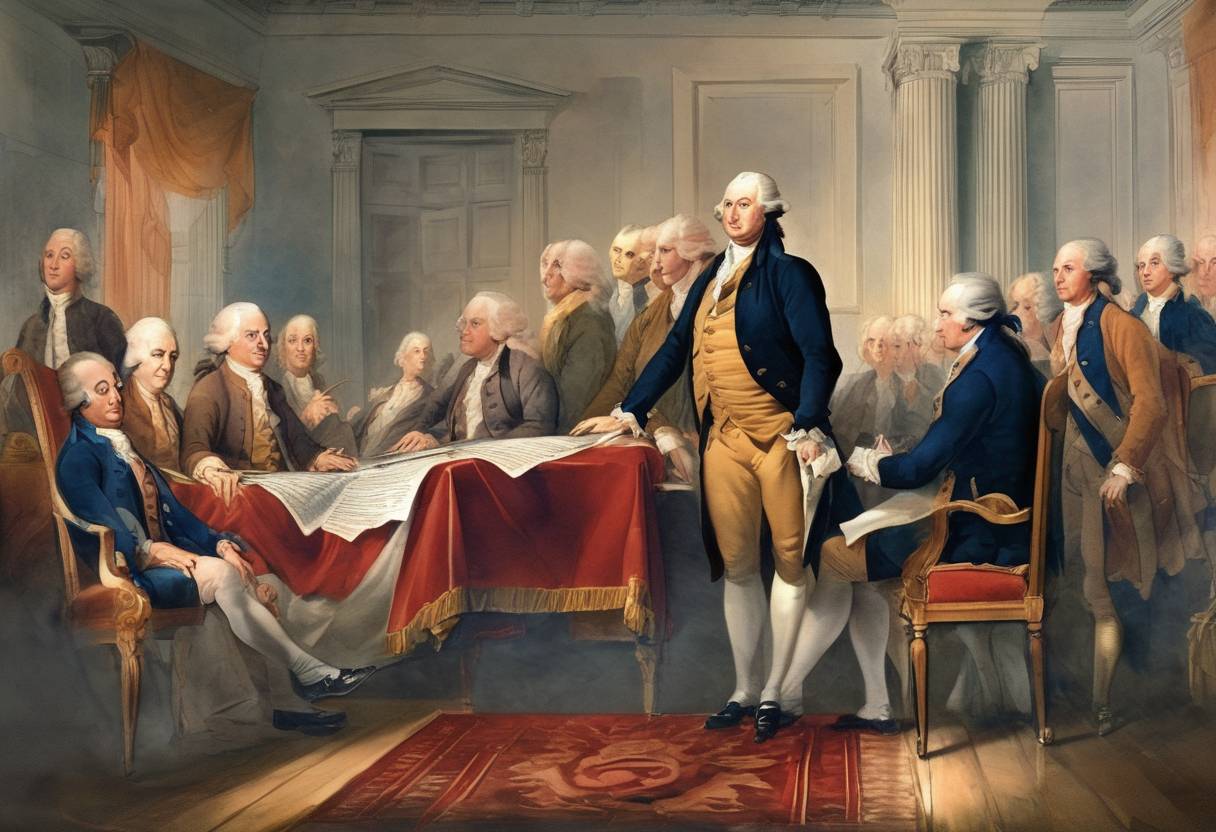
The Adoption of the United States Declaration of Independence
Background
The adoption of the Declaration of Independence on July 4, 1776, by the Continental Congress marked a pivotal moment in American history, signifying the birth of the United States of America. This event was the culmination of growing tensions between the thirteen American colonies and the British Crown, primarily over issues of taxation without representation, British military presence, and the colonies’ desire for self-governance.
Key Events Leading Up to July 4, 1776
1765-1774: Rising Tensions
The Stamp Act of 1765 and the Townshend Acts of 1767 imposed taxes on the colonies, leading to widespread protest. The Boston Massacre in 1770 and the Boston Tea Party in 1773 further escalated tensions.
1774: The First Continental Congress
In response to the Intolerable Acts, the First Continental Congress convened in Philadelphia, uniting colonial leaders in opposition to British policies.
April 1775: The Outbreak of the Revolutionary War
The battles of Lexington and Concord marked the beginning of armed conflict between colonial militias and British forces.
June 1775: The Second Continental Congress
The Congress reconvened, taking on the role of a de facto national government, and appointed George Washington as the commander of the Continental Army.
June 1776: Drafting the Declaration
A committee, including Thomas Jefferson, John Adams, Benjamin Franklin, Roger Sherman, and Robert R. Livingston, was tasked with drafting a formal declaration of independence. Jefferson, the principal author, composed the initial draft.
July 4, 1776: Adoption of the Declaration
On July 2, 1776, the Continental Congress voted in favor of independence. Two days later, on July 4, the Declaration of Independence was formally adopted. The document articulated the colonies’ grievances against King George III and asserted their right to self-determination. It famously proclaimed that “all men are created equal” and endowed with “unalienable Rights,” including “Life, Liberty and the pursuit of Happiness.”
Aftermath and Significance
Immediate Impact
The Declaration was disseminated throughout the colonies and read publicly, galvanizing support for the revolutionary cause. It also served to justify the colonies’ break from Britain to the international community.
Long-term Consequences
The Declaration laid the ideological foundation for the new nation, influencing future democratic movements worldwide. It remains a symbol of American ideals and a cornerstone of national identity.
The Revolutionary War
The war continued until 1783, culminating in the Treaty of Paris, which recognized the sovereignty of the United States.
Conclusion
The adoption of the Declaration of Independence on July 4, 1776, was a defining moment in history, marking the emergence of a new nation committed to principles of liberty and equality. Its legacy endures as a testament to the enduring struggle for freedom and self-governance.