Recep Tayyip Erdoğan's Victory in the 2018 Turkish Presidential Election
2018 · Ankara, Turkey
Recep Tayyip Erdoğan won the Turkish presidential election, securing his position with expanded executive powers following a constitutional referendum.
July 17, 2016
A coup attempt in Turkey fails as forces loyal to President Recep Tayyip Erdoğan regain control.
Ankara, Turkey | Turkish government
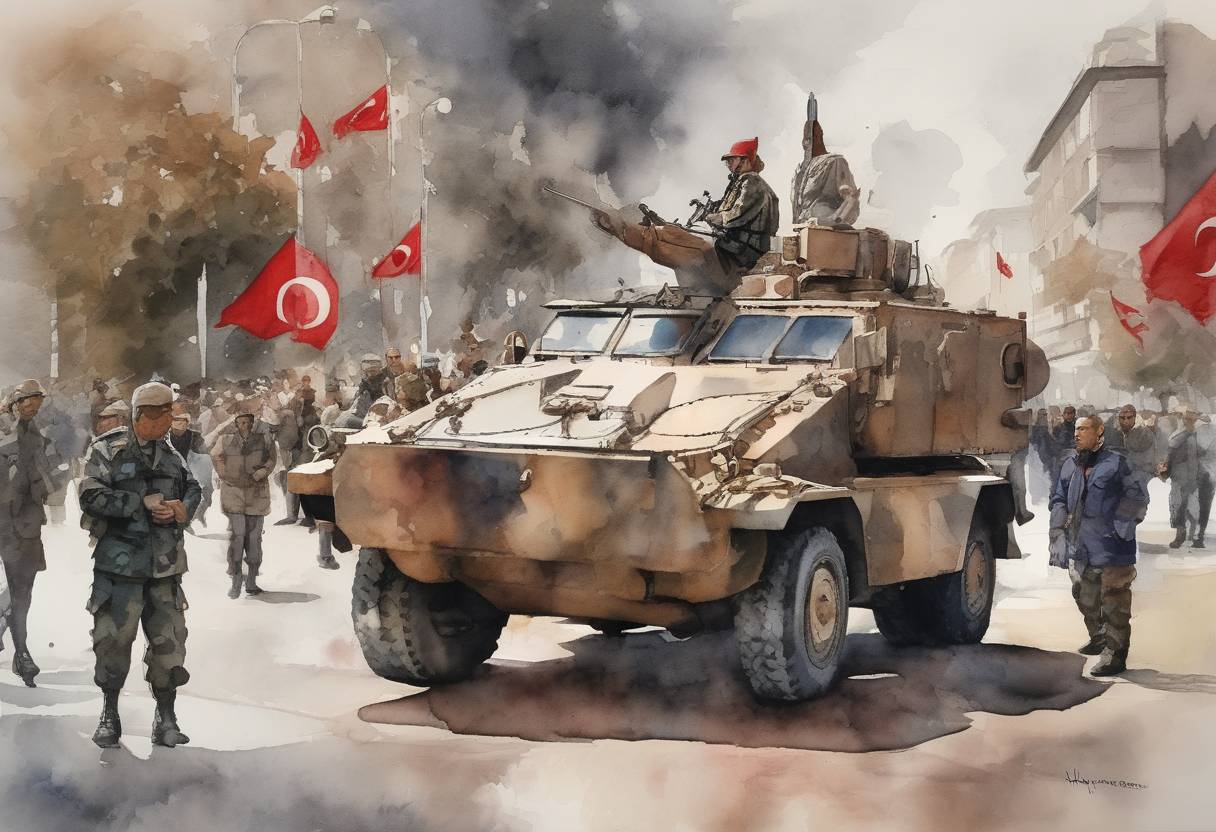
On July 15, 2016, a faction within the Turkish Armed Forces attempted to overthrow the government of President Recep Tayyip Erdoğan. This coup attempt, which unfolded over the course of the evening and into the early hours of July 16, ultimately failed as forces loyal to Erdoğan regained control. By July 17, the situation had largely stabilized, marking a significant moment in Turkey’s contemporary history.
Turkey has a history of military coups, with the armed forces traditionally viewing themselves as guardians of the secular and unitary nature of the Turkish Republic. However, the political landscape had shifted significantly under Erdoğan’s leadership, with his Justice and Development Party (AKP) consolidating power since 2002. Tensions had been rising due to Erdoğan’s increasingly authoritarian style and his moves to expand presidential powers.
Initiation: The coup attempt began on the evening of July 15, 2016, when a faction within the military declared that they had taken control to restore democracy and human rights. Key locations in Ankara and Istanbul, including bridges, airports, and media outlets, were seized by the coup plotters.
Public Response: President Erdoğan, who was on vacation at the time, addressed the nation via a FaceTime call broadcast on television, urging citizens to take to the streets in protest. Thousands responded, confronting tanks and soldiers.
Loyalist Action: Forces loyal to the government, including police units and segments of the military, quickly mobilized to counter the coup. By the morning of July 16, the coup had largely collapsed.
Casualties and Arrests: The coup attempt resulted in over 300 deaths and more than 2,100 injuries. In the aftermath, the Turkish government launched a massive purge across the military, judiciary, civil service, and educational institutions, arresting tens of thousands of individuals suspected of having links to the coup.
Blame and Crackdown: The government blamed the coup on the Gülen movement, led by Fethullah Gülen, a cleric in self-imposed exile in the United States. This led to a significant diplomatic strain between Turkey and the U.S., as Turkey demanded Gülen’s extradition.
Constitutional Changes: The failed coup attempt provided Erdoğan with the impetus to push for constitutional changes, which were approved in a 2017 referendum. These changes significantly expanded the powers of the presidency, effectively transforming Turkey’s parliamentary system into a presidential one.
The failed coup attempt of July 2016 marked a turning point in Turkish politics. It not only reinforced Erdoğan’s grip on power but also led to a more pronounced shift towards authoritarianism. The purges and subsequent constitutional changes have had lasting impacts on Turkey’s democratic institutions and its relationship with Western allies.
This event remains a pivotal moment in understanding the dynamics of power and governance in Turkey, as well as the broader geopolitical implications in the region.
Source: en.wikipedia.org