The 1994 United States Midterm Elections
1994 · Washington, D.C., United States
The Republican Party wins control of both the House of Representatives and the Senate for the first time in 40 years in the United States midterm elections.
November 6, 1984
Ronald Reagan was re-elected as President of the United States, defeating Democratic candidate Walter Mondale in a landslide victory.
Washington, D.C., United States | Republican Party
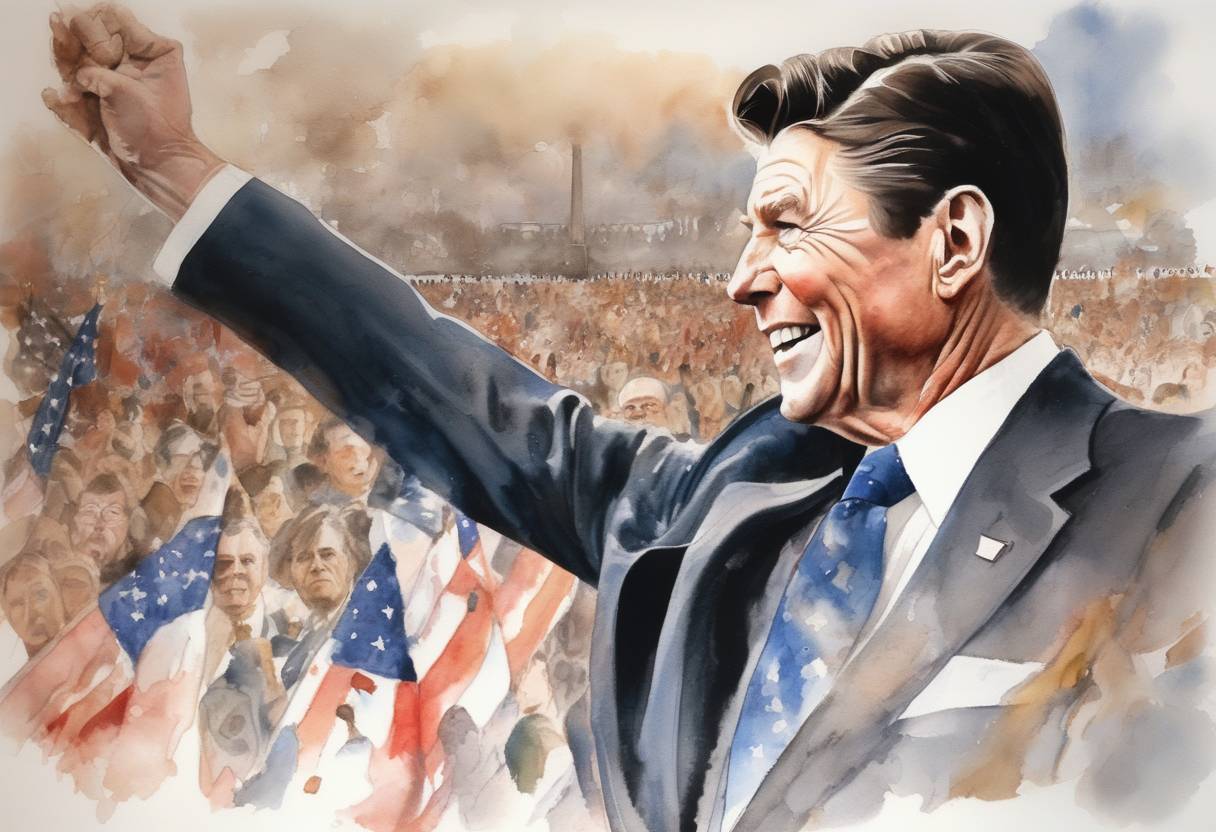
On November 6, 1984, Ronald Reagan was re-elected as President of the United States, achieving a decisive victory over his Democratic opponent, Walter Mondale. This election is notable for its significant impact on American political history and the overwhelming support Reagan received from the electorate.
First Term Achievements: Reagan’s first term was marked by significant economic policies, often referred to as “Reaganomics,” which included tax cuts, deregulation, and a focus on reducing inflation. His administration also took a strong stance against the Soviet Union, contributing to the Cold War dynamics of the era.
Economic Recovery: By the time of the 1984 election, the U.S. economy was recovering from the recession of the early 1980s. Economic growth and a decrease in unemployment rates bolstered Reagan’s popularity.
Foreign Policy: Reagan’s foreign policy, characterized by a robust military buildup and a hardline approach to the Soviet Union, resonated with many voters who were concerned about national security.
Reagan’s Campaign: The Reagan campaign capitalized on the theme of “It’s Morning Again in America,” emphasizing economic recovery and national optimism. Reagan’s charismatic communication style and optimistic vision for the country were central to his campaign strategy.
Walter Mondale’s Challenge: Walter Mondale, a former Vice President under Jimmy Carter, faced an uphill battle. His campaign focused on issues such as social justice and criticized Reagan’s economic policies for favoring the wealthy. Mondale made history by selecting Geraldine Ferraro as his running mate, the first woman to be nominated for Vice President by a major party.
Electoral College: Reagan won a landslide victory, securing 525 of the 538 electoral votes, the highest number ever received by a presidential candidate. Mondale won only his home state of Minnesota and the District of Columbia.
Popular Vote: Reagan received 58.8% of the popular vote, while Mondale garnered 40.6%. This wide margin underscored the broad support for Reagan’s policies and leadership style.
Second Term: Reagan’s second term focused on continuing economic policies, addressing the federal deficit, and engaging in significant foreign policy initiatives, including negotiations with the Soviet Union that eventually led to the end of the Cold War.
Political Landscape: The 1984 election solidified the Republican Party’s strength in the 1980s and influenced the political landscape for years to come. Reagan’s presidency is often credited with reshaping American conservatism and the Republican Party’s platform.
Legacy: Reagan’s re-election is remembered as a testament to his widespread appeal and the effectiveness of his administration’s communication strategies. His presidency left a lasting impact on U.S. domestic and foreign policy.
In summary, the 1984 presidential election was a pivotal moment in American history, reflecting the nation’s economic recovery and the political climate of the time. Reagan’s overwhelming victory demonstrated his popularity and the electorate’s endorsement of his policies and vision for the future.
Source: www.history.com