UK General Election of June 7, 2001: Tony Blair's Labour Party Victory
2001 · London, United Kingdom
Tony Blair's Labour Party wins a second consecutive term in the UK general election, securing a large majority in the House of Commons.
October 19, 1998
Former Chilean dictator Augusto Pinochet was arrested in London on a Spanish warrant for human rights violations.
London, United Kingdom | Spanish Judiciary
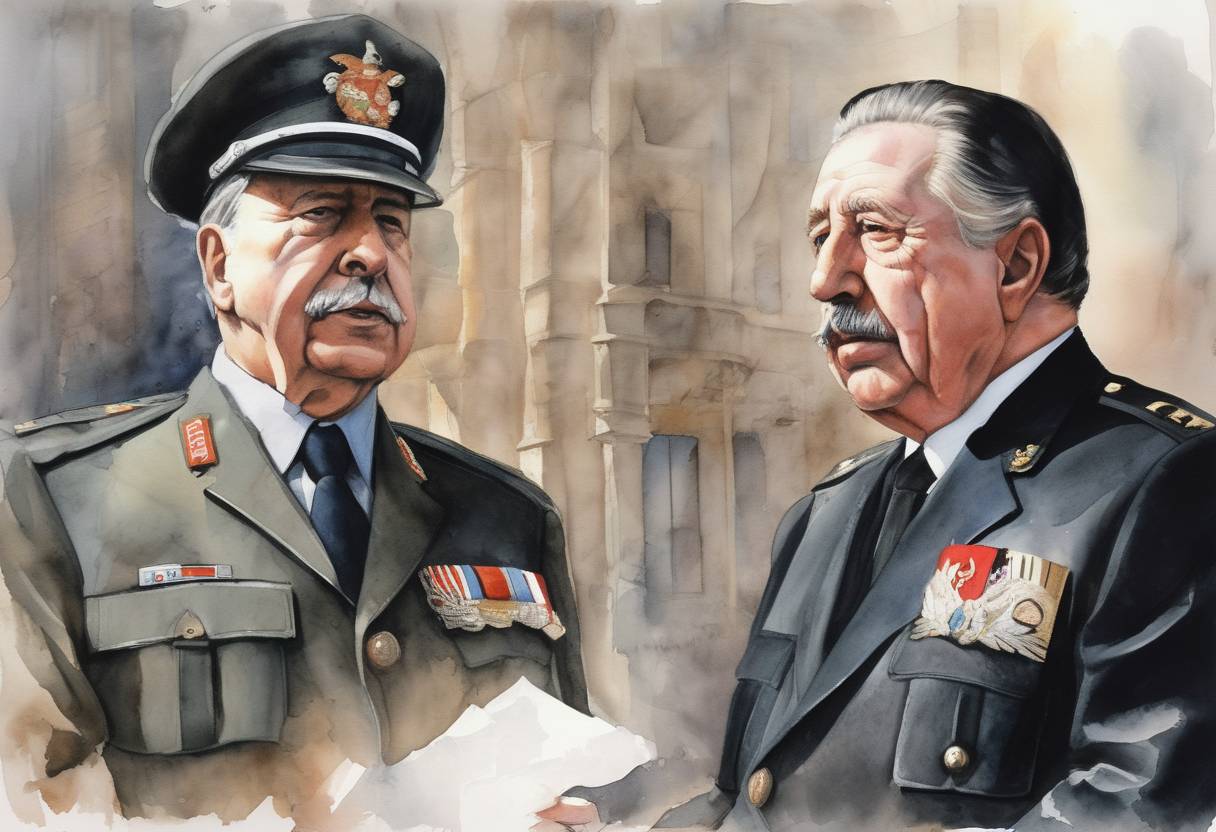
On October 19, 1998, former Chilean dictator Augusto Pinochet was arrested in London, marking a significant moment in international law and human rights advocacy. This arrest was executed under a Spanish warrant issued by Judge Baltasar Garzón, who sought Pinochet’s extradition to Spain to face charges of human rights violations, including torture, murder, and the disappearance of Spanish citizens during his regime.
Augusto Pinochet came to power in Chile following a military coup on September 11, 1973, which overthrew the democratically elected government of President Salvador Allende. Pinochet’s rule, which lasted until 1990, was marked by widespread human rights abuses. Thousands of Chileans were killed, tortured, or disappeared during his dictatorship, as documented by various human rights organizations and the Chilean National Commission on Truth and Reconciliation.
Pinochet traveled to the United Kingdom in September 1998 for medical treatment. While there, Spanish authorities, led by Judge Garzón, issued an international arrest warrant. The warrant was based on the principle of universal jurisdiction, which allows national courts to prosecute individuals for serious crimes against international law, such as genocide and torture, regardless of where they were committed.
The arrest was carried out by British authorities, and Pinochet was placed under house arrest in London. This unprecedented legal action drew global attention and sparked debates about the limits of diplomatic immunity and the reach of international law.
Pinochet’s arrest led to a prolonged legal battle in the UK. His defense argued that he was entitled to immunity as a former head of state. However, in a landmark decision, the House of Lords ruled in 1999 that Pinochet could be extradited to Spain to face charges of torture, as these acts were not protected by immunity.
Despite the ruling, Pinochet was never extradited. In March 2000, the British Home Secretary, Jack Straw, decided to release Pinochet on medical grounds, citing concerns about his health. Pinochet returned to Chile, where he faced numerous legal challenges but never stood trial due to his deteriorating health. He died in 2006.
The arrest of Augusto Pinochet was a pivotal moment in the global human rights movement. It demonstrated the potential of international law to hold former leaders accountable for human rights abuses, regardless of their status or location. The case also highlighted the challenges and complexities of prosecuting such crimes, influencing subsequent international legal proceedings and the development of international criminal law.
Source: en.wikipedia.org