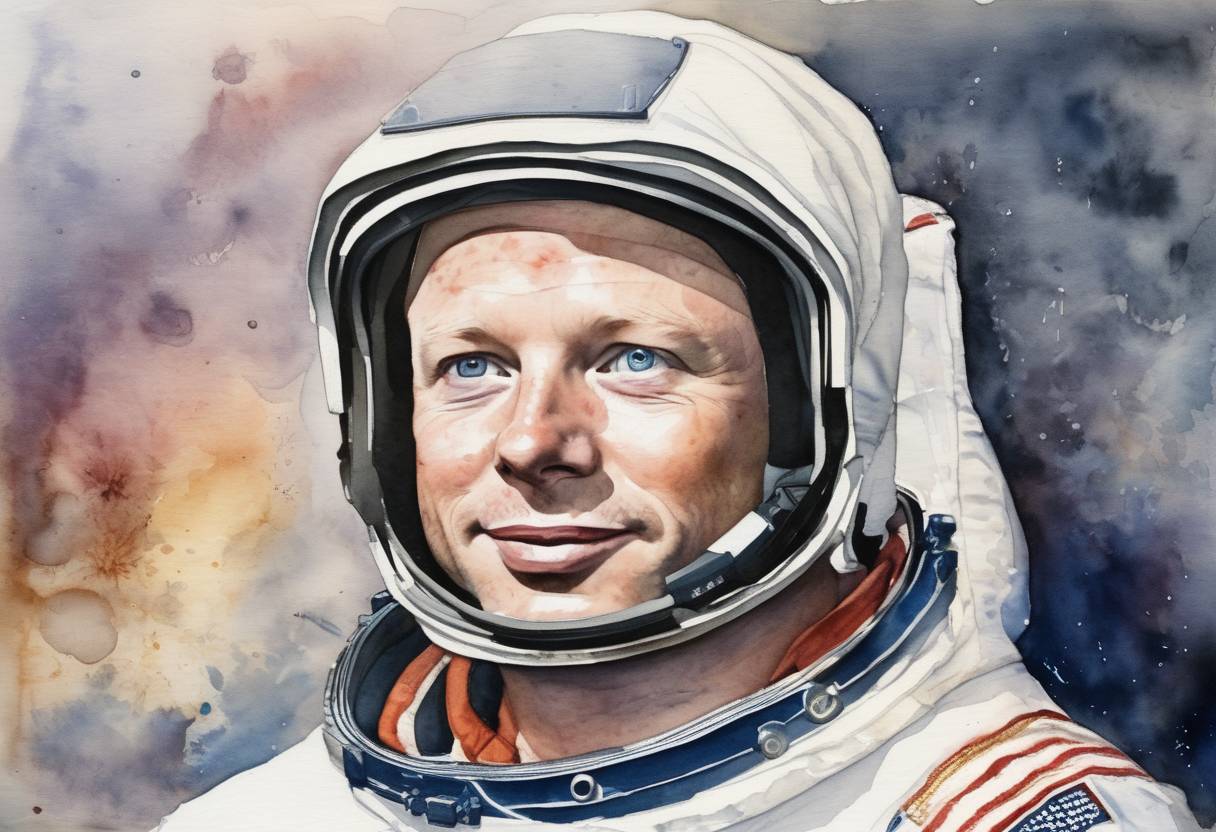
Neil Armstrong: A Tribute
Neil Armstrong, the pioneering astronaut who became the first human to set foot on the Moon, passed away on August 25, 2012, at the age of 82. His death marked the end of an era in space exploration and left a lasting legacy on both science and human achievement.
Early Life and Career
Neil Alden Armstrong was born on August 5, 1930, in Wapakoneta, Ohio. From a young age, he showed a keen interest in aviation, earning his pilot’s license before he could drive a car. Armstrong pursued his passion by studying aeronautical engineering at Purdue University, later serving as a naval aviator during the Korean War.
NASA and the Apollo Program
Armstrong joined the National Advisory Committee for Aeronautics (NACA), which later became NASA, as a test pilot. His exceptional skills and calm demeanor earned him a place in NASA’s second group of astronauts in 1962.
Apollo 11 Mission
Armstrong’s most famous achievement came on July 20, 1969, during the Apollo 11 mission. As the mission commander, he piloted the Lunar Module, Eagle, to the Moon’s surface. Upon stepping onto the lunar surface, he famously declared, “That’s one small step for [a] man, one giant leap for mankind.” This moment was broadcast to millions worldwide, symbolizing a monumental achievement in human history.
Later Life and Legacy
After the Apollo 11 mission, Armstrong continued to contribute to aerospace and engineering fields. He served as a professor of aerospace engineering at the University of Cincinnati and participated in various corporate and governmental advisory roles.
Armstrong remained a private individual, often shunning the limelight despite his historic achievements. His passing in 2012 was due to complications resulting from cardiovascular procedures.
Historical Significance
Neil Armstrong’s journey to the Moon was not just a personal triumph but a testament to human ingenuity and perseverance. His legacy continues to inspire generations of scientists, engineers, and explorers. The Apollo 11 mission remains a pivotal moment in the 20th century, showcasing the potential of human collaboration and technological advancement.
Armstrong’s life and accomplishments remind us of the power of exploration and the enduring human spirit to reach beyond the confines of our planet.