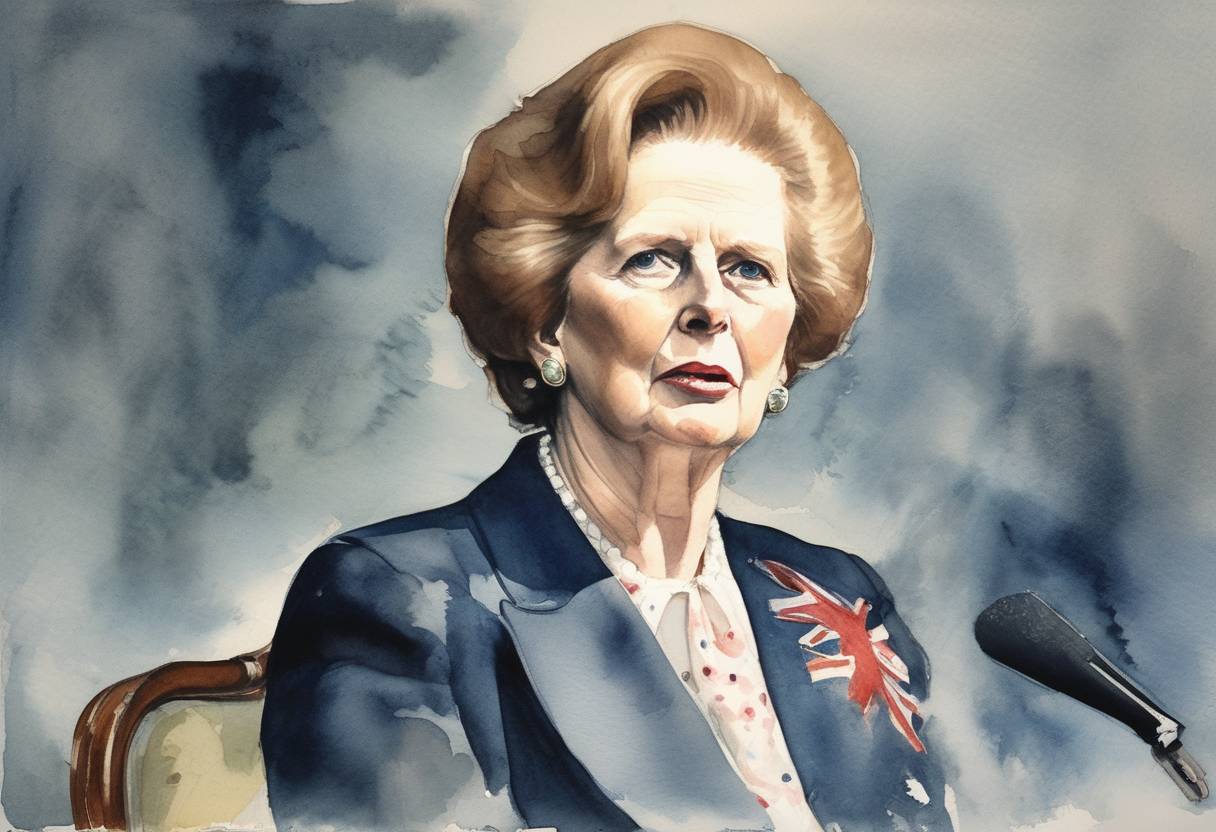
Margaret Thatcher Becomes the First Woman to Lead the British Conservative Party
On February 11, 1975, Margaret Thatcher made history by becoming the first woman to lead the British Conservative Party. This event marked a significant milestone in British political history and set the stage for Thatcher’s eventual role as the first female Prime Minister of the United Kingdom.
Context and Background
Before her leadership bid, Margaret Thatcher had already established herself as a prominent figure within the Conservative Party. Born on October 13, 1925, in Grantham, Lincolnshire, she pursued a career in chemistry before transitioning to law and eventually politics. Thatcher was elected as the Member of Parliament for Finchley in 1959 and quickly rose through the ranks, serving in various ministerial roles, including Secretary of State for Education and Science from 1970 to 1974.
The Conservative Party, under the leadership of Edward Heath, faced significant challenges in the early 1970s, including economic difficulties and industrial unrest. After losing the general elections in February and October 1974, Heath’s leadership came under scrutiny, leading to a leadership contest.
The Leadership Election
The Conservative Party leadership election of 1975 was a pivotal moment. Thatcher emerged as a candidate who represented a new direction for the party, advocating for free-market policies and a reduction in the power of trade unions. Her candidacy was initially seen as a long shot, but she gained momentum by appealing to the party’s desire for change.
In the first ballot held on February 4, 1975, Thatcher secured a surprising victory over Heath, forcing a second ballot. On February 11, 1975, she won the leadership contest decisively, defeating her main rival, William Whitelaw, with 146 votes to his 79.
Significance and Aftermath
Thatcher’s election as the leader of the Conservative Party was groundbreaking, not only because she was the first woman to hold the position but also because she represented a shift in the party’s ideological direction. Her leadership style and policies would later earn her the nickname “The Iron Lady,” reflecting her strong-willed and uncompromising approach.
Thatcher’s leadership of the Conservative Party set the stage for her to become Prime Minister in 1979, following the party’s victory in the general election. Her tenure as Prime Minister, which lasted until 1990, was marked by significant economic reforms, a focus on privatization, and a strong stance against the Soviet Union during the Cold War.
Broader Historical Impact
Margaret Thatcher’s rise to leadership and subsequent premiership had a profound impact on British politics and society. Her policies and leadership style influenced the Conservative Party and the broader political landscape in the UK and beyond. Her tenure is often credited with reshaping the British economy and redefining the role of government in economic affairs.
Thatcher’s legacy remains a subject of debate, with supporters praising her for revitalizing the British economy and critics arguing that her policies increased social inequality. Nonetheless, her election as the leader of the Conservative Party on February 11, 1975, remains a landmark event in the history of British politics.